Custom Landscapes by Design logo
Finished green lawn bordered by decorative rock, small plants, and a concrete patio

New Lawns, Trees, Shrubs, and Planting Beds

Parker Sod, Tree, and Plant Installation

A living landscape is the one part of a yard that has to survive its first season before it counts as finished. We prepare the ground, place the sod and planting for the exposure they will actually get, and build the establishment plan around the watering rules that apply at your address.

  • Sod installation with real soil and grade preparation
  • Trees, shrubs, grasses, and perennials placed for mature size
  • Establishment watering planned around your water district

Get a Parker Sod and Planting Estimate

Tell us what is going in, what is already there, and when you need the yard usable.

Start with the calendar

New Sod Is on a Clock From the Day It Is Cut

Hardscape can sit half finished over a winter without much consequence. Living material cannot. Sod, trees, and planting are the only part of a landscape that has a biological deadline attached to them, and almost every disappointing planting job we get called out to look at went wrong on timing rather than on selection.

Sod arrives already cut

A pallet of sod is a harvested crop with its roots severed. It does not wait for a convenient week. Once it is delivered it wants to go down and get watered the same day, which is why the soil work has to be finished before the order is placed rather than after.
Planting establishes over seasons

Trees and shrubs are far more forgiving about the delivery date and far less forgiving about where they end up. A tree set two feet from a fence is a problem you will still be managing in ten years, long after anyone has forgotten which month it went in.

Handoff is the start, not the finish

The day the last roll is laid, nothing is rooted yet. The following few weeks decide whether the lawn knits into the soil or thins out in patches, and that stretch depends almost entirely on water arriving in the right amount at the right time.

The rule that governs the first month

Watering New Sod in PWSD Territory Takes a Permit

Parker Water and Sanitation District publishes standard watering guidelines for the properties it serves, and it requires a permit to water outside those guidelines while new sod or seed establishes. That is not a technicality to sort out later. It is the difference between a new lawn getting the water it needs during the weeks it is rooting and a new lawn being asked to establish on a schedule written for an established one.

So the sequence runs backwards from the district. We identify who serves the address, confirm the current terms with them rather than repeating them from memory, and set the install date against what the establishment period will actually be allowed to look like. The permit belongs to the district and the decision is theirs. Our part is to make sure the request happens before the pallets show up, not two weeks after the lawn has started to thin.

One qualification matters more here than anywhere else on this page. A Parker mailing address does not guarantee PWSD service, and PWSD says as much itself. Stonegate Village Metropolitan District and Pinery Water and Wastewater District serve other Parker-address communities in unincorporated Douglas County. Their establishment rules are theirs to publish and we will not state them for you, which is exactly why the first question is always which utility sends your bill.

What Happens to the Ground Before Anything Green Goes In

Everything above grade is judged on the day it is installed. Everything below grade is judged for the next twenty years. The ground work is the part of a planting project that nobody photographs and the part that decides the result.

  1. 01

    Fix the layout on paper first

    Lawn edges, bed shapes, tree positions, and the elevations where planting meets paving all get settled before a machine touches the ground. Changing a bed line after the soil is prepared means preparing that soil twice.

  2. 02

    Open up what construction closed

    On a newer lot the subgrade has usually been driven over for months. Relieving that compaction is not cosmetic. Roots cannot push into ground that has been pressed flat, and water sits on top of it instead of moving through.

  3. 03

    Give surface water a direction

    Grade should carry water away from the house and toward somewhere it can go. Expansive clay is a documented hazard along the Front Range and how a site handles water affects how much that matters, which is a regional statement about conditions rather than a finding about your particular lot.

  4. 04

    Build a root zone, not a surface

    Amendment depth and material follow what the excavation actually exposes. Soil, fill, and moisture vary from one property to the next and within a single yard, so we work from what is in front of us rather than applying one recipe everywhere.

Choosing Sod for the Way the Lawn Gets Used

Most lawn disappointment traces back to asking one rectangle of grass to be four different things at once. A putting-smooth surface, a dog run, a shaded side yard, and a patch the kids sprint across are not the same product.

Tahoma 31, Colorado Blue, and RTF are the documented options we install, subject to what is available when the order goes in. Tahoma 31 is chosen for drought and cold tolerance, which suits a semi-arid climate with real winters, but no cultivar solves a site problem. Sun hours, expected traffic, how the irrigation can reach the area, and how much maintenance you genuinely want to do all move the answer.

The other half of the conversation is size. If the honest use for a lawn is a path between the patio and the gate, a smaller, better-shaped lawn with beds around it will look more deliberate, use less water, and be easier to keep than a wall-to-wall green rectangle that struggles at its edges.

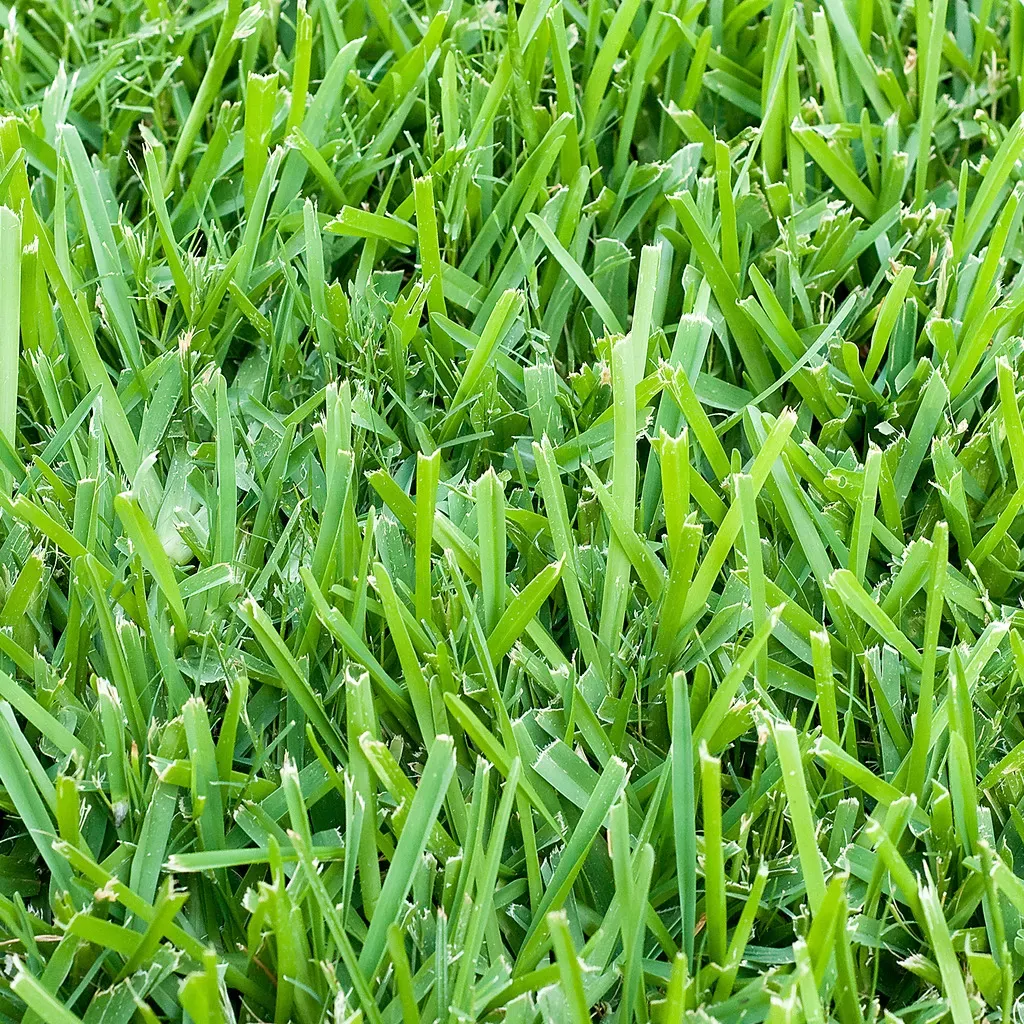
Close view of dense green grass blades
Blade texture and density are part of the selection conversation; sun, traffic, and watering decide the rest.

Position outlasts selection

Trees and Shrubs Are the Decisions You Cannot Undo

A lawn can be replaced in a weekend. A tree in the wrong place is a decision you live with, and then eventually pay to remove. We spend more time on where the woody material goes than on almost anything else in a planting scope.

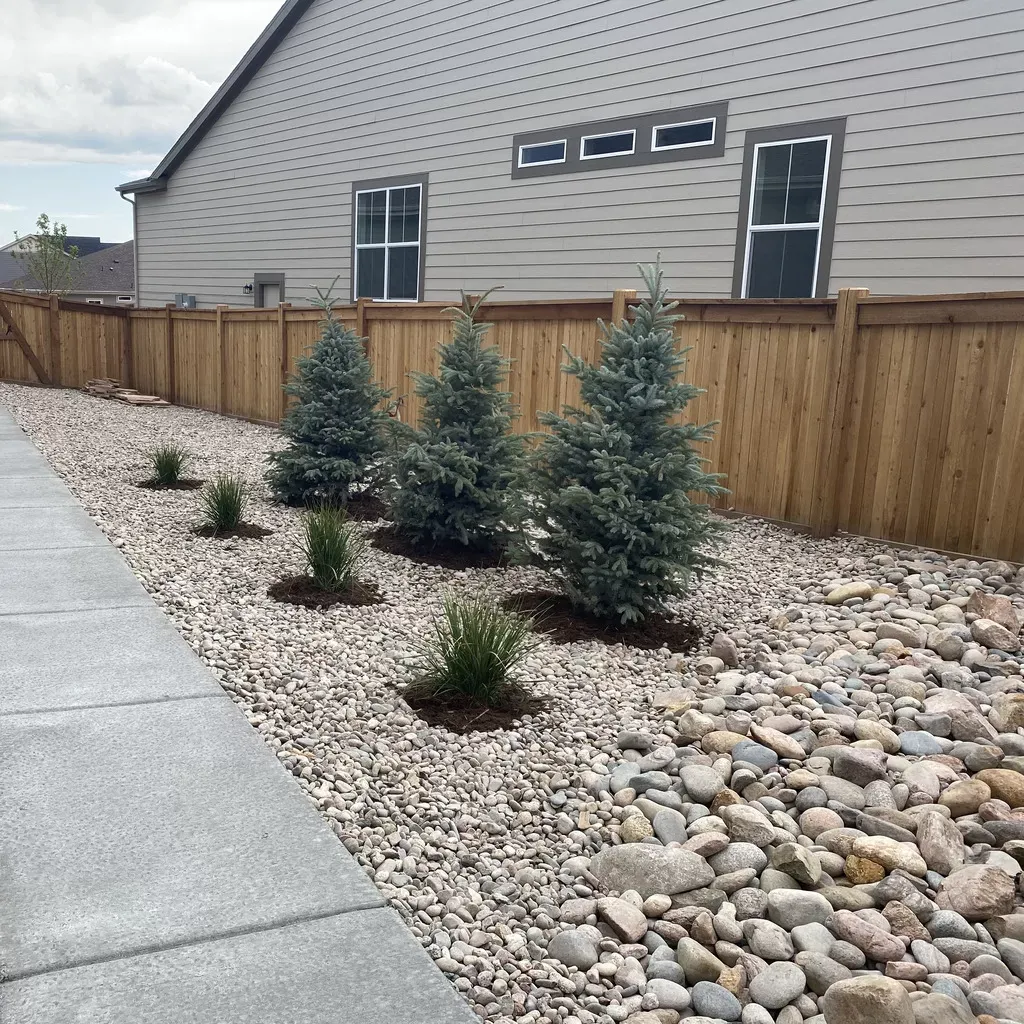
Newly planted blue-toned spruce trees and ornamental grasses in a rock bed beside a walk and a wood fence

Trees, Sized for the Year 2040

Mature height and spread set the spacing, not the pot the tree came in. Distance from the house, the fence line, walks, and anything buried has to be right on day one. Exposure matters too: at roughly 5,900 feet the combination of intense sun, drying wind, and hail is hard on new stock, and a position that shelters a young tree through its first winters is worth more than a larger specimen in a bad spot.

These went in at this size. The spacing has to suit what they become, not what they are on delivery day.

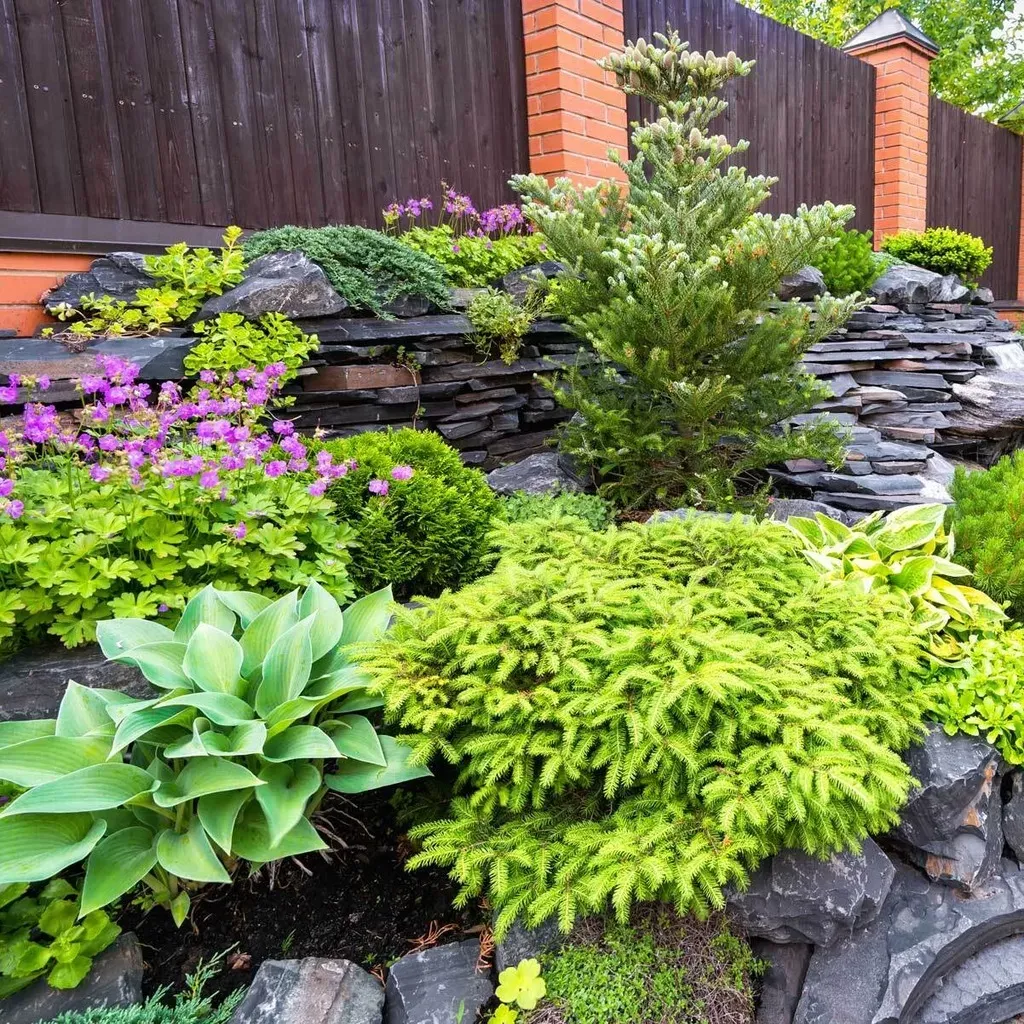
Layered ornamental bed with evergreen forms, flowering perennials, and stone accents

Beds That Still Read in February

Shrubs give a bed its permanent shape, ornamental grasses give it movement, and perennials give it a season of color that then disappears. A bed built only from the flowering layer looks bare for half the year. Layering by form first and bloom second, then finishing with mulch or rock depending on what the location needs, is what makes planting look intentional out of season.

The evergreen shapes and stone are what this bed still looks like in February.

Sequencing a New Parker Yard So Nothing Gets Planted Twice

On a yard that is being built rather than patched, the order is not negotiable. Grade and drainage first, because everything else sits on top of them. Then irrigation lines and any sleeving that has to cross under future hardscape. Then the built work. Then soil preparation, then trees, then beds, and sod last, because sod is the one element that starts dying the moment it is delivered and should never be waiting on someone else.

Getting that order wrong is expensive in a specific and avoidable way. Planting installed before a trench is cut gets dug up. A lawn laid before a patio is built gets driven over. We would rather hold the living material back two weeks than install it into a yard that still has machinery to accommodate.

One more thing can sit in that sequence. Exterior changes get reviewed by an association or design committee in a good many Parker-area communities, and planting is sometimes on the list of what they look at. Where it is, we hand you the layout in a submittable form and check what your particular community wants to see. How that review goes, and how long it takes, is theirs to decide, so we treat it as a scheduled step with an unknown duration rather than something to plan around optimistically.

Sod, Tree, and Planting Questions in Parker

What does the PWSD new-sod permit actually allow?

Parker Water and Sanitation District publishes standard watering guidelines, and it requires a permit to water outside those guidelines while new sod or seed is establishing. That is the mechanism that lets a brand-new lawn get the frequent water it needs during the weeks it is rooting. The permit belongs to the district, the current terms are the district to state, and the application is made for the property. We flag it during planning and build the install schedule around it, but we do not promise how it will be handled. This applies to properties served by PWSD. Not every Parker address is: Stonegate Village Metropolitan District and Pinery Water and Wastewater District serve other Parker-address communities and set their own rules, which we are not going to state on their behalf.

Is there a wrong time of year to install sod in Parker?

There is no single correct week, but there are harder ones. Sod laid into the hottest, driest stretch of summer needs the most water at exactly the point when restrictions are tightest, and sod laid too late has less root growth before the ground cools. What actually decides the date is the combination of when the rest of the yard work finishes, when material is available, and when the establishment watering can realistically be delivered. We would rather move an install date than hand over a lawn that cannot be watered properly.

How do you decide which sod to use on my lawn?

Tahoma 31, Colorado Blue, and RTF are the documented options we work with, subject to what is available at the time. The choice comes from the site rather than from a product list: how much direct sun the area gets, whether it is a traffic lane or a view, how the irrigation can reach it, and how much maintenance you actually want to do. A cultivar that suits an open, well-watered back lawn is not automatically the right answer for a narrow strip beside a driveway.

Do you amend the soil, or just lay sod on what is there?

Preparation is part of the scope, not an upsell. At minimum that means clearing debris, breaking up compaction, correcting low spots, and establishing a consistent root zone. How much amendment goes in depends on what the ground turns out to be once it is opened, which is why we do not publish a depth or a mix in advance. Laying good sod on unprepared ground produces a lawn that looks right for about a month.

Should the trees go in large or small?

Larger stock gives you presence immediately and costs more in both money and establishment risk, because a bigger root ball has more to replace before the tree is self-sufficient. Smaller stock catches up faster than most people expect. The more important decision is position: mature height and spread, distance from the house, fences, walks, and utilities, and what the tree will be shading or crowding once it is grown. Front Range communities generally fall in USDA zones 5 to 6 and conservative zone-5 selection is standard practice here, though we are not going to state an exact zone for an individual address.

What happens if something does not survive?

We will not promise that every plant lives, and you should be careful with anyone who does. Weather, watering, animals, and the condition of the ground all have a say. What we can do is put the right plant in a suitable position, prepare the ground properly, and give you an establishment plan that matches the watering rules you are actually working under. If something declines, tell us early, while the cause is still fixable and before it takes the plants around it with it.

Get the Ground Right Before the Green Goes In

Show us the yard, tell us who supplies the water, and we will scope the soil work, the planting, and an establishment plan that fits the rules you are actually under.