Create privacy
A solid residential fence can screen close property lines and make a patio, lawn, or play space feel more settled. The useful height, gate plan, and relationship to neighboring grades all matter.


Fence Installation Across Our Colorado Service Area
We install residential fencing as part of complete landscape projects and as standalone work: privacy fencing, cedar and vinyl systems, split rail, and gates. Posts and foundations are set for Colorado wind and freeze-thaw, and the fence line is planned with grading, access, and the surrounding landscape in mind.
Share the boundary, access needs, and fence type you are considering. We will review the site before pricing the work.
Start with the job the fence must do
Fence style should follow the purpose of the line. A backyard that needs screening, a visible front boundary, and a side yard that must admit equipment are three different planning problems. Defining the function first helps settle material, height, openness, gates, and how the fence meets the rest of the property.
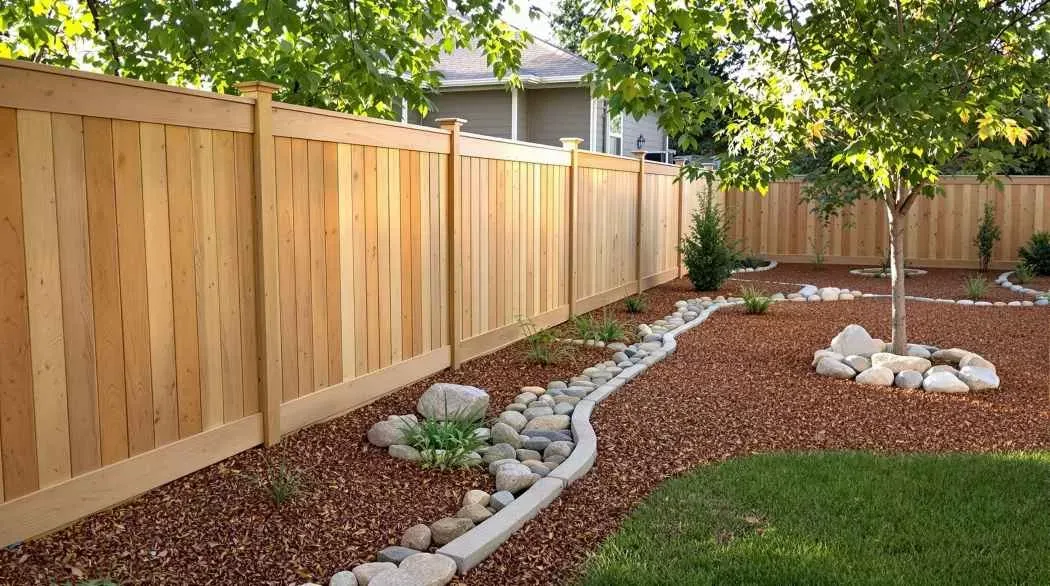
A solid residential fence can screen close property lines and make a patio, lawn, or play space feel more settled. The useful height, gate plan, and relationship to neighboring grades all matter.
An open rail-style fence can establish an edge without creating the same visual weight as a full privacy layout. The exact style still has to fit the property rules and the way the yard is used.
Gates turn a fence line into part of the circulation plan. Daily foot traffic, mower clearance, trash access, material delivery, and future landscape work should influence both width and location.
Verified residential options
Wood privacy fencing creates the strongest visual screen and can fit a range of residential settings. Board layout, exposure, finish care, and how the line changes elevation should be understood before installation.
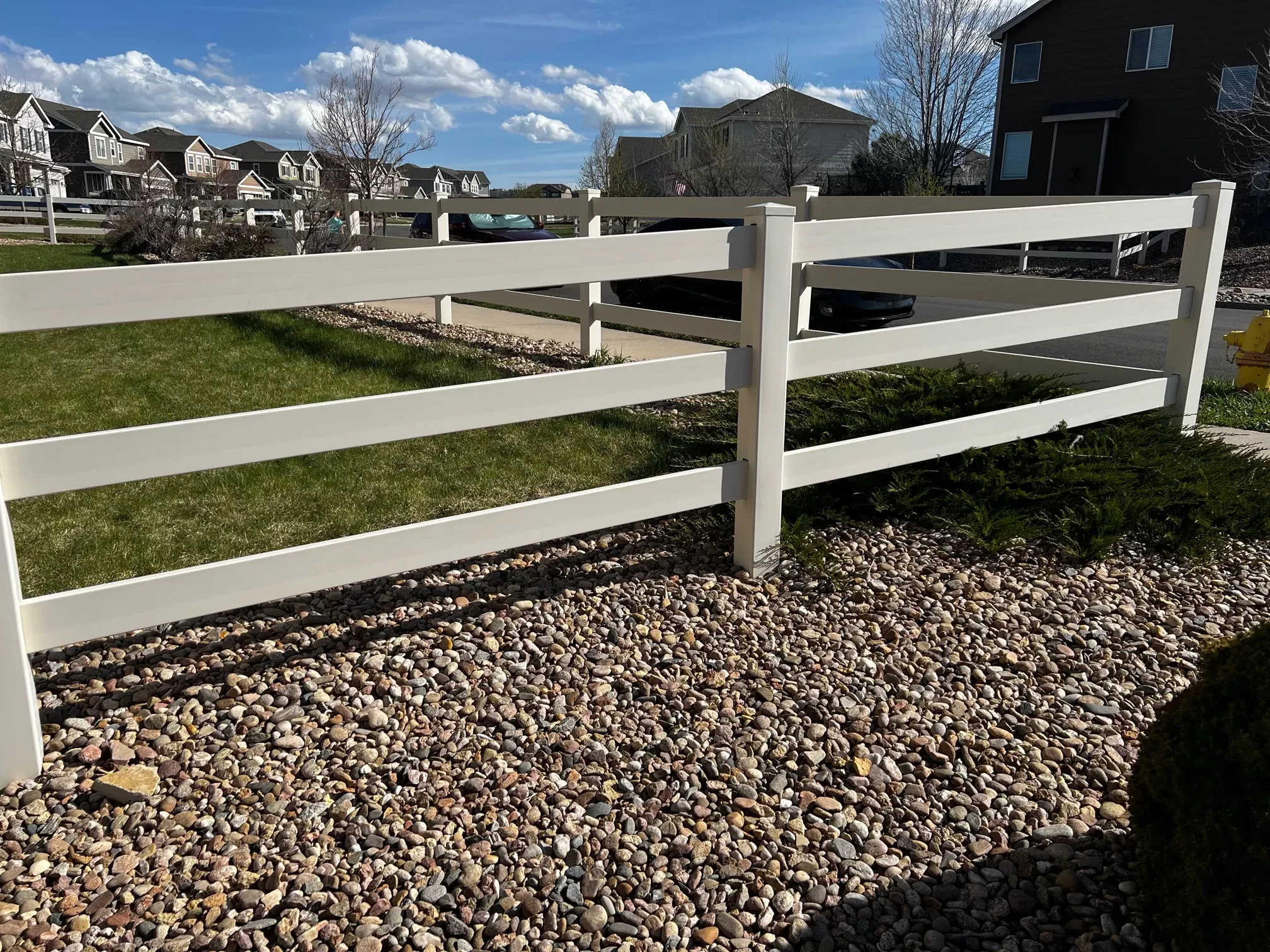
Vinyl fencing offers a manufactured, lower-finish-maintenance option. The verified work includes rail-style vinyl; the chosen configuration should match the amount of enclosure and visibility the property needs.
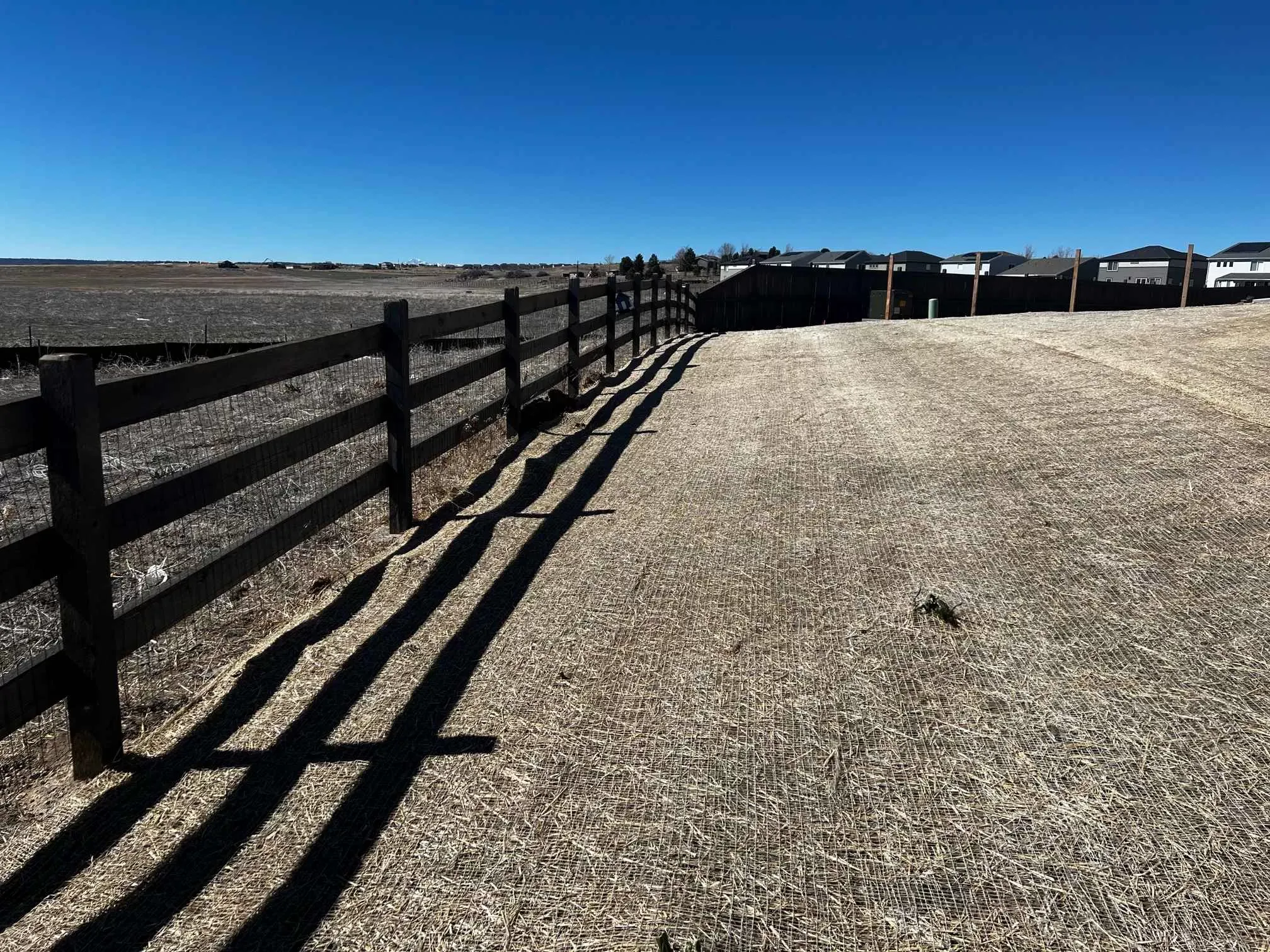
Wood rail-style fencing, including confirmed split-rail-style applications, can preserve a more open view. Wire mesh may add practical containment where appropriate without turning the line into a solid screen.
Gates are part of every material decision. Frame, hardware, width, swing, ground clearance, and the path on each side need to work as one access point.
Posts, grade, and exposure
Posts create the fixed structure. Their locations have to account for corners, gates, changing ground, drainage routes, the selected fence system, and practical access for installation. Foundation and spacing decisions remain property-specific.
On a slope, panels or rails may step or follow the grade. On an exposed property, solid fencing presents a different wind surface than an open rail system. Colorado freeze-thaw cycles also make stable support and water management around posts worth planning instead of treating them as finish details.
A failed panel and widespread post movement are not the same scope. We inspect the run before recommending targeted work or full replacement.
Fence installation should not dam runoff, bury drainage outlets, or make low spots inaccessible for correction.
Fence work is easier to coordinate when decisions happen in order. The sequence can change with replacement, restricted access, or a larger landscape build, but permanent posts and gate openings should not be set before the yard plan is understood.
We review the boundary information supplied for the property, access, utilities, grade, drainage, existing fence conditions, and the outdoor spaces on both sides of the proposed line.
Privacy, visibility, upkeep, material, gate width, and appearance are considered together. Any property-specific review belongs before material ordering and post layout.
Post positions, corners, gate posts, and changes in elevation are marked so the selected system can step or follow the grade in an orderly way.
Posts and foundations are installed for the actual layout and site conditions, then rails, panels, pickets, mesh where applicable, and gate hardware complete the enclosure.
Soil, rock, planting, turf, irrigation access, walks, and gate approaches are checked so the new boundary does not leave a collection of unfinished or hard-to-maintain strips.
Complete landscape coordination
A boundary can support the landscape or complicate it. Gate locations should connect to concrete walks and access routes or the chosen paver layout. Posts should also be coordinated with irrigation lines and service access.
On changing ground, a retaining wall and grade plan may establish elevations before the fence follows them. Inside the yard, sod, trees, and planting beds need maintainable edges, appropriate clearance, and a water plan that does not keep posts wet.
The broader landscape-construction scope and Castle Rock property conditions can both shape fence layout, access, and sequencing.
Ownership begins with clear expectations. Keep soil and vegetation from trapping moisture at the fence, watch gate alignment, and investigate new movement instead of repeatedly forcing hardware back into place.
Wood offers natural variation and can create full privacy, but it also moves, weathers, and needs periodic inspection. Cleaning, finish care, and repair timing depend on exposure and the selected wood system.
Vinyl avoids staining or painting, but it is not maintenance-free. Wash accumulated soil, inspect posts and connections, and address damaged components before movement spreads along a run.
Open rail layouts preserve views and reduce visual mass. Check rails, posts, and attached wire mesh where used, and keep vegetation from trapping moisture or obscuring loose connections.
Confirmed options include wood privacy fencing, vinyl systems, split-rail configurations, and gates. The suitable choices depend on the boundary, view, maintenance preference, access, and any property rules.
We plan gates around daily foot traffic, mower and equipment access, hardscape routes, and future landscape work. Width and swing direction should be resolved before the post layout is finalized.
Yes. Depending on the fence system and the grade, sections may step or follow the slope. The site visit is used to choose a layout that keeps the boundary functional and visually orderly.
Replacement is available for fencing that has reached the end of its useful life or has widespread post and panel failure. We inspect the existing condition before recommending replacement; routine cleaning, staining, and minor upkeep depend on the material and are discussed separately.
Published local detail is available on our Castle Rock fence company page. For another community in our service area, request an estimate and we will confirm availability for the address.
Request a site-based estimate for the fence type, gates, post layout, and landscape connections your property needs.