Custom Landscapes by Design logo
New wood privacy fence beside a concrete walk, decorative rock, and bare soil between recently built homes

Wood, Vinyl, and Rail Fencing for Parker Properties

Parker Residential Fence Installation

Two questions settle most of a fence project before a post goes in: exactly where the line runs, and how tall the fence is allowed to be at that address. We answer both first, then build standard residential fencing that follows the ground it sits on.

  • Standard residential wood privacy, vinyl, and rail systems with gates
  • Permit threshold and jurisdiction confirmed before material is ordered
  • Free on-site fence estimates across the Parker area

Start a Parker Fence Estimate

Tell us what the fence has to do, roughly where the line runs, and whether anything is there now.

One number, and what it does not mean

Six Feet Is Where the Town of Parker Draws Its Permit Line

Inside the Town of Parker, a fence over six feet requires a building permit. Below that the town does not list a fence permit requirement, though it also states that permits are required for almost everything, which is why we confirm a specific scope with the Parker Building Division instead of reading an exemption into a silence.

Here is the part that gets misread constantly. That figure is a permitting threshold. It is not advice about how tall your fence should be, and this page is not going to tell you to build to six feet or to anything else. Height comes from what the fence is for and what your community allows, and those two answers are frequently different from the town rule. An association or metro district can be stricter than the government, and when it is, the stricter rule is the one that governs your yard.

And the threshold only counts if the town is your permitting authority in the first place. Plenty of properties with Parker addresses are not inside town limits at all. Stonegate, The Pinery, and Pradera are the familiar examples, and for those the county writes the building requirements while a metro district and an association add theirs. The six-foot figure stops at the town boundary along with every other town rule. Sorting out which authority owns your address is the first thing we do, and it is not something we would ask you to guess at.

Finding the Line the Fence Is Supposed to Follow

A fence is the most permanent statement a property makes about where it ends. Getting that wrong is not a finish defect, it is a problem with a neighbor, so we would rather spend an hour on it at the start than assume.

Where the line is, not where the old fence is

An existing fence is evidence of where somebody once thought the boundary ran. It is not the boundary. Where the two might differ, the plat, the survey pins, and any documentation you hold are what we work from, and locating the line is your information to supply rather than something we determine for you.
What crosses the line underground

Utility locates come before post holes, every time. Easements are the other half of that question: a drainage or utility easement can run through the exact strip you want to fence, and finding out at the digging stage is the expensive version.

Who else the line belongs to

A run between two houses touches two properties and usually two opinions. Sorting out who is doing what, and on which side the posts and rails face, is a conversation worth having before material is ordered rather than after a neighbor sees a delivery.

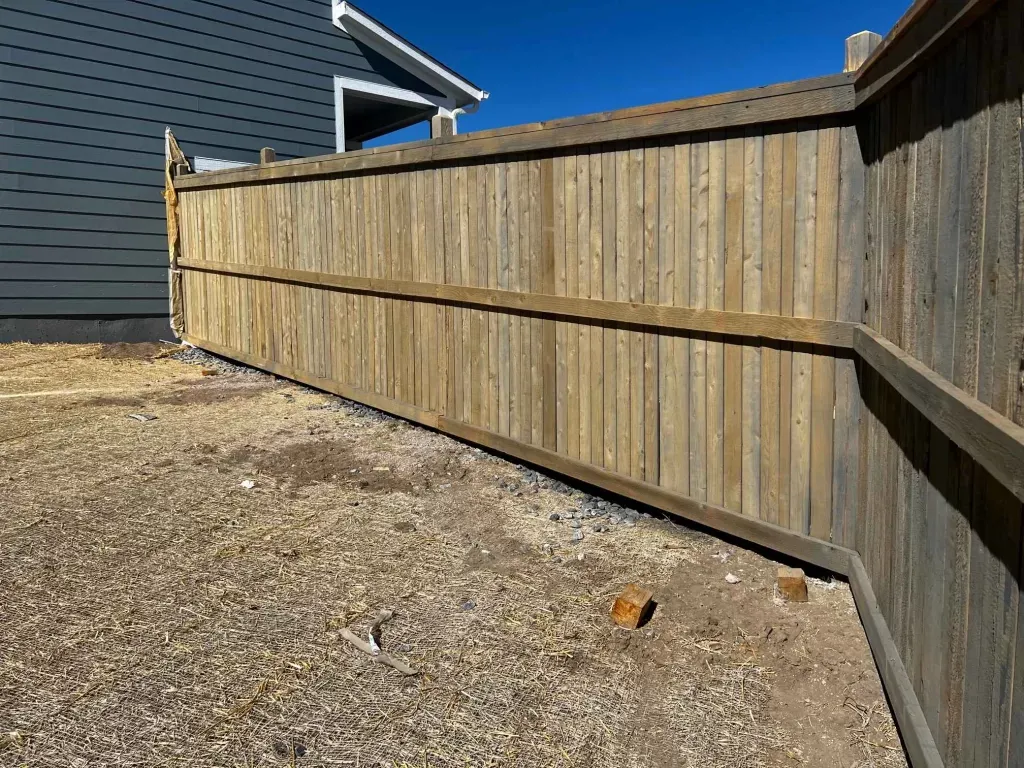
Tall wood privacy fence following a long exposed residential boundary and a change in grade
A run this long is a single decision about where the boundary is, repeated post by post.

Standard Residential Systems, Sorted by How Much They Close the View

Material lists tend to start with the heaviest option and work down. It is more useful to line the systems up by how much of the view each one takes away, because that is the decision you are actually making.

Wood rail, the most open option

A rail system marks an edge without building a wall. It keeps a view, reads lightly against open ground, and can carry wire mesh where something needs containing without turning the line into a screen. It is the least private option by design, which is exactly the point when the fence exists to define rather than to hide.

Vinyl, in whichever configuration fits

Vinyl trades finish maintenance for a manufactured look and is available in configurations from open rail through to full privacy. It does not need staining, which is genuinely less work, but it is not maintenance free: it wants washing, and posts and connections still need looking at. What it is not is invisible, so the color and profile have to suit the house.

Wood privacy, the most closed option

A solid wood fence is the strongest screen and the heaviest visual object you will put on a boundary. Board layout, how the line steps across changing ground, and the finish schedule all matter more with this system than with the others, because there is more of it and it moves with the weather.

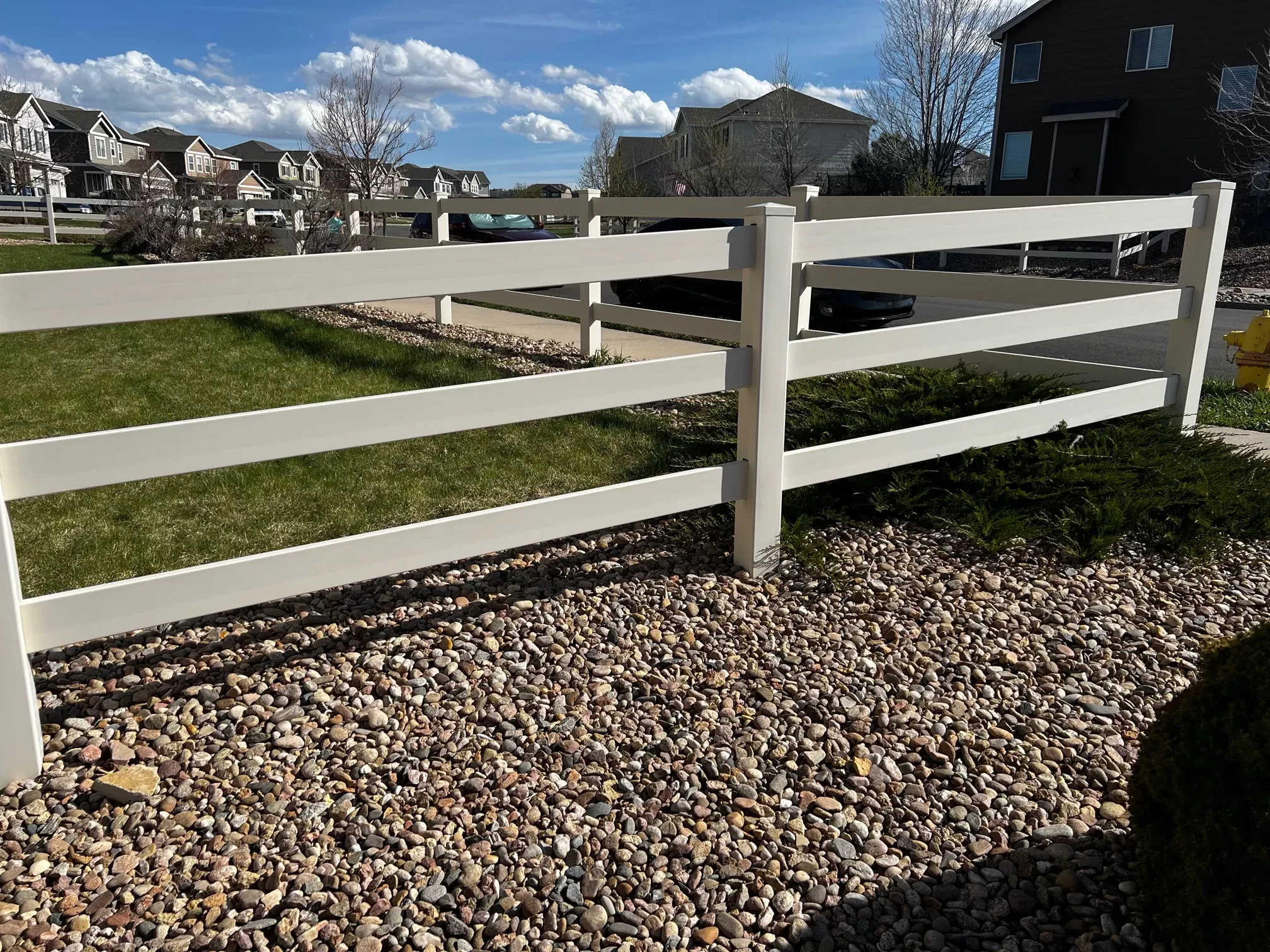
White vinyl three-rail fence along a residential property line
An open rail system marks the edge and keeps the view. That is the least-closed end of the range.

That is the whole list, and it is deliberately short. This is standard residential fencing for suburban property lines. Ranch, horse, agricultural, and heavy commercial fencing are not part of this service, and we would rather tell you that here than halfway through a site visit.

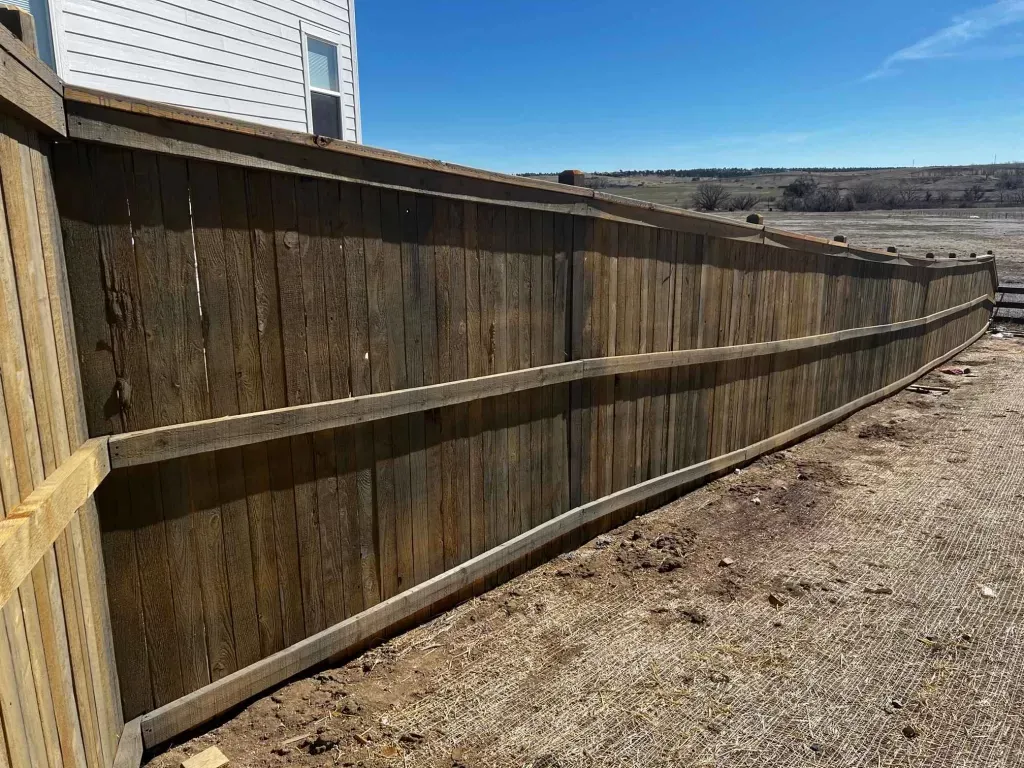
Back of a wood privacy fence with rails and posts following a residential grade change
From behind, a fence is posts and rails. The grade decides whether the run steps or follows.

Posts Carry the Whole Fence, and Open Yards Test Them

Almost every fence failure anyone calls about is a post failure wearing a panel. The visible parts are light and replaceable; the supports are what the weather actually works on, and on the open, rolling ground around here they get a fair amount of weather.

Two forces do most of it. Wind, because a solid privacy run is a sail and a yard without much between it and the horizon gives that sail a lot to work with. And freeze-thaw, because at roughly 5,900 feet the ground goes through repeated cycles that move anything set in it and punish water that has been allowed to collect around a support. Footing depth and post spacing follow the system and the site rather than a default, and keeping water away from the base is part of the layout rather than an afterthought.

Changing ground adds the third decision. A run crossing a grade either steps down in defined increments or follows the slope continuously, and the two look completely different when they are finished. That gets chosen deliberately with the material in mind, not discovered when the panels arrive. The run also should not dam a drainage route or bury an outlet, which is easy to check while the line is still marked out and awkward once it is built.

The parts people think about last

Gates and the Rest of the Yard Are Part of the Fence Decision

A fence is bought as a boundary and lived with as an access problem. The openings and the strip of ground on the inside face are where a run either works for years or annoys someone every weekend.

Width follows the widest thing that has to pass

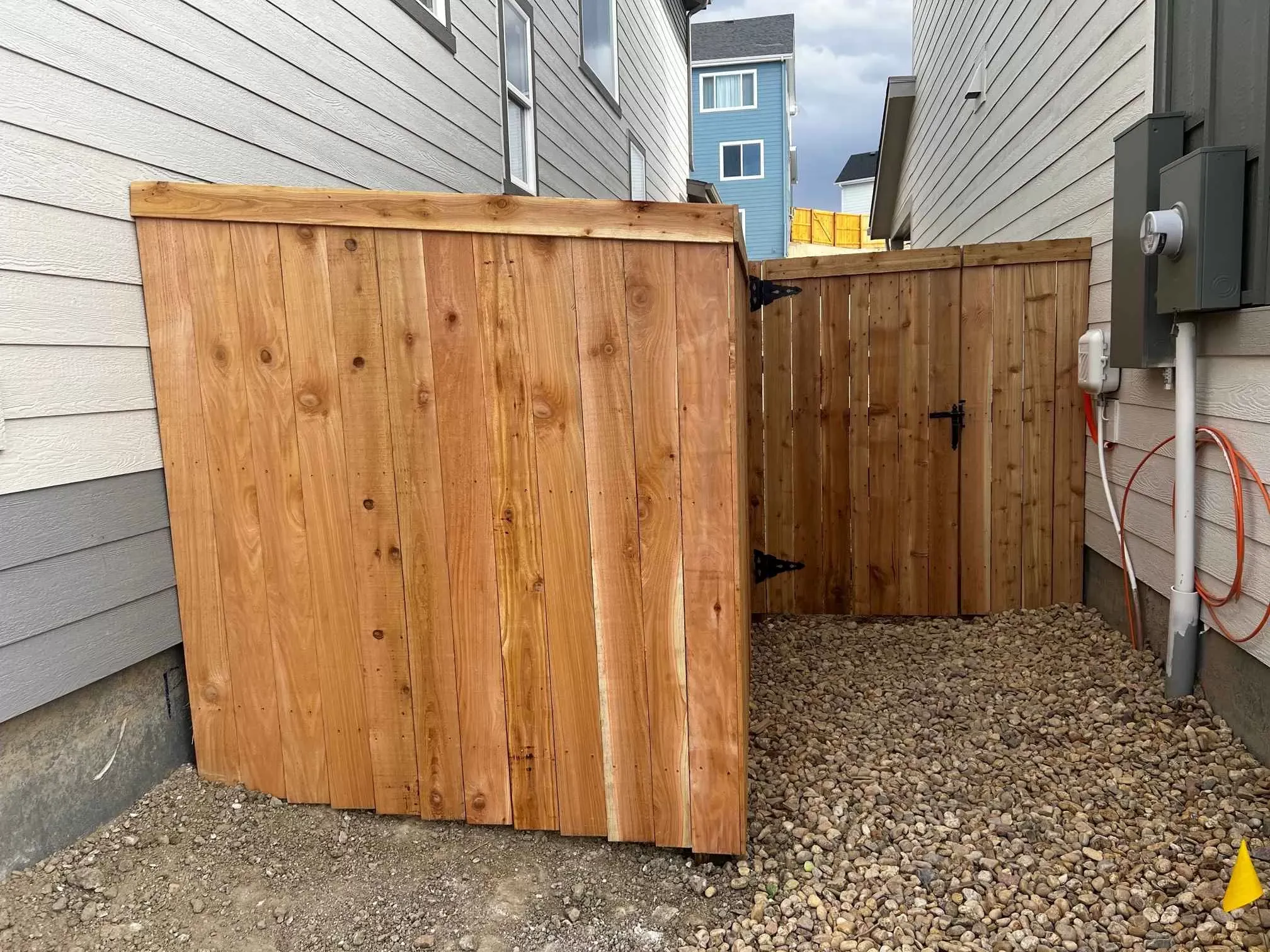
A standard gate handles people. It does not handle a mower, a wheelbarrow of soil, a pallet of pavers, or a mini excavator. If any future work on the yard needs to reach the back, that determines the width of at least one opening, and it is far cheaper to build it now than to take a panel out later.

Swing, hardware, and ground clearance

Which way a gate opens is set by what is behind it and where the ground falls. Clearance under the leaf has to allow for a slope, for snow, and for a bit of seasonal ground movement, and hardware has to be sized for a gate that will be swung several times a day for years.

What happens on the inside face

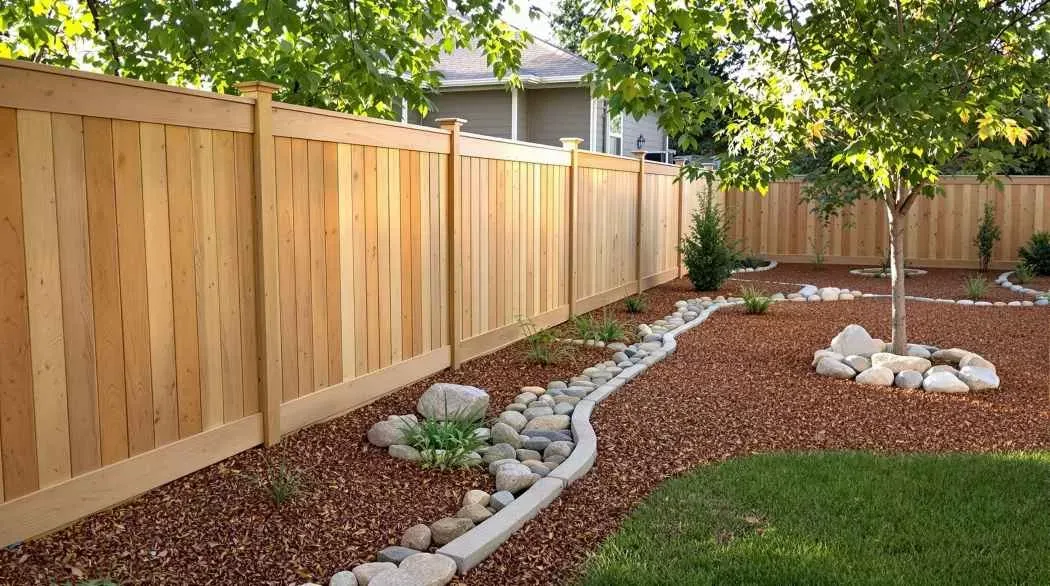
The strip along a fence is the part of a yard most often left unresolved. Bed edges, rock, turf, and irrigation heads all want a defined relationship to the line so the fence finishes the yard rather than leaving a channel nobody can mow or reach.

A fence is also about as visible as an exterior change gets, so where an association or design committee reviews such things, and around here that is common, a fence is almost always on their list. Reviewers want specifics: material, color or finish, height, where the gates go, and the line the run will follow. We assemble exactly that and check what your particular community expects to receive. Then the timing is out of everyone\'s hands but theirs, which we allow for in the schedule instead of assuming a quick turnaround.

Length of run, chosen system, gate count and widths, how much grade the line has to cross, removal of anything already there, equipment access, and whatever the applicable rules demand are what actually move a fence estimate. Every one of those is read off the property, which is the reason the site visit comes before the number.

Cedar privacy fence panels with a hinged wood gate installed between two homes
A side-yard opening is the only route to the back once the run is closed. Its width is a decision, not a default.
Wood privacy fence beside decorative rock, mulch beds, and lawn in a finished backyard
No leftover channel along the base. Bed edges, rock, and lawn were given a defined relationship to the line.

Fence Questions from Parker Homeowners

Do I need a permit to put up a fence in Parker?

That depends on two things, and the second one surprises people. Height is the obvious one: a fence over six feet requires a building permit inside the Town of Parker. The other is whether the Town of Parker is your permitting authority at all, because plenty of Parker-address properties sit outside town limits and answer to Douglas County instead, with metro-district and association requirements layered on. So the honest answer is that we establish the authority first, then apply that authority's rule. Where a specific scope is not spelled out in the town's published list, we ask the Parker Building Division rather than reading an exemption into a silence, and we do not forecast how any application will be decided.

How tall should my fence be?

We are not going to answer that with a number, and you should be wary of a contractor who does. The six-foot figure people repeat around here is a Town of Parker permit threshold, not a recommendation, and it says nothing about what suits your property. Your association or metro district may set a different limit than the government does, and where they differ the stricter one is the one you have to live with. What the height should be comes from what the fence is for, what it is screening, how the ground moves along the run, and what your community actually allows.

Who owns the fence between two yards?

That is a property and agreement question rather than a construction one, and it is not ours to settle. Our part is narrower: we build to the line the property owner directs us to, document where the fence was set and which way it faces, and keep the work on the side agreed. Where a run is shared, having the arrangement clear in advance saves a great deal of awkwardness, because a fence is a permanent object sitting on a boundary two households have to look at.

Can you replace part of a fence instead of the whole run?

Sometimes, and the answer comes from what actually failed. A single damaged panel is a repair. Posts leaning consistently along a stretch means the failure is below grade, and replacing the visible parts on top of failing supports buys a season at most. We walk the run and look at the posts before recommending anything, because the honest scope is usually either much smaller or much larger than it looks from the patio.

Do you install ranch or horse fencing?

No. This is standard residential fencing: wood privacy, vinyl, and wood rail systems with gates, built for suburban property lines. Ranch, horse, agricultural, and heavy commercial fencing are not part of this service, and we would rather say so plainly than take on work outside what we do well.

Should the fence go in before or after the rest of the landscape?

It depends on one practical thing: whether anything still has to get into the yard. A fence closes access, and if soil, base material, paving, or equipment still needs to reach the back, either the fence waits or the gate plan has to be generous enough to let the work through. On the other hand, a boundary settled early gives everything else a fixed edge to design against. We would rather sequence it around the actual remaining work than apply a rule.

Start With the Property Line, Not the Panel

Tell us where the boundary runs, what the fence has to do, and which community the property is in. We will confirm the jurisdiction, walk the line, and scope standard residential fencing that fits it.