Custom Landscapes by Design logo
Pop-up sprinkler distributing water across lawn and nearby plants

Sprinkler and Drip Systems Designed Around Your Water District

Parker Irrigation System Installation

An irrigation system here is designed around a calendar as much as a landscape. We start by establishing which district actually serves your address and what its schedule allows, then build zones that can do their job inside those hours.

  • New sprinkler and drip systems, plus rework of existing ones
  • Zones sized to finish inside the watering days that apply to you
  • Free on-site irrigation estimates across the Parker area

Get a Parker Irrigation Estimate

Tell us what you are watering now and where the dry spots or puddles show up.

The mailing address does not decide this

Find Out Who Delivers Your Water First

A Parker address can be served by any of several districts, and they do not share a rulebook. Designing a system against the wrong one produces a schedule you cannot legally run, so this is genuinely the first question, ahead of head counts and product choices.

Parker Water and Sanitation District

The principal provider for the Town of Parker and a number of surrounding communities. PWSD publishes the watering rules most Parker homeowners are working under, and it says plainly that it does not serve every resident of the town.
Stonegate Village Metropolitan District

Stonegate sits in unincorporated Douglas County and runs its own potable water and wastewater system for the community. Its watering rules are its own, and we do not restate them here or assume the PWSD schedule carries over.

Pinery Water and Wastewater District

The Pinery, Pradera, and several neighboring communities in northeastern Douglas County are served by Pinery Water. Same principle: their requirements come from their district, not from the town or from PWSD.

Your water bill answers this in about ten seconds, and it is worth checking before you read another word about schedules.

For properties served by PWSD

The PWSD Watering Schedule, in Plain Terms

Parker Water and Sanitation District publishes the rules most homeowners in town are working under. Everything below is a PWSD requirement for PWSD-served properties, and the district remains the authority on its own current terms.

Nothing between 10 a.m. and 6 p.m.

PWSD prohibits watering during that window. It is the stretch when the most water is lost to sun and wind, which means the practical watering day is early morning and evening, and every runtime has to fit inside it.

Three days, set by your address

The district publishes a recommended three-day-a-week schedule split by address parity: even-numbered addresses on Sunday, Tuesday, and Thursday, odd-numbered on Monday, Wednesday, and Saturday. Multi-family, homeowners association, and commercial properties follow the Monday, Wednesday, and Saturday pattern.

Runoff and overspray count as waste

Water running down the gutter, spray landing on pavement, and broken or misaligned heads are all treated as water waste, and the district acts on reports of it. That makes head placement and arc adjustment a compliance question, not only an efficiency one.

Add those together and the shape of the problem appears: three watering days, a closed middle of the day, and a penalty for putting water anywhere it does not belong. A system designed for unlimited watering will not perform inside that, which is what the next section is about.

Designing Zones for a Three-Day Window

Zoning is where a schedule constraint turns into a design decision. Every zone has to complete its watering inside the hours available on its days, which puts a real ceiling on how much area one zone can carry.

Cycle and soak instead of one long run

Short repeated cycles with a soak gap between them let water enter the ground instead of running across it. The total minutes can be the same, but the amount that reaches a root zone is not, and nothing ends up in the gutter.

Lawn on spray, beds on drip

Grass and shrubs want different amounts of water on different intervals, so putting them on the same zone guarantees one of them is wrong. Separating them lets each run its own schedule and makes it far easier to dial back a lawn without starving a tree.

Group by exposure, not by convenience

A strip that bakes in afternoon sun and a bed in the shade of the house behave nothing alike. Grouping by how much sun and wind an area takes means the zone that needs more can get it without overwatering everything else on the same valve.

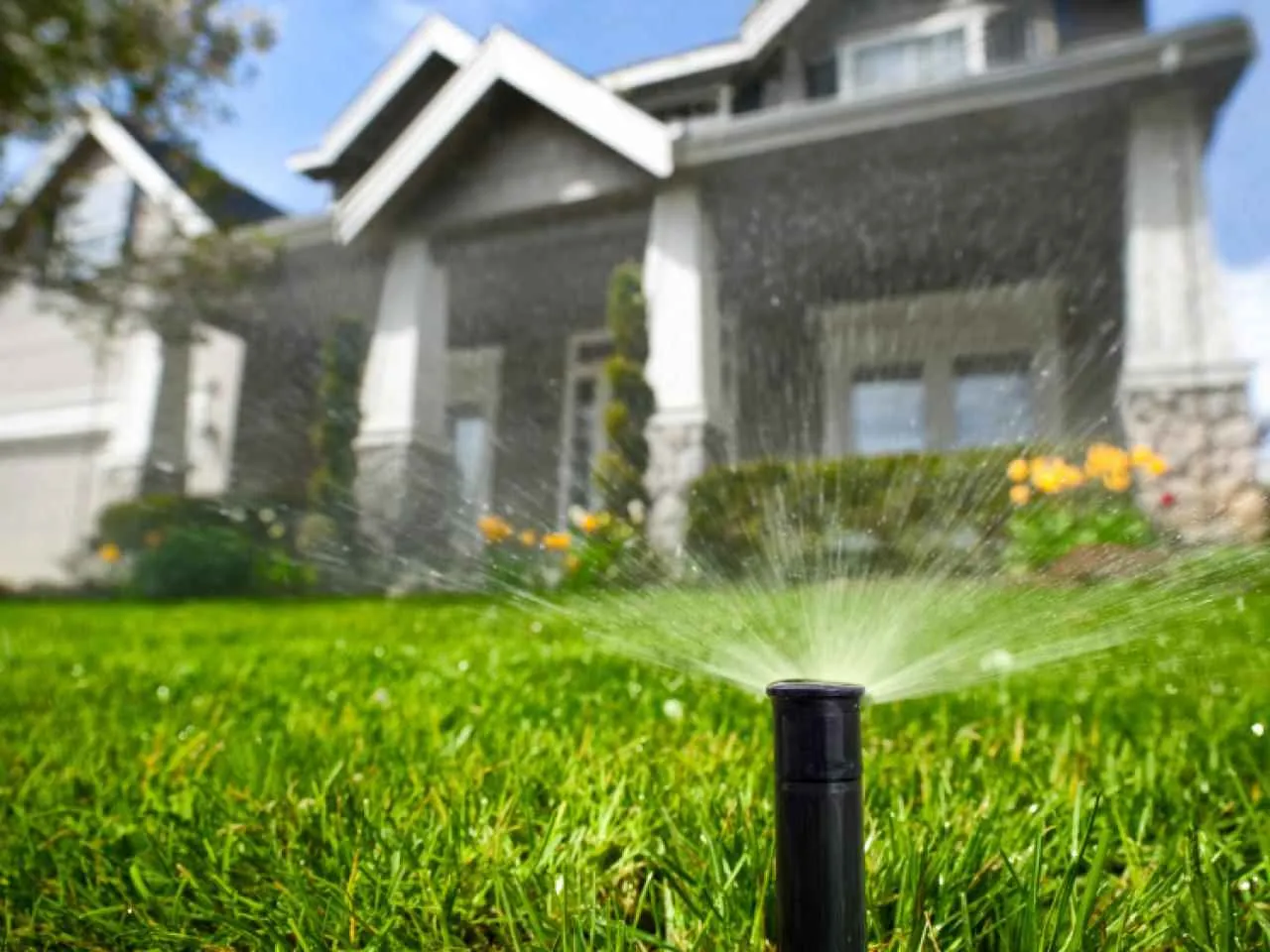
Pop-up spray head watering a residential lawn near planting beds
Lawn areas and planted beds want different amounts of water, which is why they rarely belong on the same zone.

Runoff, Overspray, and What Counts as Waste

Water that leaves the property or lands on concrete is the easiest thing to lose and the easiest thing to fix. It is also the category a district is most likely to hear about from a neighbor, so it is worth getting right at installation rather than after a notice arrives.

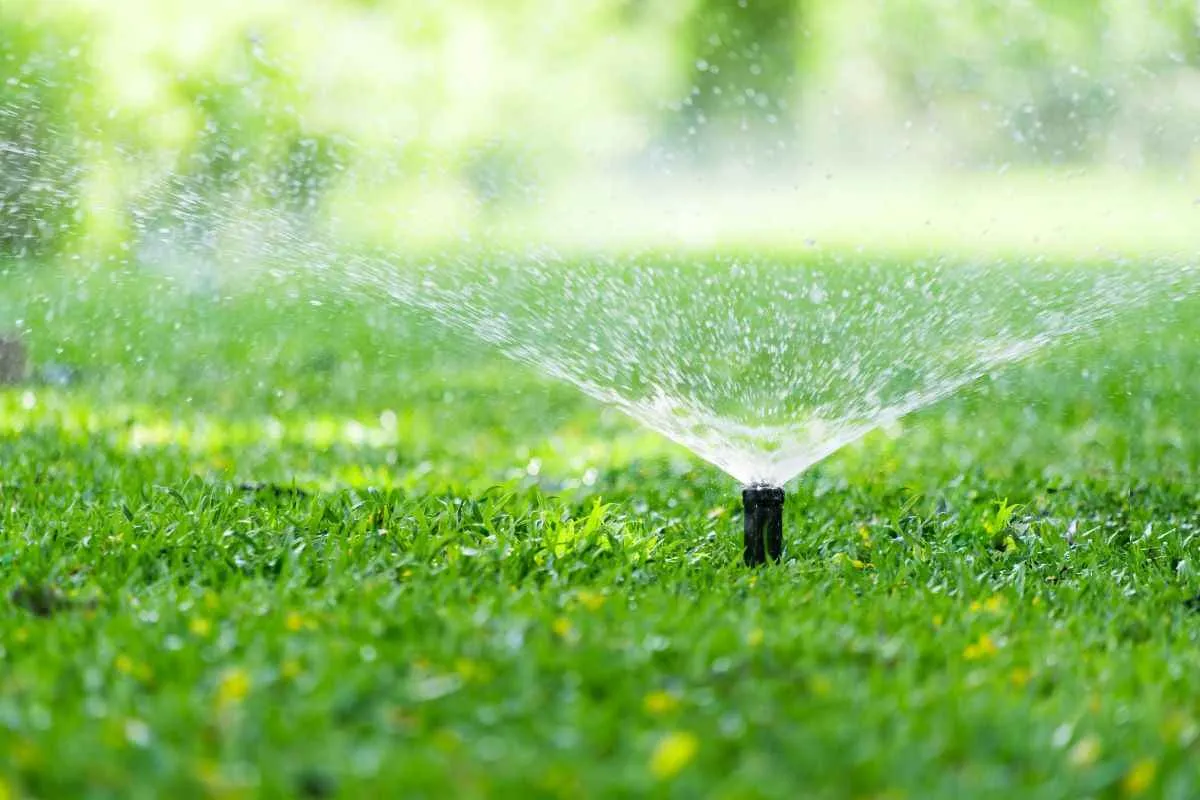
Low pop-up spray head distributing water across a lawn
Spacing, arcs, and the edge of the lawn Heads are spaced so their patterns overlap properly, then each arc is set against the actual edge of the planted area. Getting this wrong produces both a dry corner and a wet sidewalk from the same zone, which is why we run every zone and watch it before calling the job finished. A visible arc is the easiest way to see whether a head is watering the lawn or the sidewalk.
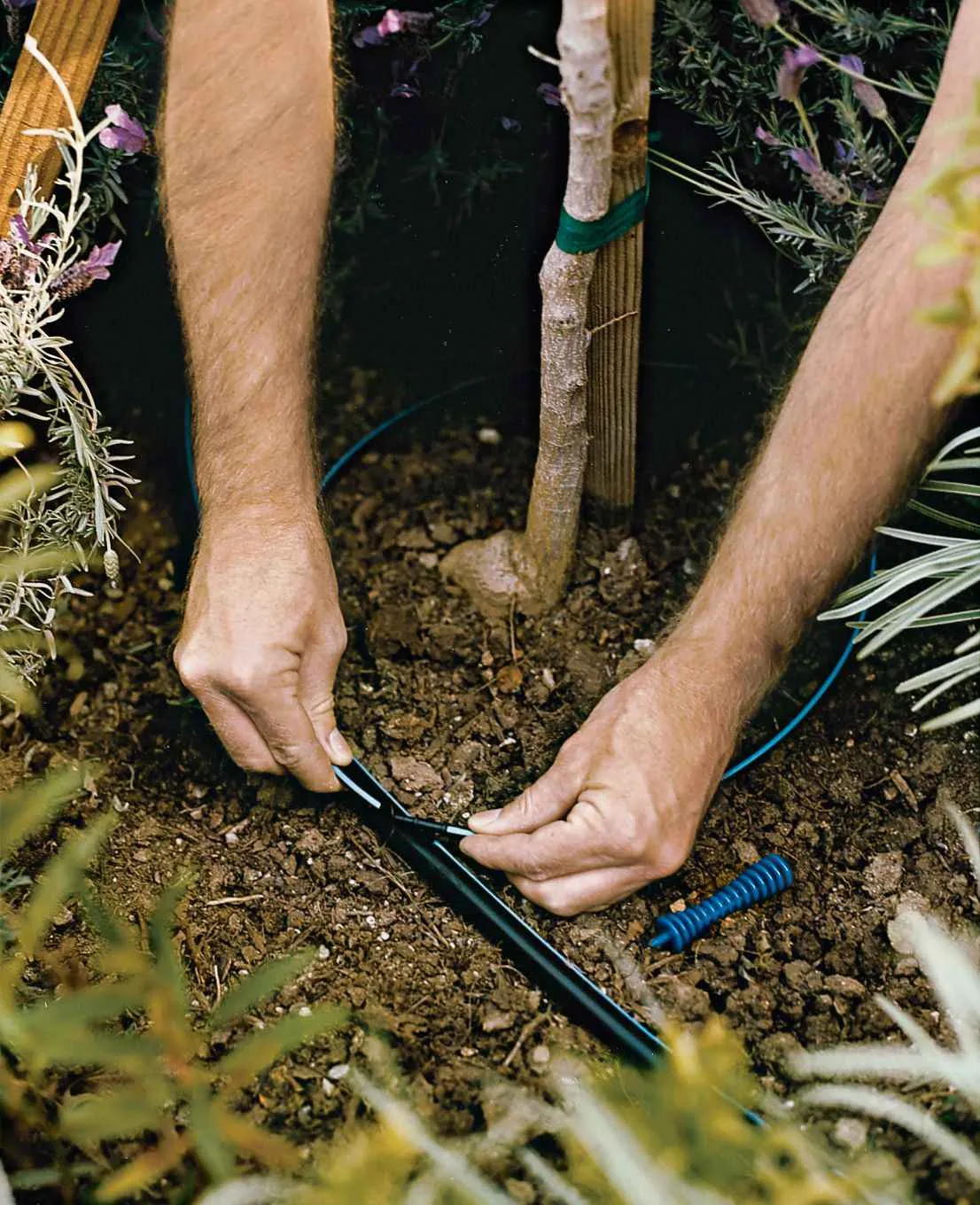
Hands connecting drip tubing beside a young tree in a planting bed
Drip puts the water where the roots are Emitters and flexible tubing deliver water at the root zone of trees, shrubs, and perennials instead of throwing it through dry air. Almost nothing is lost to wind or evaporation, there is no overspray to control, and the emitters get adjusted as the planting fills in and its needs change. Water delivered at the root zone loses far less to wind and sun than the same water thrown through the air.

Installing a System in an Established Parker Yard

Most of what we install goes into a yard that already exists, with a lawn, beds, a patio, and a fence line already in place. That changes the sequence, because the goal is a finished system and a yard that does not look like it was excavated.

  1. 01

    Confirm the provider and the water source

    Before a single head is placed we establish who serves the address, what the schedule allows, and what static pressure and flow the tap actually delivers. Every design decision downstream depends on those numbers.

  2. 02

    Map the yard as it will be, not as it is

    Lawn areas, beds, trees, hardscape edges, and anything planned for later all go on the plan. Sleeving under a future patio or walk costs almost nothing during the dig and is a demolition job afterward.

  3. 03

    Divide zones that can finish inside the window

    Zones are grouped so each one can complete its cycles within the hours available on its watering days, then trenched, piped, and fitted with heads or drip appropriate to what that zone is feeding.

  4. 04

    Run it, watch it, and adjust

    Every zone is run and observed: coverage checked, arcs corrected, dry corners found, overspray onto hardscape eliminated. Then the controller is programmed to the applicable schedule and the whole thing is walked with you.

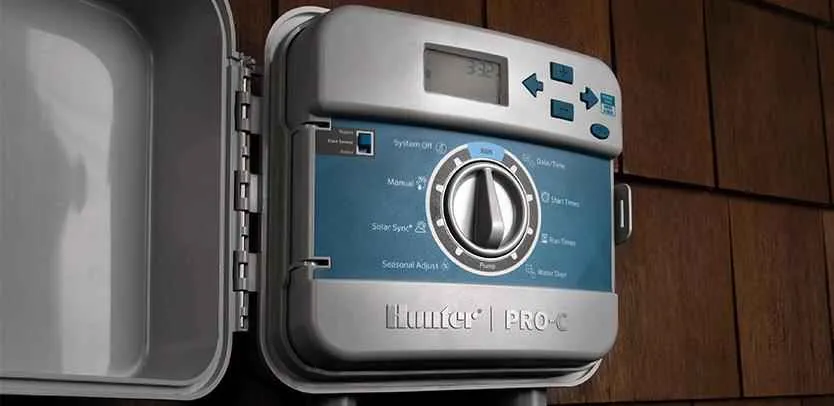
Wall-mounted irrigation controller with timer and seasonal-adjustment controls
The controller is where a provider schedule stops being a rule on a website and becomes what your yard does.

The Controller Is Where the Schedule Actually Lives

A district publishes days and hours; the controller is what turns them into what your yard does at 5:40 on a Tuesday morning. We program it to the schedule that applies at your address, with each zone given its own runtime and cycle pattern rather than one setting applied across the board.

It is also not a set-and-forget device, whatever the box says. A May schedule is wrong by July and wrong again in September, and a controller left on spring settings through a hot August is one of the most common causes of both a large bill and a soggy corner. Seasonal adjustment takes a few minutes and saves more water than most equipment upgrades.

Winter is its own step. Colorado freezes hard enough that a system left charged will split pipe and crack backflow components, so blowing the lines out before the first sustained freeze is routine annual work rather than an upsell.

Watering and Irrigation Questions in Parker

What days and hours can I water in Parker?

It depends on who supplies your water, so start there. For properties served by Parker Water and Sanitation District, watering is prohibited between 10 a.m. and 6 p.m., and the district recommends a three-day-a-week schedule: even-numbered addresses on Sunday, Tuesday, and Thursday, odd-numbered addresses on Monday, Wednesday, and Saturday, with multi-family, association, and commercial properties on Monday, Wednesday, and Saturday. Those are PWSD rules for PWSD-served properties, and the district is the authority on its own current requirements.

My water comes from Stonegate or Pinery Water. Does the same schedule apply?

Not necessarily, and we will not tell you it does. Stonegate Village Metropolitan District and Pinery Water and Wastewater District are separate providers that set their own rules for their own customers. We have not researched their published schedules, so nothing on this page states them. When we design a system for an address they serve, we work from that district's current requirements directly rather than assuming the PWSD pattern carries across.

Why cycle and soak instead of one long run?

Because water applied faster than the ground can take it becomes runoff, and runoff is both wasted water and a rule problem. Splitting a zone's runtime into two or three shorter cycles with a gap between them lets each application soak in before the next one starts. It is more effective at the same total minutes, and it keeps water off the sidewalk.

Can I water a brand-new lawn on the normal schedule?

New sod and seed need more frequent water than an established lawn, which is why PWSD requires a permit to water outside its standard guidelines while new sod or seed is establishing. That is a PWSD requirement for PWSD-served properties, and it is worth sorting out before the sod is delivered rather than after. If a different district serves your address, ask them what their establishment provisions are.

What actually counts as water waste?

The practical list is water leaving your property or landing where nothing is growing: runoff into the gutter, spray across a driveway or walk, a head that has been clipped by a mower and is now watering a fence, and leaks that go unnoticed because they only run at five in the morning. Most of it is fixable with head placement, arc adjustment, and a walk-through of the system while it is actually running.

Can an existing system be reworked instead of replaced?

Often, yes. Zones that were laid out for a lawn that has since become planting beds, heads throwing water onto new hardscape, and controllers still programmed for a schedule nobody uses are all common and all correctable. We evaluate what is in the ground, tell you honestly what is worth keeping, and rework the parts that are fighting the current layout.

Build a Parker System Around the Rules That Apply to You

Tell us who supplies your water and what the yard is doing now. We will check pressure and coverage on site and lay out a system that works inside your district's schedule.