Custom Landscapes by Design logo
Stone steps through boulders and planting illuminated by visible landscape-lighting fixtures at night

Low-Voltage Lighting for Paths, Steps, and Outdoor Living

Landscape Lighting Design and Installation

For homes in our Colorado service area, landscape lighting should help people move, gather, and understand the yard after dark. We plan low-voltage fixtures around circulation, grade changes, entries, planting, patios, walls, and focal points so the result feels useful and composed without glare or over-lighting.

  • Path, step, entry, and outdoor-living lighting
  • Selective accents for trees, planting, walls, and landscape features
  • Fixture placement coordinated with new landscape construction

Request a Landscape Lighting Estimate

Tell us which routes, outdoor areas, and landscape features you want to use or see after dark.

Begin with movement

Path, Step, Entry, and Outdoor-Living Landscape Lighting

Follow the evening route through the yard before deciding where accent light belongs. Decoration is only one part of a lighting plan. The first job is to make the sequence from door to path, step, patio, gate, or gathering area easier to understand. Once that route is established, accent light can add depth and focus without competing with circulation.

  1. 01

    Path and walkway lighting

    Place light where a route begins, turns, narrows, or meets another surface. The goal is to reveal the walking line without creating a row of bright points that dominates the yard.

  2. 02

    Step and grade-change lighting

    Elevation changes need enough contrast to read after dark. Fixture position and aiming should help define treads, landings, wall edges, and the next change in level.

  3. 03

    Patio and outdoor-living lighting

    Evening gathering areas need usable ambient light and visible routes back to the house. A fire feature, wall, table, or planting accent can become a focal point without lighting every surface equally.

  4. 04

    Entry and transition lighting

    Arrival lighting should connect the approach, front walk, planting, and door. It works best when those layers feel intentional together rather than competing for attention.

New paver patios and walks or concrete routes give the lighting plan clear edges and transitions to follow.

Create depth after dark

Layered Landscape Lighting for Entries, Planting, and Outdoor Rooms

Build layers instead of turning up brightness. A layered plan gives different jobs to different fixtures. One group may define a route, another may reveal a tree or planting composition, and another may orient people toward an entry or patio. The spaces left darker are part of the design because they separate those layers.

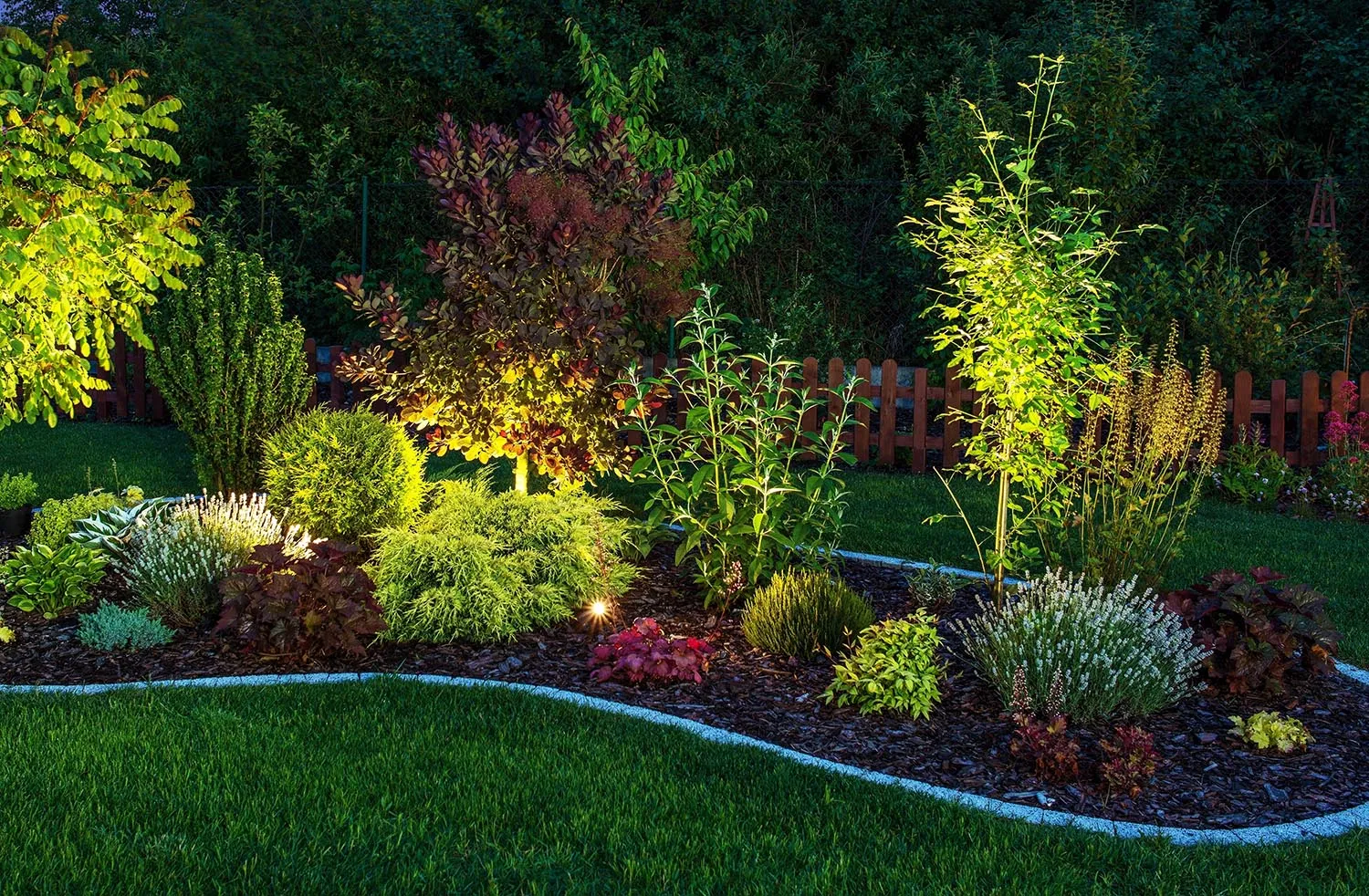
Accent fixtures illuminating trees, shrubs, and perennials in a nighttime planting bed
Selective pools of light reveal planting layers while darker areas preserve depth.
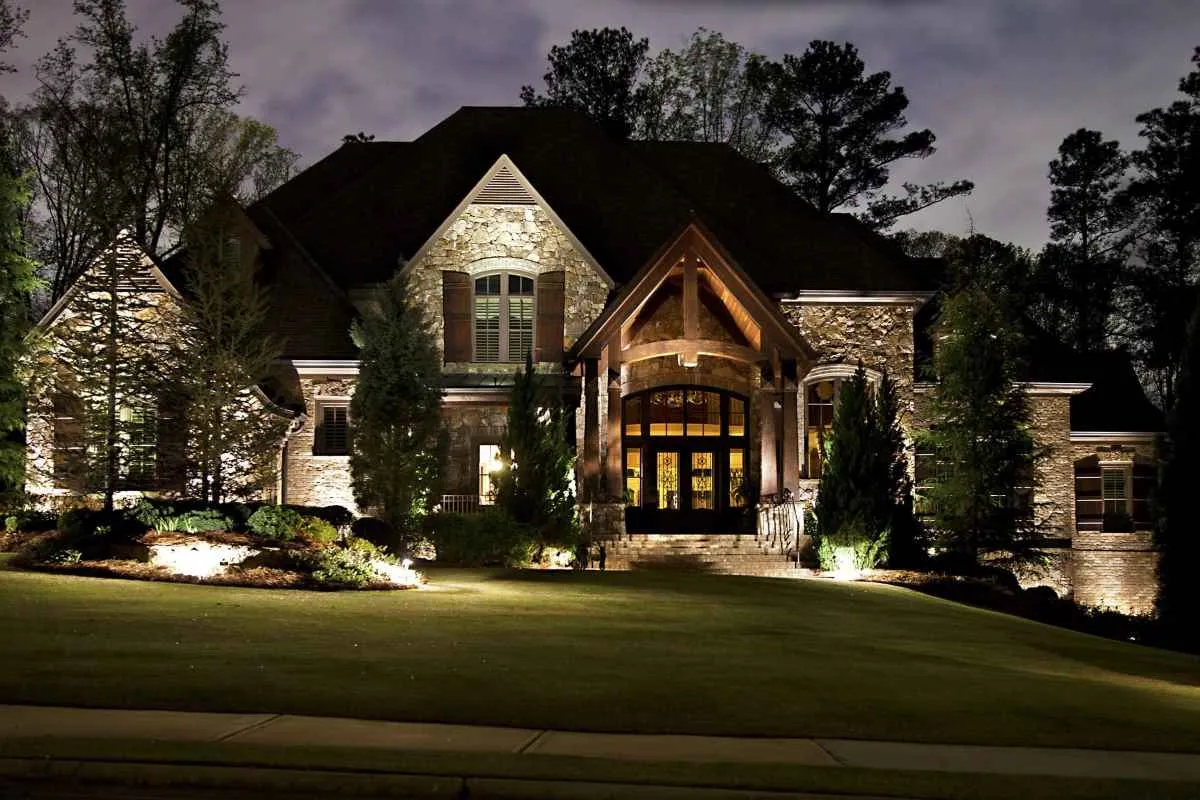
Stone entry and front landscape illuminated from multiple directions at night

Layered Entry and Arrival Lighting

Organize the arrival by connecting the approach, door, planting, and architecture with entry lighting. Several subtle layers usually read more naturally than one source trying to illuminate the entire front landscape.

Comfort depends on restraint

Glare Control and Comfortable Outdoor Lighting

Let darkness do some of the work. More light can make a landscape harder to read when fixtures shine into someone’s eyes, bright surfaces overpower nearby planting, or every feature receives the same emphasis. Good aiming keeps the source as quiet as practical while putting light on the surface or feature that needs it.

Light-colored walls and paving reflect more light than dark stone, mulch, or foliage. Fixture output and position therefore need to respond to the actual material. A plan that looks balanced in one section of the yard may feel harsh against a pale wall or disappear inside dense planting.

Outdoor rooms also benefit from hierarchy. Around a built-in fire-pit area, the flame can remain the focal point while lower light helps define steps, seating walls, and the route back to the house.

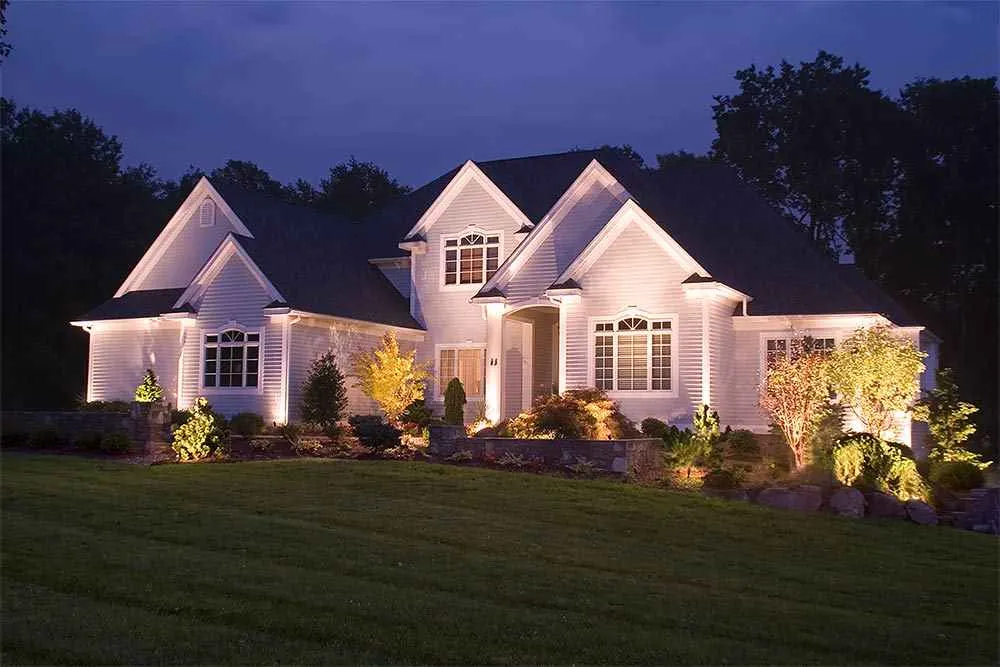
Front entry, trees, shrubs, and a low wall illuminated across a white facade at night
Light surfaces, plants, and entry points need different output and aiming to remain readable as one composition.

Put lighting into the construction sequence

Landscape Lighting Installation and Construction Coordination

Low-voltage lighting is easier to coordinate before finished landscape layers limit access. The plan should identify cable routes, fixture positions, and serviceable equipment locations while the hardscape, grade, walls, planting, and irrigation are still being resolved.

  1. Step 1

    Read the plan in daylight

    Mark the routes, steps, entries, walls, trees, planting, patio edges, and grade changes that need to remain understandable at night.

  2. Step 2

    Choose the nighttime hierarchy

    Decide which elements guide movement, which become focal points, and which should remain quiet so the yard keeps contrast and depth.

  3. Step 3

    Plan concealed routes and access

    Coordinate low-voltage cable paths, fixture positions, and transformer access before paving, wall caps, rock, mulch, and dense planting close the work area.

  4. Step 4

    Aim and review after dark

    Operate the installed system at night, then refine aiming and output so the intended routes and features are clear without unnecessary glare.

Coordinate Lighting with Irrigation, Planting, and Hardscape

Fixture positions should account for irrigation spray, drip routes, mature plant size, mulch or rock depth, wall edges, and maintenance access. Tree and planting work and retaining-wall planning help establish those relationships before the final aiming review.

Keep the lighting plan adjustable as the landscape grows

Long-Term Landscape Lighting Care and Adjustment

Plants change the lighting pattern. A small tree can become a major screen, shrubs can hide fixtures, and mulch or rock can shift around a low fixture. Regular review keeps the visible result aligned with the original purpose.

Keep fixtures clear

Remove leaves, mulch, soil, snow residue, and plant growth that blocks a lens, traps the fixture, or changes the intended beam.

Review aiming

Check the yard after dark when plants grow, furniture moves, or a route changes. A small aiming correction can restore the intended focus.

Preserve access

Keep fixtures and serviceable equipment reachable without damaging planting, paving, or irrigation components.

A lighting estimate is shaped by the number and type of areas being lit, route length, grade changes, fixture placement, access, existing landscape constraints, transformer and cable planning, hardscape coordination, and the nighttime aiming review. We define those factors from the property rather than promising a one-size-fits-all package.

Lighting can be coordinated with the broader landscape scope when it is one part of a new outdoor-living project.

Landscape Lighting Questions

What kind of landscape lighting do you install?

The preserved service record confirms professional low-voltage landscape-lighting design and installation. The page scope includes paths, steps, entries, planting accents, architectural accents, and outdoor-living areas coordinated as one residential plan.

How many fixtures does a yard need?

There is no useful fixture count without a plan. The answer depends on the routes, grade changes, patio use, planting, focal points, property scale, fixture output, and the amount of darkness the design intentionally keeps.

Can lighting help with steps and uneven grades?

Yes. Lighting can make treads, landings, wall edges, and changes in elevation easier to read after dark. Placement and aiming matter because a bright fixture in the viewer’s line of sight can reduce visibility instead of improving it.

Do you light trees and planting beds?

Yes, where the composition benefits from it. Selective accents can reveal tree form, foliage, boulders, or layered planting. We avoid treating every plant as an equal focal point because the darker spaces between features create visual depth.

When should lighting be planned during a landscape project?

Plan it with the hardscape, grade, planting, irrigation, and outdoor-living layout. That allows cable routes, fixture locations, and access to be coordinated before finished surfaces and dense planting make changes more disruptive.

What ongoing care does a lighting system need?

Keep lenses and fixture openings clear, remove leaves or mulch that cover fixtures, check that plant growth has not blocked or redirected the light, and review aiming after landscape or grade changes. Damaged components or unusual operation should be evaluated before continued use.

Plan a Complete Landscape Lighting Project

See the landscape as a complete evening space. Show us the routes, grade changes, patios, entries, and planting that matter after dark. We will plan a low-voltage lighting scope around how the yard needs to work and feel.