Keep unlike water demand apart
Hydrozoning is required by the CAB initiatives adopted August 26, 2020. High- and moderate-water plantings cannot share one irrigation zone simply because they sit beside the same valve box.


A Published Specification on Paper, a Measured Result at the Meter
An irrigation plan here is evaluated twice: first against the Sterling Ranch CAB's published design requirements, then through the property's separate outdoor meter after the system begins operating. We turn that specification into zones, equipment, and schedules for the actual lot without assuming one controller, pressure, or layout fits every home.
Share the property address, what will be planted, and whether an irrigation system already serves the lot.
Design from the governing document
Adopted on August 26, 2020, the Sterling Ranch Community Authority Board's Water Demand Management Initiatives describe how an irrigation plan is organized, which delivery methods go where, how coverage is evaluated, and what equipment belongs on the submittal. Because those initiatives remain amendable, the version in force when the work is designed controls.
The recorded Master Declaration, dated September 28, 2015, classifies a sprinkler or irrigation system as an Improvement and requires prior written Design Review Committee approval. It also leaves compliance with law and required government approvals to the owner. Community review and Douglas County requirements are therefore separate checks; neither is described as replacing the other.

Demand and delivery are separate decisions
Hydrozoning is required by the CAB initiatives adopted August 26, 2020. High- and moderate-water plantings cannot share one irrigation zone simply because they sit beside the same valve box.
Under that same adopted document, overhead irrigation is generally reserved for turf grass and native species. Trees, shrubs, perennials, groundcovers, and every shrub bed use drip technology.
Design and installation share a 0.75 distribution-uniformity target in the August 26, 2020 specification. The drawing proposes performance; operating the finished zone shows whether it was achieved.
Geometry changes the delivery method
In the CAB initiatives adopted August 26, 2020, overhead irrigation is prohibited in areas less than 8 feet wide and on slopes steeper than 4:1; those areas use drip or subsurface delivery. The document also calls for tree lawns to be irrigated below the surface.
Those figures do not establish the condition of any lot. Width, grade, planting, exposure, the Established Drainage Pattern, and available pressure are measured for the property before the zone method is chosen. Irrigation should follow that evidence instead of using a familiar head layout everywhere.
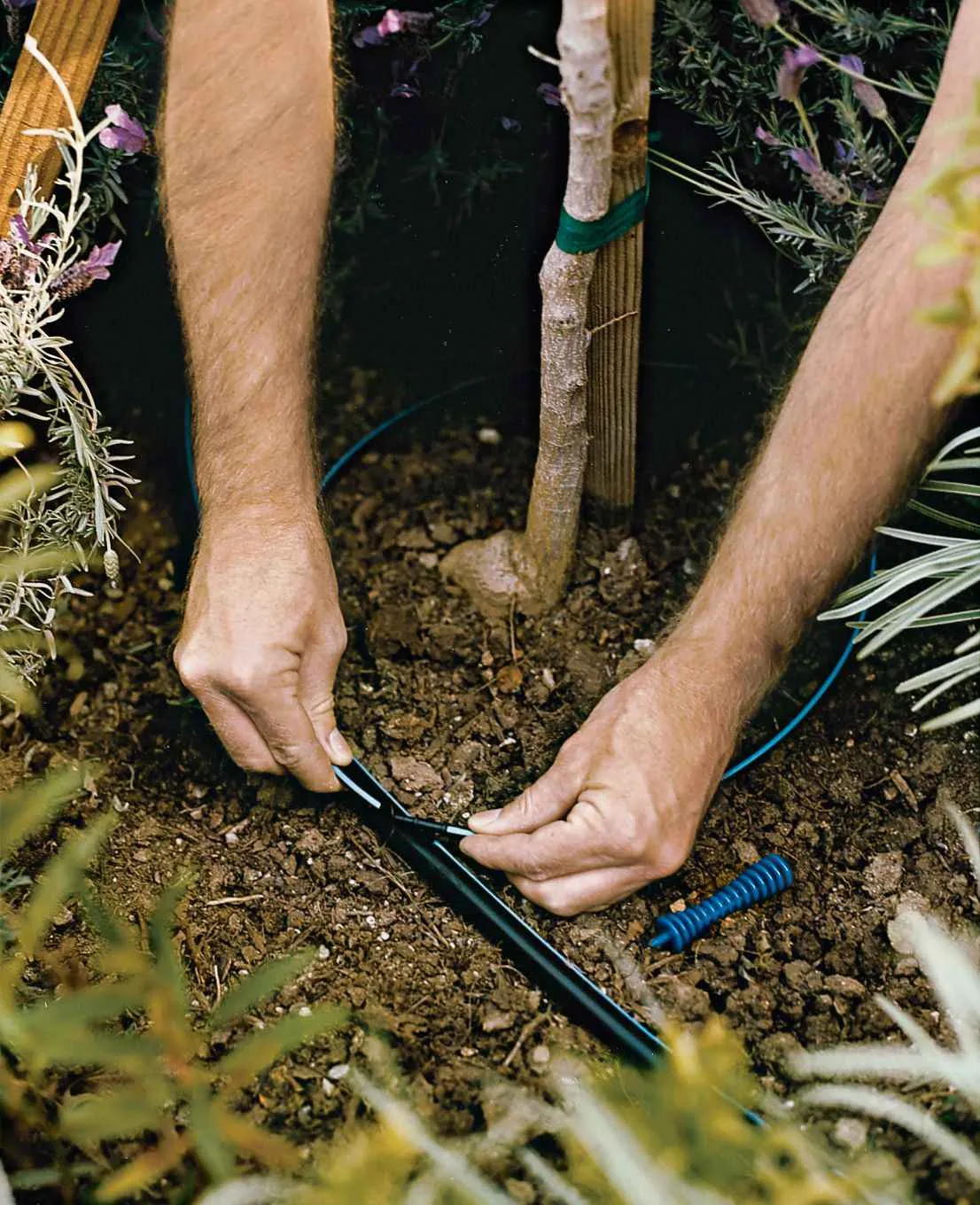
The schedule of parts is not generic
A compliant plan is not simply a conventional sprinkler layout with a different runtime. Dated August 26, 2020, the CAB specification names delivery, spacing, pressure, filtration, and valve details that have to work as a system.
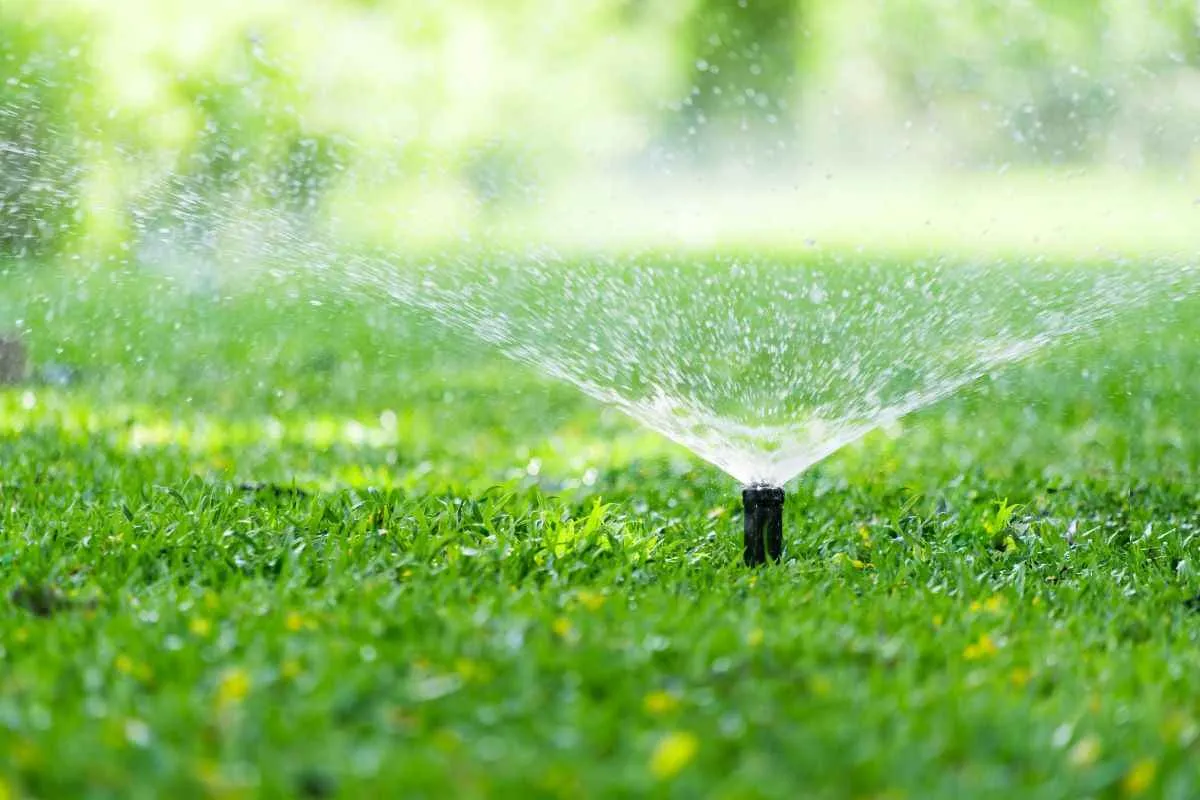
Traditional fixed- and variable-arc spray nozzles are ruled out by the August 26, 2020 initiatives. Pop-up spray heads also cannot share a zone with rotator or rotor heads.
That adopted specification calls for head-to-head coverage, spacing no greater than 90% of maximum spray radius, pop-ups at least 6 inches high, and sprinkler bodies with pressure-regulating stems and check valves.
For shrub-bed drip, the August 26, 2020 document specifies pressure-compensating emitters, filtration of at least 200 mesh, and valve pressure regulated between 30 and 40 psi.
Named on the plan, verified when the plan is built
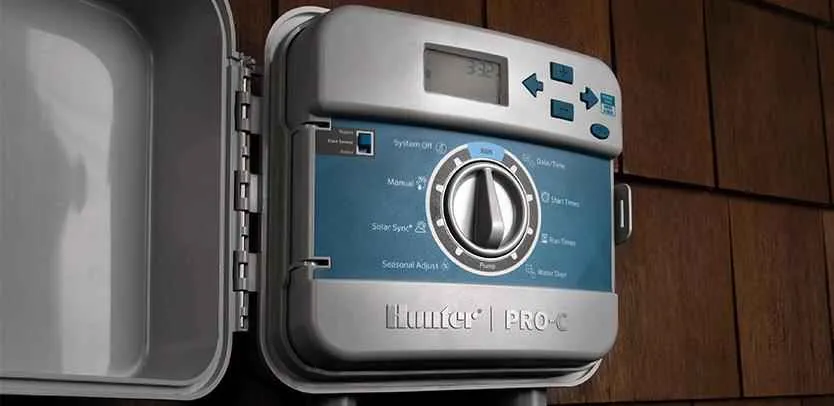
Controller provisions in the CAB initiatives adopted August 26, 2020 mandate a WaterSense-certified smart controller compatible with the Siemens Desigo CC system. They call for weather- or soil-responsive operation, at least three programs with three start times each, and the controller model named on the plan.
That is a dated community requirement, not a universal product recommendation. The current CAB standard is checked before equipment is selected. The generic timer pictured here shows the kind of controls an operator adjusts; it is not evidence of an approved model, CAB compatibility, or a verified project location.
The same August 26, 2020 initiatives limit static service pressure to 60 psi and require two schedules at the controller: one for establishment and one for the permanent landscape, with both changing by season.
A number assigned to the property
Under the CAB framework adopted August 26, 2020, the annual outdoor budget is set by lot size. No more than 30% of that budget may serve the front yard and right-of-way, leaving the balance for the rear. Plant demand, hydrozones, and the landscape layout have to fit that property-specific number before runtimes are assigned.
Separate indoor and outdoor metering, described in CAB Rules adopted the same date, makes outdoor use visible as its own account of the yard. Usage beyond the budget moves into higher billing tiers, but no rate, threshold price, budget table, or calculation for a reader's property is reproduced on this page.
Routine turf watering is limited by the August 26, 2020 initiatives to three days per week, with spray irrigation prohibited from 10 a.m. to 6 p.m. between May 1 and September 30. The stated exceptions are the establishment period, new plant material on planting day, turf under heavy pedestrian use, and attended operation for installation, repair, or reasonable maintenance.
The CAB expressly describes those as standing waste-of-water rules rather than drought restrictions and reserves the right to add restrictions. Because no current-restrictions page established whether an additional measure is active on the design date, the CAB's current direction is confirmed before a schedule is built.
A separate first-season clock
A 45-day establishment period is defined by the CAB initiatives adopted August 26, 2020. It starts with the billing cycle in the installation month and runs through the following cycle. Water used during that period is billed at Tier 1 and excluded from the annual outdoor budget.
That exception does not turn one schedule into a permanent setting. Establishment and permanent schedules are posted separately and vary by season. Installation timing, current CAB terms, and the needs of the actual planting determine the handoff.
Wholesale and retail are different roles
In the documented provider structure, Dominion Water and Sanitation District provides wholesale water. Retail service for homes comes from the Sterling Ranch CAB, which administers the water-management framework residents use. Calling Dominion the provider without that distinction would assign the CAB's rules to the wrong body.
The Master Declaration recorded September 28, 2015 also says a private well requires written DRC approval and compliance with applicable law. A well is not presented here as a route around the CAB budget or review process.
Resolve the address-specific inputs before drawing
Properties within this master-planned Sterling Ranch community sit in unincorporated Douglas County, but that description does not make them interchangeable. Lot size, village or filing, planting, grade, pressure, exposure, existing equipment, and the current governing documents can all change the practical scope.
County irrigation-permit and backflow requirements were not verified from an opened source, so this page states no threshold or exemption. CAB registration is part of the adopted framework, but the document conflicts internally about whether it attaches to an individual or a company. Current government requirements, the responsible party's eligibility, and the CAB version in force are confirmed directly rather than inferred.
The plan needs enough information for the Design Review Committee to evaluate the irrigation Improvement before construction. For the August 26, 2020 CAB submittal framework, that includes hydrozones, delivery methods, equipment, pressure control, coverage, and the proposed WaterSense-certified controller named on the submittal. Before a package is prepared, the current document set and lot-specific landscape plan are checked. DRC review does not replace any government approval that applies to the project.
For sprinkler equipment, the CAB initiatives adopted August 26, 2020 say traditional fixed- and variable-arc spray nozzles are not allowed, and pop-up spray heads may not be combined on one zone with rotator or rotor heads. They also set coverage, spacing, pop-up-height, pressure-regulation, and check-valve criteria. Those are attributed CAB requirements, not a claim that one product is right for every property.
No. CAB initiatives adopted August 26, 2020 mandate a WaterSense-certified smart controller compatible with the Siemens Desigo CC system and specify at least three programs with three start times each, but that requirement is amendable. The eligible model is confirmed when the plan is prepared. Zone count follows the actual planting, delivery methods, exposure, pressure, flow, and lot layout; no universal zone count or controller model is promised here.
The CAB framework adopted August 26, 2020 assigns an annual outdoor budget by lot size and allows no more than 30% of that budget for the front yard and right-of-way, preserving the balance for the rear. That is a design constraint, not a calculation performed from page copy. The property’s current budget band and planned hydrozones are confirmed directly, and no rate, tier price, or budget table is reproduced here.
For establishment accounting, CAB initiatives adopted August 26, 2020 define the 45-day period as beginning with the billing cycle in the installation month and running through the next cycle; establishment water is billed at Tier 1 and excluded from the annual outdoor budget. The same document requires an establishment schedule and a permanent schedule at the controller, both changing by season. Current CAB terms and any added restrictions are confirmed before installation timing is set.
Wholesale supply comes from Dominion Water and Sanitation District. Retail billing for homes comes from the Sterling Ranch Community Authority Board, which administers the community water framework. That distinction matters because the CAB’s adopted requirements and the property’s outdoor meter are the immediate references for the irrigation plan.
No current-restrictions page established whether an extra or drought-stage restriction is active on July 22, 2026, so the CAB’s current direction must be checked rather than guessed. Douglas County irrigation-permit and backflow requirements were not verified from an opened source. An internal conflict in the adopted CAB document leaves unresolved whether professional registration attaches to an individual or a company, so the responsible party’s current eligibility must be confirmed directly. No registration, listing, or endorsement is claimed.
An on-site estimate documents the planting plan, pressure, existing system, current CAB requirements, and the property-specific inputs that decide the irrigation scope.