Custom Landscapes by Design logo
Artificial turf lawn beside a home and planted beds

A Published Rear-Yard Limit Comes Before Product Selection

Artificial Turf Planning and Installation in Sterling Ranch

The useful first question is not which turf looks most realistic. Published water-demand guidance from the Sterling Ranch Community Authority Board says rear-yard artificial turf will be considered, then places a ceiling on how much area it can occupy. We measure that constraint before drawing a dog run, putting surface, or lawn.

  • Rear-yard turf area measured against the CAB document adopted 26 August 2020
  • Living planting and hardscape planned with the synthetic surface, not after it
  • Base elevations and drainage checked against the property before installation

Discuss a Sterling Ranch Turf Plan

Share the property address and how you want to use the proposed turf area.

A ceiling, not a permission slip

The Rear-Yard Percentage Sets the Design Envelope

Adopted on 26 August 2020, the CAB initiatives use careful wording: artificial turf in the rear yard “will be considered,” and it cannot exceed 30% of the rear yard's square footage. We preserve both parts of that sentence. The number limits the proposal; the DRC still decides whether to approve a surface on a particular property.

The CAB can amend its rules, and documented property differences matter. Rear-yard area, existing live coverage, village, filing, builder product, lot condition, and the current submittal standard are verified for the address. No front-yard turf position is inferred from a rear-yard rule.

Two separate area tests

A Rear Yard Still Needs Living Material

The same 2020 CAB document says a rear yard will not be approved as hardscape only and requires at least 30% live plant material. Synthetic turf is non-living material under that document. A plan therefore has to pass more than a turf calculation: it must also reserve and design the living part of the yard.

That distinction prevents a common planning mistake. Turf, patio, planting, and circulation are sized together so the synthetic surface earns a specific job while the living landscape remains intentional. The applicable figures and current conditions are checked for the property rather than treated as universal.

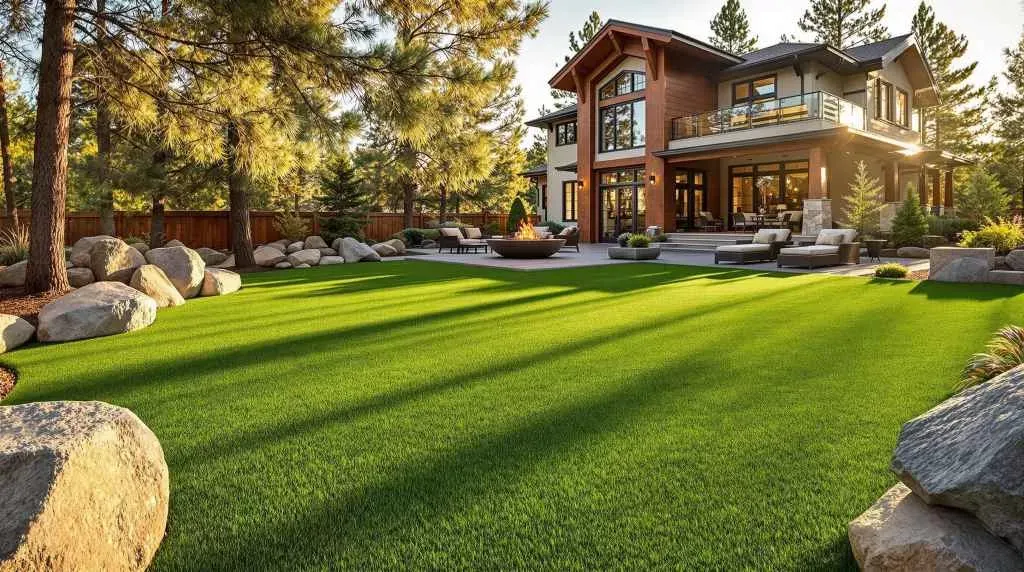
Finished artificial turf lawn beside living planting beds
A location-neutral example of a finished turf surface beside living planting.

Give the surface one clear job

Where Artificial Turf Can Earn Its Share of the Yard

A dog run that needs fast drainage

A narrow pet area can earn a share of the turf allowance when its base, edge, and cleanup plan are designed together. Antimicrobial infill is an option for pet use, not a substitute for routine rinsing and removal of waste.

A shaded strip where live grass struggles

Deep shade can make a small synthetic surface more practical than repeatedly replacing sod. The decision still has to fit the rear-yard calculation and leave the living material the CAB document calls for.

A putting surface with a defined footprint

A compact practice green can be shaped inside a measured area rather than spread across the yard. Fringe, cups, slope, and ball roll are designed for that use after the eligible footprint is known.

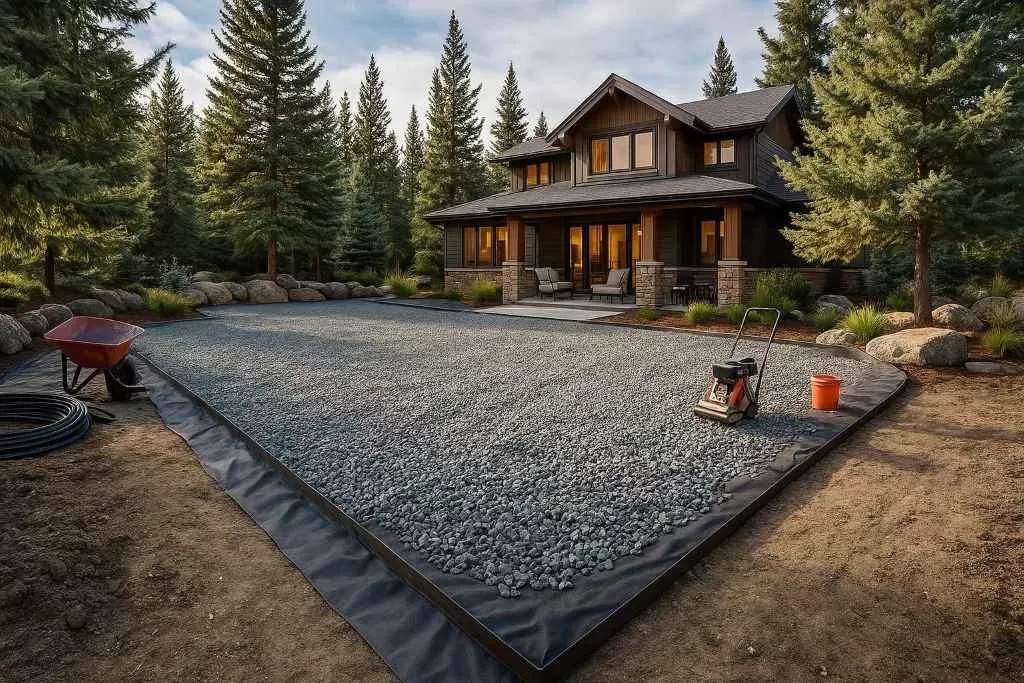
Angular gravel being installed as an artificial turf base
Angular aggregate creates a drainage layer; its elevation still has to respect where the lot sends water.

The surface is only the top layer

The Base Has to Drain Without Rewriting the Lot

Installation removes organic material, compacts the subgrade, places a free-draining angular-aggregate base, smooths the setting course, and secures the fitted turf before infill. Each layer affects finished elevation. An edge that is too high can hold water; a low base can become a basin.

Dated 28 September 2015, the recorded declaration defines the Established Drainage Pattern from the county-approved overlot grading plan and places the duty to maintain it on the owner. We use the property record and site elevations to decide where the base may build up. This dependency is why the page makes no claim that turf needs no water or no drainage work.

A plan the review body can read

What Gets Confirmed Before a Turf Submittal

Landscaping is an Improvement under the recorded declaration, so the Design Review Committee's prior written approval comes before construction. The CAB issues the water-demand rules; the DRC reviews the proposal. Neither role is described as a government permit, and neither decision is promised.

  • Rear-yard square footage and the proposed turf footprint
  • Existing and proposed live plant coverage
  • The lot's Established Drainage Pattern and the receiving grade around the base
  • Village, filing, builder product, and whether an open-space Transition Zone affects the lot
  • The current CAB documents and the DRC submittal requirements in effect for the property
Antimicrobial infill being spread over installed artificial turf
Infill supports and weights the finished surface; pet installations still need an ongoing cleaning plan.

Sterling Ranch Artificial Turf Planning Questions

How much of a Sterling Ranch rear yard can artificial turf cover?

Under the CAB Water Demand Management Initiatives adopted 26 August 2020, artificial turf in the rear yard “will be considered” and cannot exceed 30% of rear-yard square footage. That is a ceiling inside a review process, not blanket permission. Because the CAB may amend the document, the rear-yard measurement, current coverage, village, filing, builder product, and lot condition are confirmed for the property before a design is priced.

Can the entire rear yard be synthetic turf?

No. The same CAB document says rear yards will not be approved as hardscape only and sets a separate minimum for live plant material. A workable plan therefore draws turf, planting, and any patio together. It does not treat synthetic grass as a way to remove every living area from the yard.

Does synthetic turf remove the property from its water budget?

No such claim appears here. The turf limit sits inside the CAB's water-demand rules, and the remaining living landscape still has to be designed within the current budget framework for the property. Our planning check covers the applicable CAB documents instead of turning a product choice into a promise about billing or water allocation.

What does the DRC need to see for a turf proposal?

The recorded declaration treats landscaping as an Improvement requiring prior written Design Review Committee approval. A useful submittal shows the measured rear yard, proposed turf area, living coverage, edges, adjoining hardscape, and drainage relationship. The current document set and property-specific requirements are confirmed before the package is prepared; approval and timing remain with the DRC.

Why does drainage still matter under artificial turf?

Water has to pass through the surface, move through the aggregate base, and leave without creating a low spot or changing the route the lot is meant to use. The recorded declaration obliges an owner to maintain the lot's Established Drainage Pattern, defined from the county-approved overlot grading plan. We confirm that pattern for the address before setting base elevations; turf does not make drainage planning optional.

Measure the Eligible Area Before Choosing the Product

Start with an on-site estimate that measures the rear yard, reviews living coverage and drainage, and shapes a turf area around a real use rather than a guessed allowance.