Gather from every direction
A round fire pit opens seating on all sides, which suits a freestanding patio with no single "front" the way an acreage gathering area often does.


Built-In Natural Gas Fire Features for Acreage Properties
Dark, open skies and cool evenings make a fire feature one of the most-used parts of a rural Elizabeth yard. We build it into the patio rather than on top of it, planning the surround, seating, fuel run, and wind exposure together for a property with room to choose its spot.
Tell us about your patio plans, fuel source, and the gathering space you want to create.
Built for how the yard actually gets used
On a larger Elizabeth-area lot, a fire feature earns its place fast. There is no streetlight competing with the flame, the evenings cool off quickly, and a gathering spot connected to the house gets used far more than open lawn ever will. The useful question is not whether to build one, but where it sits relative to the patio, the walk from the door, and the rest of the property.
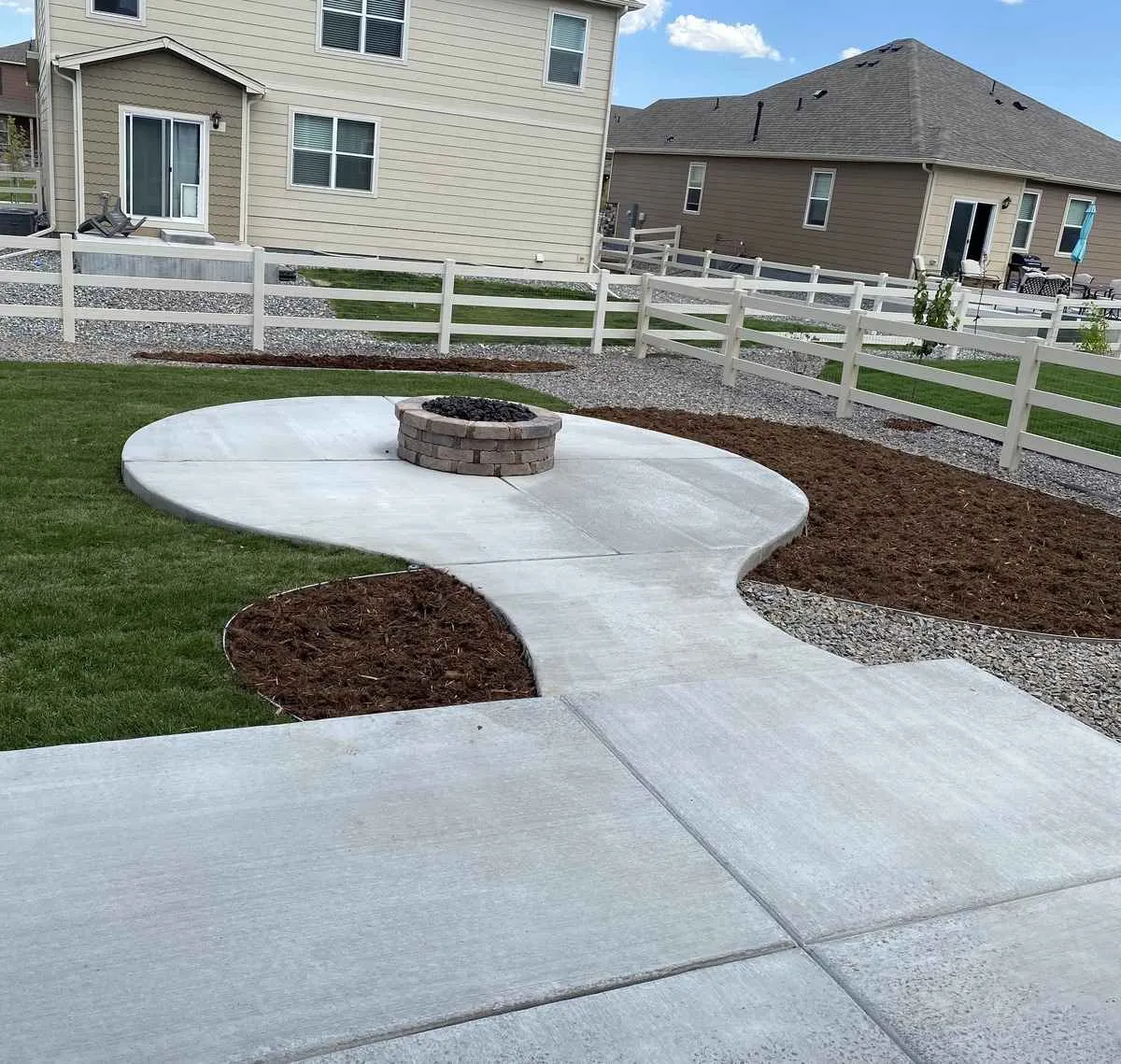
We start there: a real walkway connects the feature to daily circulation instead of leaving it stranded as a separate destination at the edge of the yard.
Shape follows the group, not the catalog
A freestanding acreage patio doesn't have a "front" the way a small suburban backyard does, so the feature and its seating need to answer the space around them rather than a standard layout.
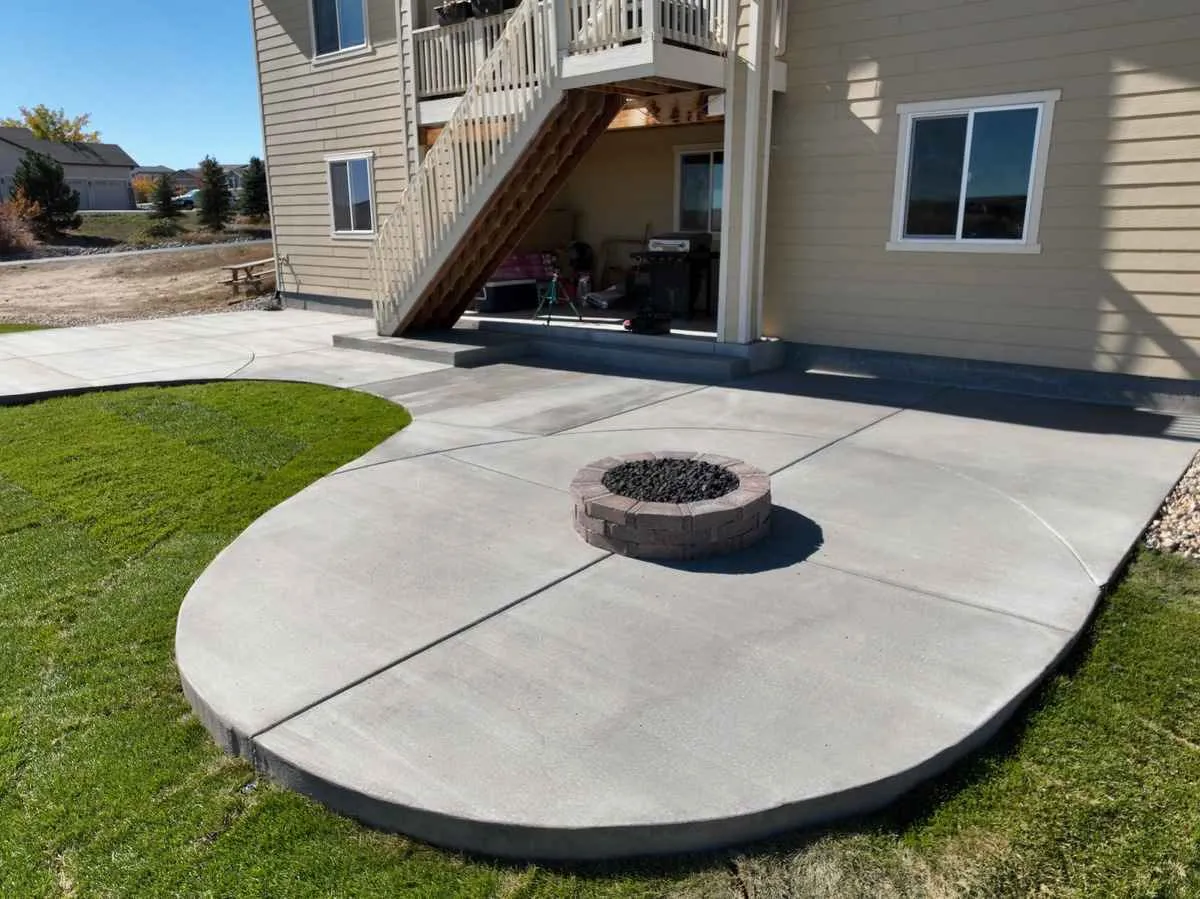
A round fire pit opens seating on all sides, which suits a freestanding patio with no single "front" the way an acreage gathering area often does.
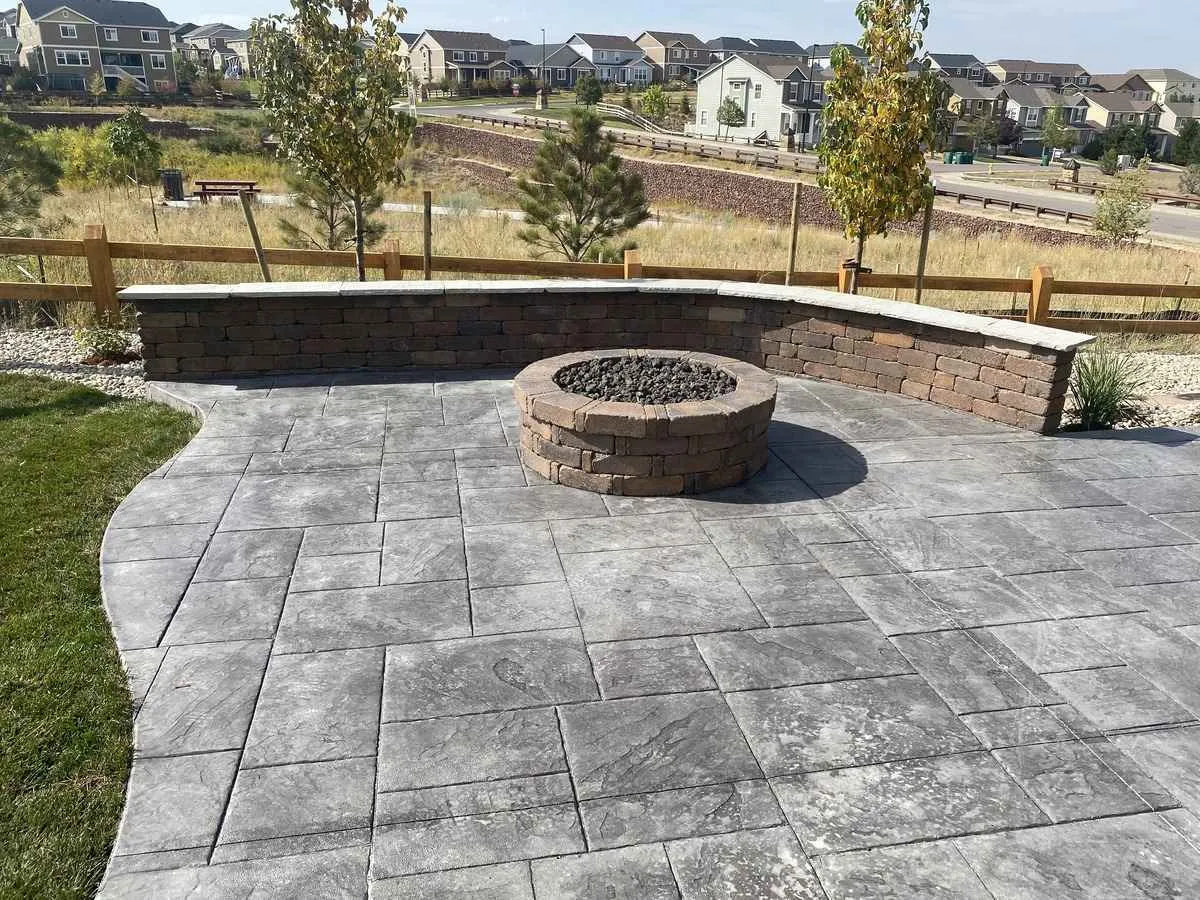
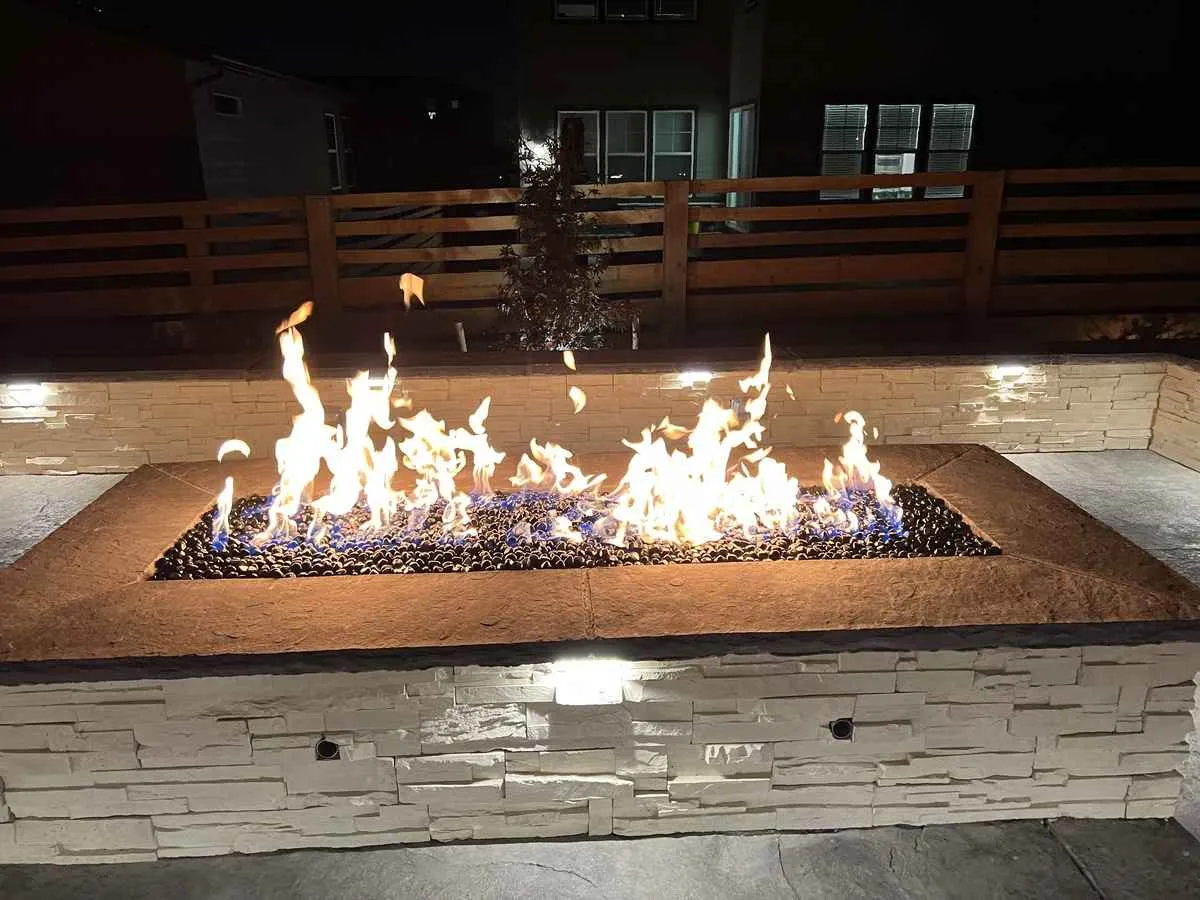
A rectangular feature can reinforce a built-in seating wall or line up with a longer patio edge, giving the space one clear orientation instead of a scattered arrangement.
A curved or straight seat wall keeps the open floor clear for movable chairs, which matters when the gathering group changes from a quiet evening to a full yard of guests.
What actually goes into the feature
The preserved service scope is built-in natural gas fire pits. Whether the run reaches the feature from an existing gas service, a new line, or a propane alternative is confirmed at the address; we never assume fuel availability across Elizabeth.
Underneath the finish, the pad and surround footing are sized to the load they carry, the fuel line and shutoff are installed to code and pressure-tested, and the heat-rated surround goes up around the burner with access preserved for future service.
Natural gas is the preserved service scope; the actual utility route, meter location, and any propane alternative are confirmed on site before layout, since availability is never assumed for a rural property.
The pad and surround footing are sized to the feature and finished patio load, with the base compacted before any masonry closes over it.
The gas line, shutoff, and burner pan are installed to code and pressure-tested before the surround is built around them.
Stone veneer, block, or masonry rated for sustained heat encloses the burner and fire media, with access left for future burner or ignition service.
Ready when the property is used
A rural fire feature sees more wind and a longer idle season than one tucked into a sheltered subdivision yard. Planning for both keeps it usable instead of becoming a fixture nobody trusts.
Open ground carries more wind than a sheltered suburban yard. A seat wall or windbreak planting on the prevailing side keeps the flame usable instead of guttering out.
Clear fire media of debris, check the burner and ignition for movement or corrosion, and confirm the shutoff before the feature sits idle through snow and freeze-thaw.
Inspect the surround for winter movement, clear the burner pan, and test ignition before the first gathering of the season.
Property-specific siting
Open ground changes three things about siting a fire feature that a small, fenced lot rarely has to answer.
A well head, septic field and reserve area, or propane run needs to be located and cleared before the feature is sited or trenched near it. What exists at the address is confirmed on site.
Exposure changes flame behavior and comfort. A seat wall, windbreak planting, or a deliberately chosen orientation can offset it; property conditions vary, so this gets confirmed on site rather than assumed.
Natural gas availability is never assumed for a rural property; the actual utility route or a propane alternative is confirmed before the design is finalized.
One coordinated project, not a bolt-on feature
Keeping the pad itself simple leaves the surrounding floor open for lawn, planting, and circulation to connect into, rather than boxing the feature in with its own isolated hardscape.
Because we plan complete landscapes, the fire-pit estimate can also account for adjoining patio, seating wall, planting, and lighting work, so the feature, the gathering area, and the rest of the property get built in one sequence rather than three separate visits.
An acreage lot rarely lacks space for a fire feature; it needs someone to walk the property, confirm the fuel and utility picture, and choose a spot that earns its use through wind and every season. That is what a free on-site estimate settles.
The preserved service scope is built-in natural gas fire features. Whether natural gas reaches the property, or whether a propane alternative fits the design better, is confirmed at the address before layout begins - we do not assume gas availability anywhere in Elizabeth.
Any property with its own well, septic system, or propane tank needs those systems located before a fire feature is sited or trenched near them. The specific clearance depends on what is actually in the ground at the address, so we confirm it on site rather than publishing a universal distance.
Open, exposed ground carries more wind than a sheltered yard, which can affect flame behavior and comfort. A seat wall, windbreak planting, or feature orientation can reduce that effect, and we plan for it as part of the site evaluation rather than treating every property the same.
That depends on how the property actually gets used. A round feature with movable chairs suits a smaller, flexible gathering; a seat wall paired with open floor space can host a larger group without crowding the pad. We size the seating to the group, not a fixed template.
They should be planned together. Building the feature, patio pad, seating, and surrounding lawn or planting as one phase avoids re-opening finished paving later for utility or drainage work.
Clear the fire media and burner pan of debris, check the surround for movement, and confirm the shutoff before winter. At spring start-up, inspect and test the ignition before the season's first use, the same as any built-in feature would need regardless of location.
Show us your patio plans, fuel source, and the way you want to gather outside. We will evaluate the site and outline a fire-pit scope built for your acreage.