Screen the yard you actually use
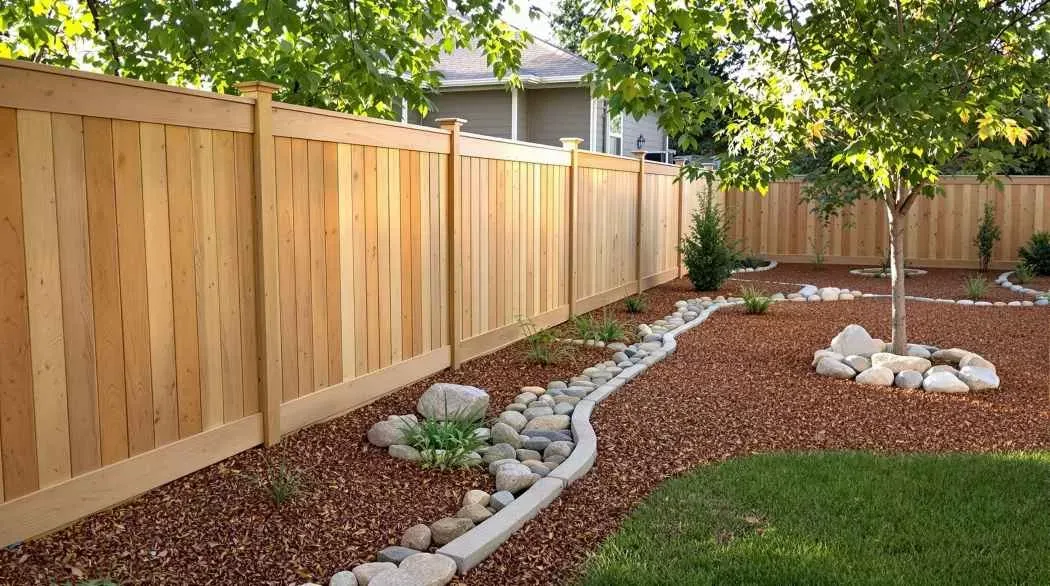
A solid wood privacy run around the patio and lawn core settles the space without trying to enclose the entire parcel.


Standard Residential Fencing Planned for Larger Lots
On an acreage-sized property, a fence usually isn't meant to enclose everything - it draws a maintained yard core, a dog run, or a garden out of a much larger parcel. We install standard residential wood, vinyl, and rail fencing planned around the property's actual line, access, and open-ground conditions.
Tell us what you want the fence to enclose and what access the property needs.
The fence marks the edge you actually maintain
On a suburban lot, a fence usually runs the whole property line. On acreage, that rarely makes sense - most of the parcel stays open ground, and the fence instead defines the part that gets mowed, watered, and used every day.
Deciding where that line falls is a design decision as much as an installation one. It shapes how much yard you maintain, where the patio and lawn core sit, and how the property reads from the house outward.
Start with the job, not the material
A fence around a patio, a dog yard, and a garden edge are three different jobs, and each one calls for a different height, material, and layout.
A solid wood privacy run around the patio and lawn core settles the space without trying to enclose the entire parcel.
A dedicated dog yard tied to the house needs a secure, appropriately scaled fence rather than the perimeter of the whole property.
An open rail or utility fence can mark off a garden, storage area, or equipment yard without adding privacy weight it doesn't need.
Our scope is standard residential fencing. We do not install ranch, livestock, or agricultural perimeter fencing, so the systems above cover a yard core, dog run, or garden edge rather than a full pasture boundary.
Settle these before a single post is set
Post layout follows the located or surveyed line supplied for the property, not an assumed boundary.
The well head, septic field and reserve area, and any propane run are located before trenching or setting posts nearby.
Gate width and placement account for mowers, trailers, and delivery vehicles that need to reach the working ground beyond the maintained core.
Verified residential systems
The strongest visual screen for a patio or lawn core, with natural weathering and periodic finish care to plan for.
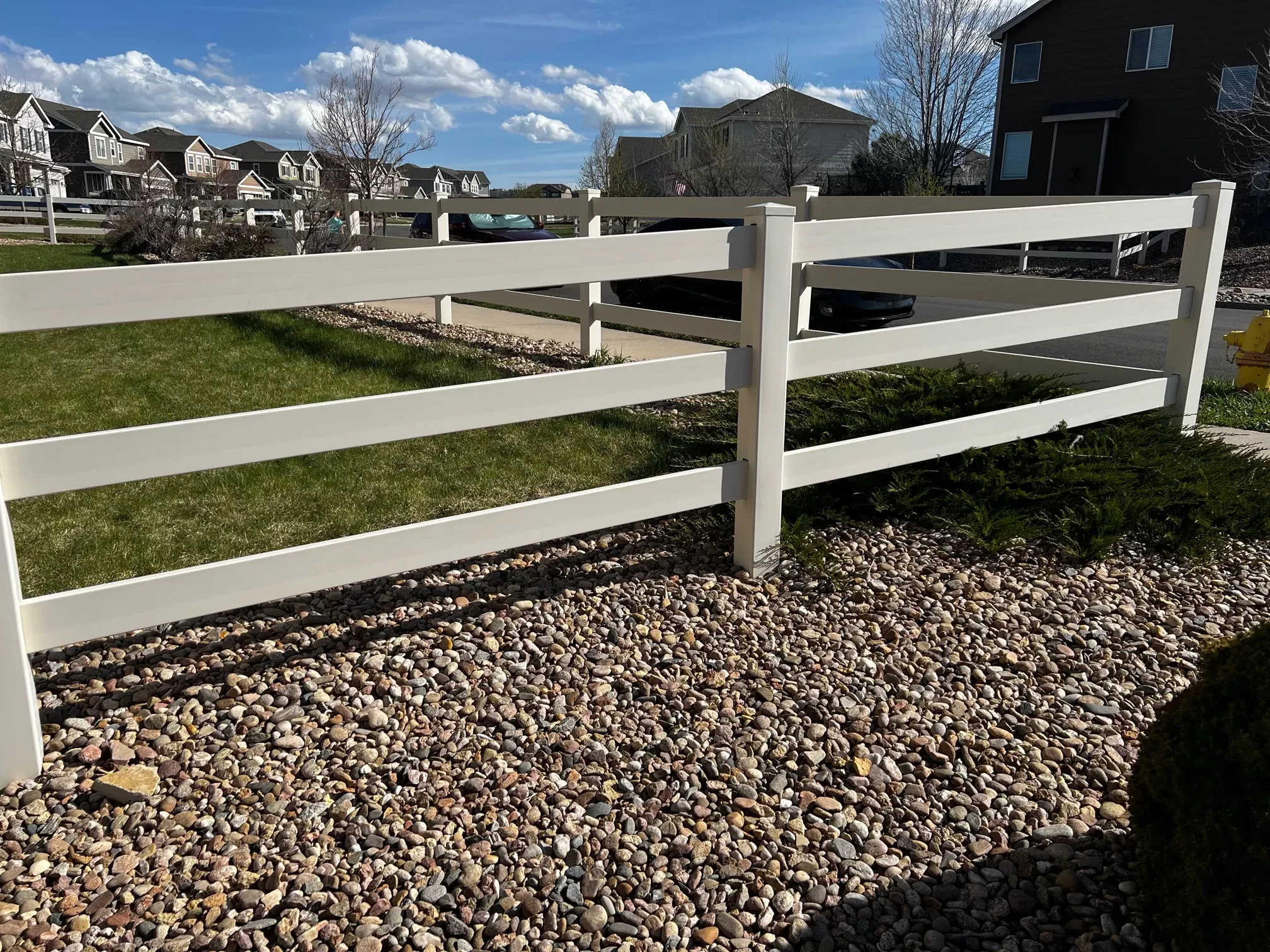
A manufactured, lower-finish-maintenance option for a defined boundary, best suited to marking an edge rather than full enclosure.
An open sightline that marks a boundary without blocking the view across open ground, sometimes paired with wire mesh for a dog yard or garden edge.
Open ground changes the layout
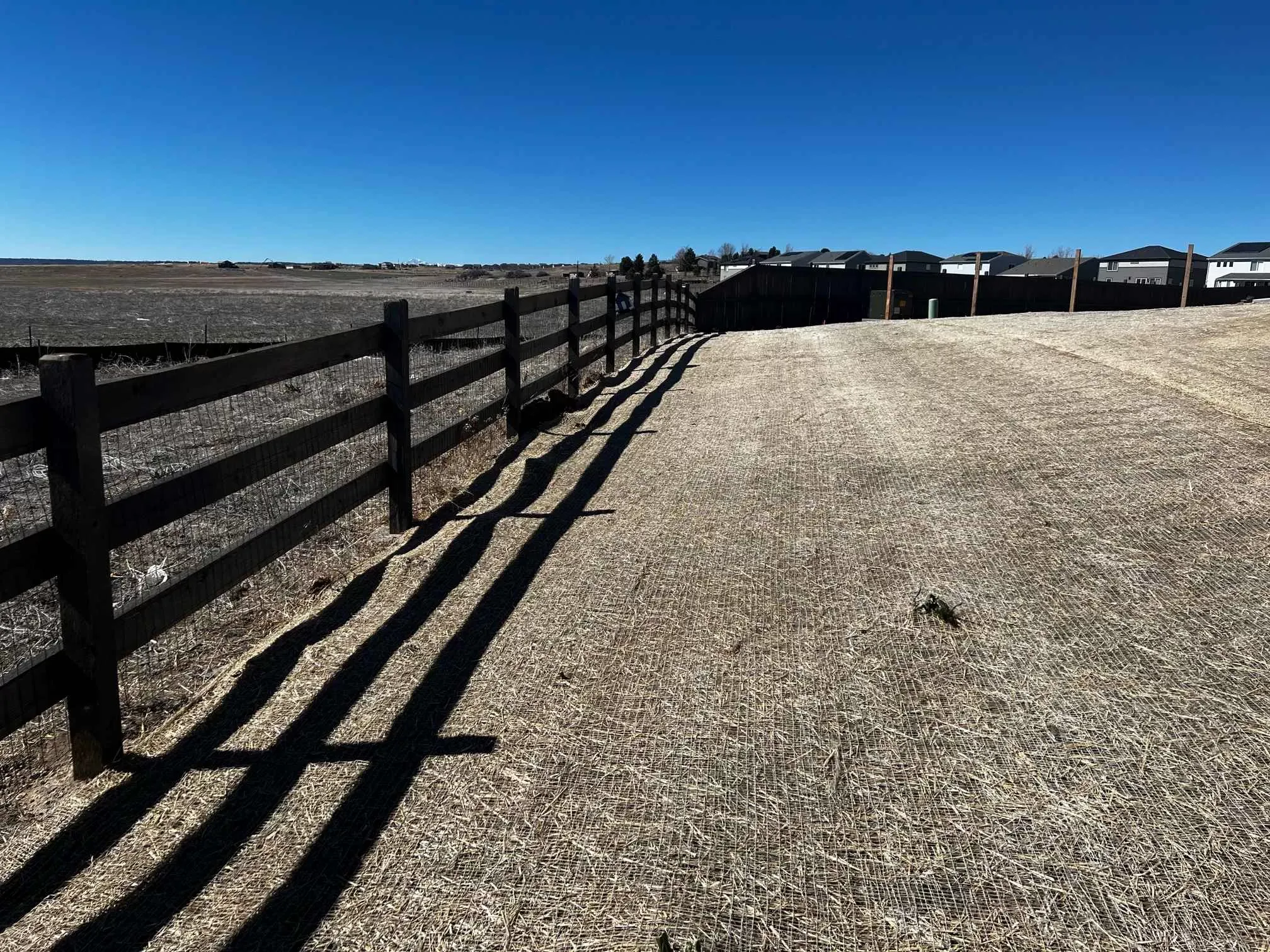
A long run across open, wind-exposed acreage carries more load than a fence tucked between two houses. Post depth, concrete, and spacing are set for that exposure, and a solid privacy run needs different consideration than an open rail system in the same wind.
Rolling grade adds a second variable. Sections may step down in even increments or rack to follow the slope continuously, and that choice affects how level the finished line reads from a distance.
One crew, one yard
Because the same company plans and builds the patios, planting, irrigation, and lighting around the fence, the gate lands where the walk actually goes, posts stay clear of irrigation lines and drainage routes, and the fence gets sequenced with the rest of the property instead of shoehorned in afterward.
Most acreage properties don't need a fence around everything - they need one around the part that gets lived in. A free on-site estimate walks the line with you, confirms what's already in the ground, and prices the fence for the yard you actually plan to enclose.
Standard residential systems: wood privacy, vinyl, and rail-style fencing with gates, sized for a yard core, dog run, garden, or defined boundary. We plan the layout around the located property line and the site conditions the address actually has.
No. Our scope is standard residential fencing - privacy, boundary, and pet or working-area enclosures - not ranch rail, livestock, or agricultural perimeter fencing. If a property needs that kind of fencing, it falls outside what we install.
Gate width and placement are set for what actually needs to pass through: mowers, trailers, delivery vehicles, or a garden cart. We confirm the equipment and access the property uses before fixing gate locations, rather than defaulting to a single residential gate width everywhere.
Yes. A long run across open, exposed ground carries more wind load than a sheltered suburban yard. Post depth, spacing, and the amount of solid surface in the selected system are planned for that exposure rather than assumed uniform across every property.
We work from the located or surveyed line supplied for the property. On acreage, that line can run much farther than a typical suburban lot, so confirming it accurately before posts go in matters more, not less.
The fence line is planned alongside grading, patios, planting, and irrigation so gates land on usable routes and posts don't block drainage or future access. Because the same crew handles the rest of the yard, the fence is sequenced with that work instead of installed as an isolated add-on.
Show us the property line, what you want the fence to enclose, and the access it still needs to allow. We will evaluate the site and outline a fence scope built for your acreage.