Retain a sound section
A run that remains stable, useful, and compatible with the new layout may not need removal. We inspect how it meets the proposed work and whether its posts, rails or panels, and transitions can remain serviceable.


Residential Fence Installation and Replacement
A fence project in an established Highlands Ranch yard has to solve more than the line itself. We install and replace standard residential wood, vinyl, and rail-style fencing with gates, coordinating the work with fixed walks and patios, mature planting, irrigation, drainage, grade, and the access the property still needs.
Tell us what the fence needs to do, what is there now, and which gates or landscape access matter.
Diagnose before demolition
The old fence, planting, irrigation, patio edges, drainage, and gate routes already divide the work area. We begin by deciding what should remain, what actually failed, and how the new run can improve privacy and access without treating every established landscape element as disposable.
A run that remains stable, useful, and compatible with the new layout may not need removal. We inspect how it meets the proposed work and whether its posts, rails or panels, and transitions can remain serviceable.
A damaged panel or isolated hardware problem is different from repeated post movement. The observed failure pattern determines whether a focused repair is sensible or whether the support below grade makes broader replacement the more durable scope.
Widespread movement, deterioration, or a layout that no longer serves access and privacy can justify replacement. Removal is planned around retained planting, hardscape, irrigation, drainage, and the work area needed for new posts.
A changed gate or fence layout affects circulation and the landscape on both sides. We build to boundary information the property owner supplies and coordinate the proposed line with utilities, access, grade, and address-specific requirements.
Function sets the layout
A screen around an outdoor room, an open property edge, and a side-yard equipment route should not receive the same system by default. Defining the job first guides openness, material, gates, grade transitions, and how the line meets the landscape.
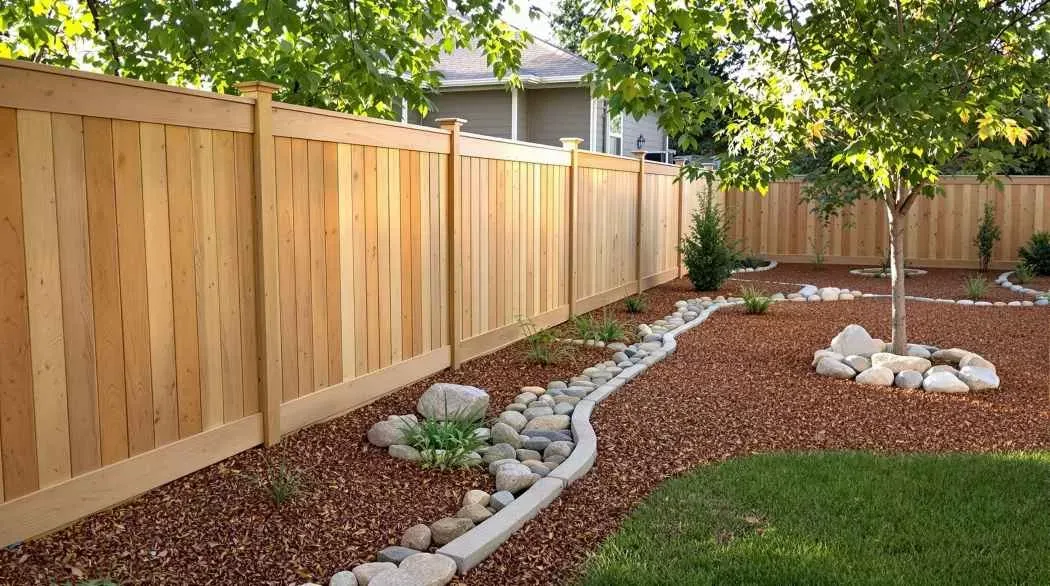
A solid residential fence can screen a patio, lawn, or play area. The useful configuration still depends on the view being controlled, changing grades, the gate plan, and the requirements confirmed for the property.
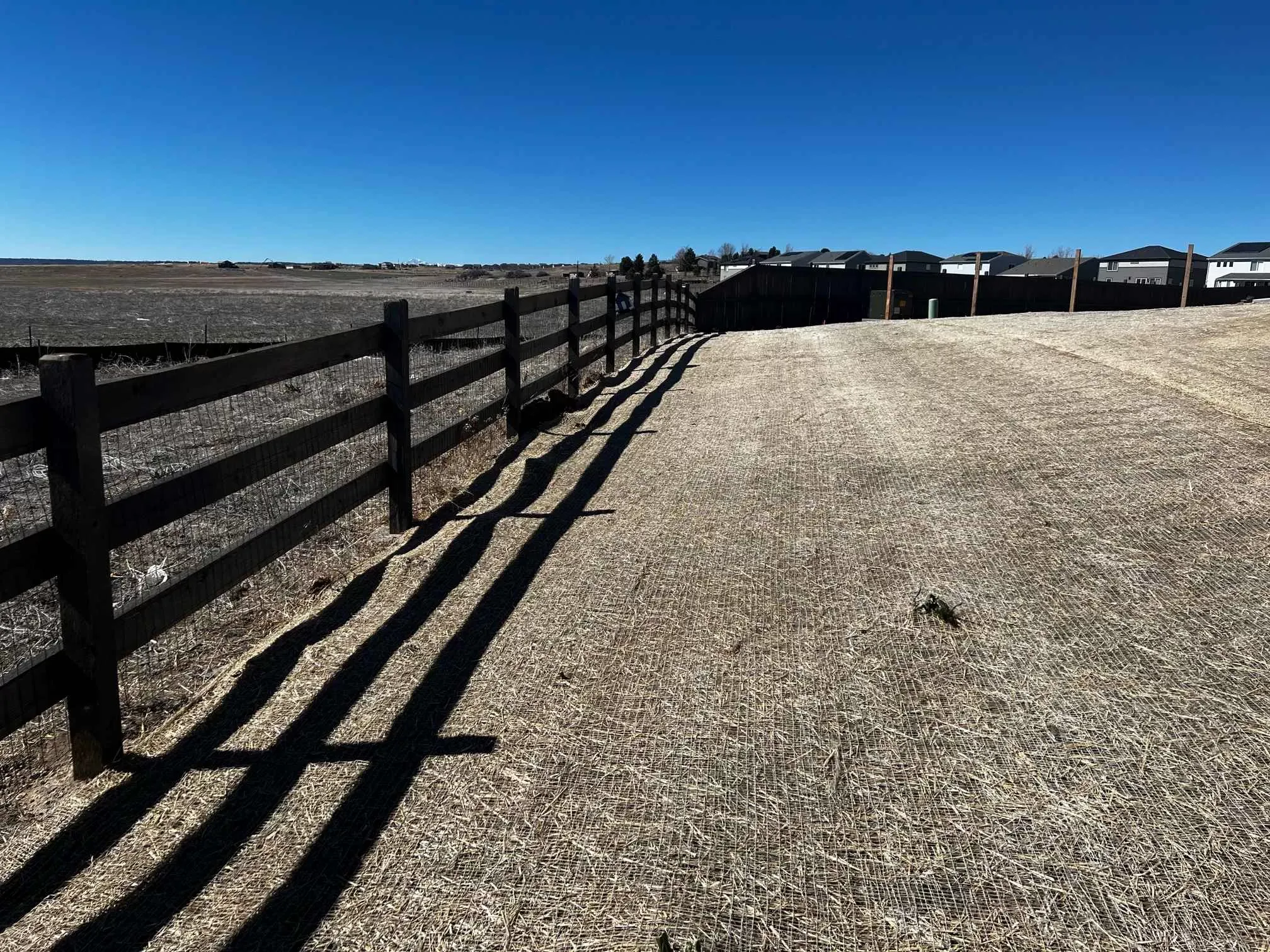
An open rail-style fence defines an edge with less visual mass. It can preserve longer views and may include wire mesh where appropriate for standard residential containment.
Gate width and location should follow what must pass through: people, mowers, trash containers, materials, or equipment for later landscape work. Swing, ground clearance, hardware, and the path on each side are resolved together.
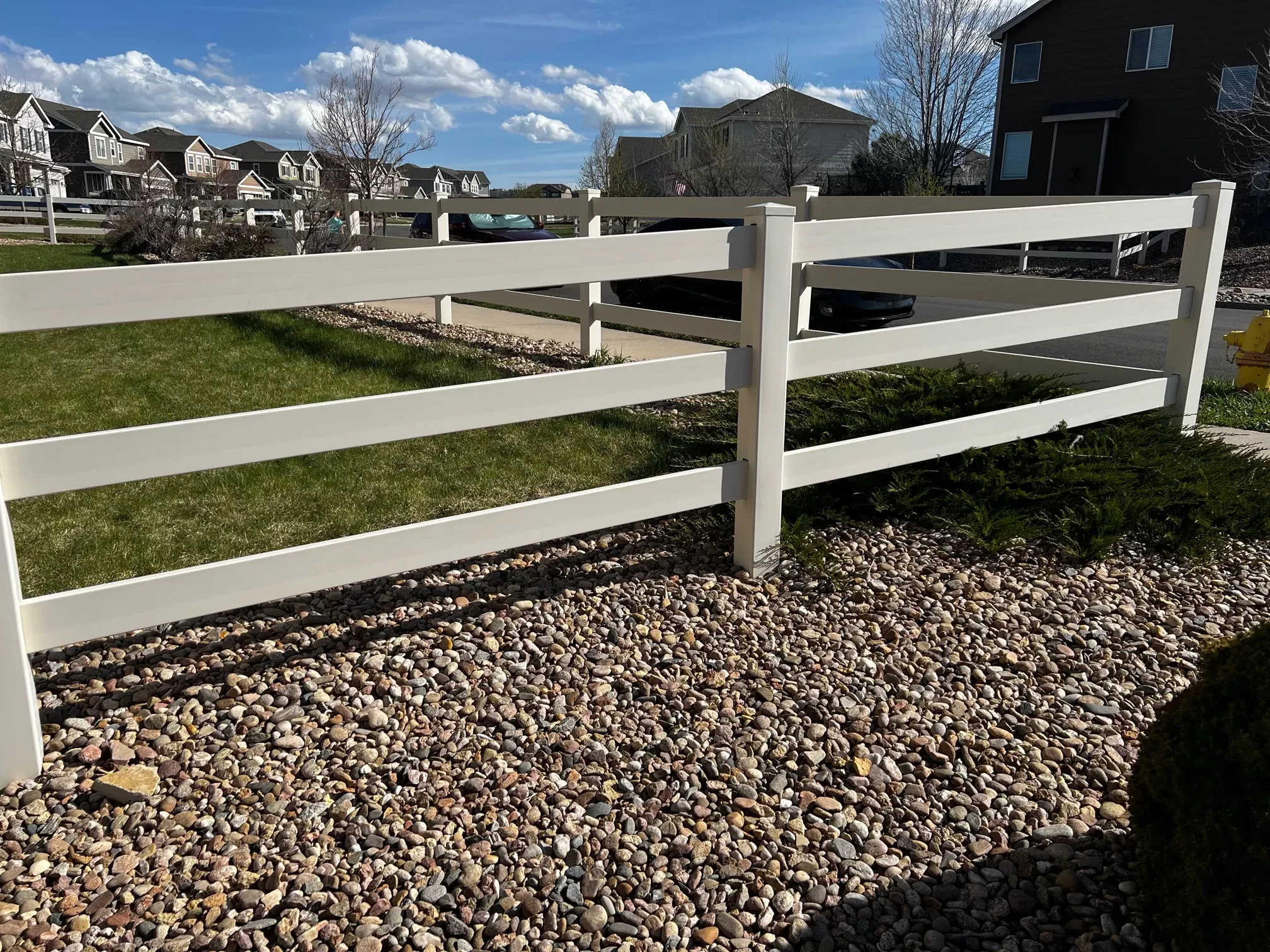
Compare enclosure, upkeep, and appearance
Wood privacy fencing provides the strongest screen. Board layout, finish care, exposure, and the way the run crosses grade all shape the finished result.
Vinyl fencing offers a manufactured option that avoids staining or painting. The configuration still needs to match the desired enclosure, sightlines, gate plan, and appearance of the property.
Wood rail-style fencing creates a more open edge and can include wire mesh where appropriate for standard residential containment. It preserves more of the view by design and does not provide the same privacy as a solid run.
Gates belong in the material decision from the beginning. Frame, hardware, width, swing, clearance, and the routes on both sides determine whether the opening works after installation.
The visible fence depends on fixed support
Post positions establish corners, gates, spacing, and the way a fence crosses changing ground. Foundations and layout respond to the selected system and actual site conditions rather than a generic flat-lot pattern.
Solid panels catch more wind than open rails. Repeated Colorado freezing and thawing puts added pressure on supports, especially when water collects near posts, so footing and drainage decisions belong in the initial layout. The line should not dam runoff, bury an outlet, or make a low area inaccessible for correction.
Where the ground changes elevation, the system may step or follow the grade. That transition is chosen before posts are set so panel or rail alignment, ground clearance, and the finished relationship to retained surfaces remain deliberate.
Keep every edge usable
The inside face of a fence can become an awkward strip when bed edges, turf, decorative rock, irrigation heads, and drainage are decided afterward. We coordinate those systems with the run so the edge remains maintainable and posts are not kept wet by the water plan.
Gate approaches should connect to existing or planned walks and preserve the access needed for future landscape work. Retained trees and shrubs need practical clearance, while patios, walls, and grade transitions establish fixed elevations the fence layout must answer.
Build in the order the property requires
Replacement, restricted access, and a larger landscape renovation can change the sequence. The constant is that permanent posts and gate openings follow a resolved line, system, grade response, access plan, and property-specific review.
We review the boundary information supplied by the owner, current fence condition, utilities, access, grade, drainage, planting, irrigation, and fixed surfaces on both sides of the work.
Privacy, openness, upkeep, appearance, gates, and property-specific review are settled before material ordering and final post layout.
The proposed layout identifies gate posts, direction changes, and where the selected system steps or follows the ground.
Foundations and posts are built for the actual layout and site conditions before rails, panels or pickets, mesh where applicable, and gate hardware complete the run.
Soil, rock, beds, turf, irrigation access, drainage, walks, and gate approaches are checked so the finished fence does not leave unusable or inaccessible strips.
Own the installed system
Maintain a clear inspection strip along the lower edge, check whether gate leaves still hang and latch correctly, and trace the cause of fresh leaning before adjusting hardware. The material determines the rest of the maintenance rhythm.
Wood provides natural variation and strong privacy options, but it weathers and moves. Periodic inspection, cleaning, finish care, and prompt attention to damaged boards or hardware help keep a small issue contained.
Vinyl avoids staining or painting, but it still needs washing and inspection. Posts, connections, gates, and damaged pieces should be addressed before movement transfers along a run.
Open wood or vinyl rail configurations preserve sightlines and reduce visual mass. Rails, posts, connections, and attached mesh where used should remain clear enough to inspect and maintain.
The site-based estimate accounts for fence length, system and configuration, gate count and width, removal, grade changes, access, post and foundation conditions, retained landscape protection, edge restoration, and the requirements confirmed for the address and proposed work.
The verified service includes wood privacy fencing, vinyl systems, wood rail-style fencing with mesh where appropriate, and gates. The choice follows the need for privacy, openness, upkeep, access, grade response, appearance, and the property-specific requirements that apply.
Sometimes. A contained panel or hardware failure can support a focused repair, while repeated leaning or movement along a run can indicate failing posts or foundations. We inspect the existing condition before recommending repair, partial replacement, or full replacement.
Yes. Depending on the system and the actual grade, sections may step or follow the slope. Post elevations, ground clearance, drainage, and the finished height on both sides are considered before the layout is fixed.
Gate location and width follow daily circulation and the largest practical access need, including mowers, materials, or future landscape equipment. Swing direction, hardware, ground clearance, adjoining walks, and the route on both sides are planned together.
Yes. Boundary information, material, height, review, utility, and other requirements can depend on the address and proposed work. We use the owner-supplied boundary information and confirm the applicable project sources before installation; we do not make a legal boundary determination or promise an approval outcome.
No. This service is for standard residential fencing: wood privacy, vinyl, rail-style configurations, and gates. Ranch, horse, agricultural, industrial, and heavy commercial security fencing are outside this scope.
Fence length, material and configuration, gate count and width, existing-fence removal, access, grade transitions, post and foundation conditions, retained landscape protection, edge restoration, and address-specific requirements all affect the site-based estimate.
Show us the existing run, the privacy or access problem, and the landscape elements that need to remain. We will scope a residential fence and gate plan from the property.