Custom Landscapes by Design logo
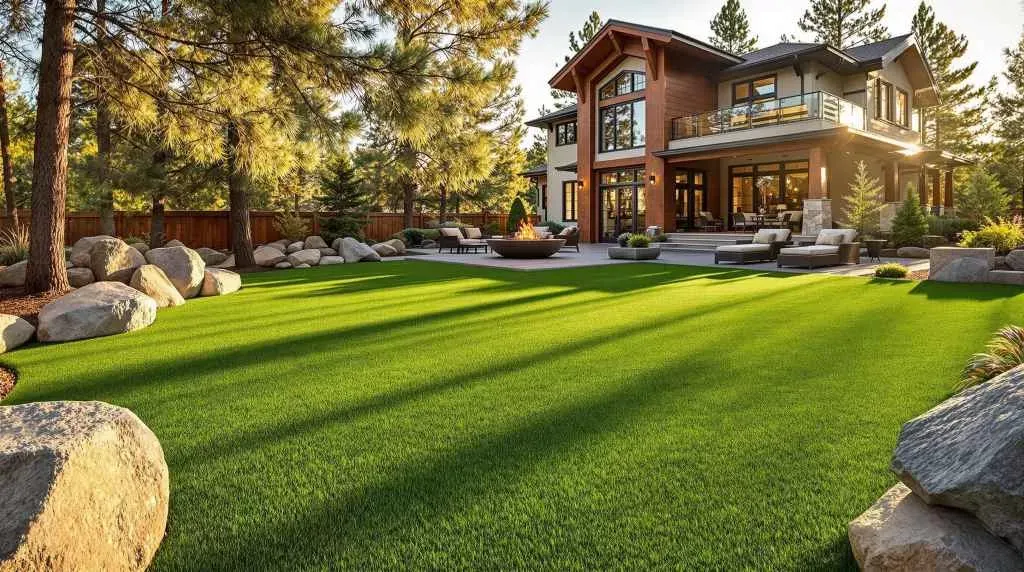
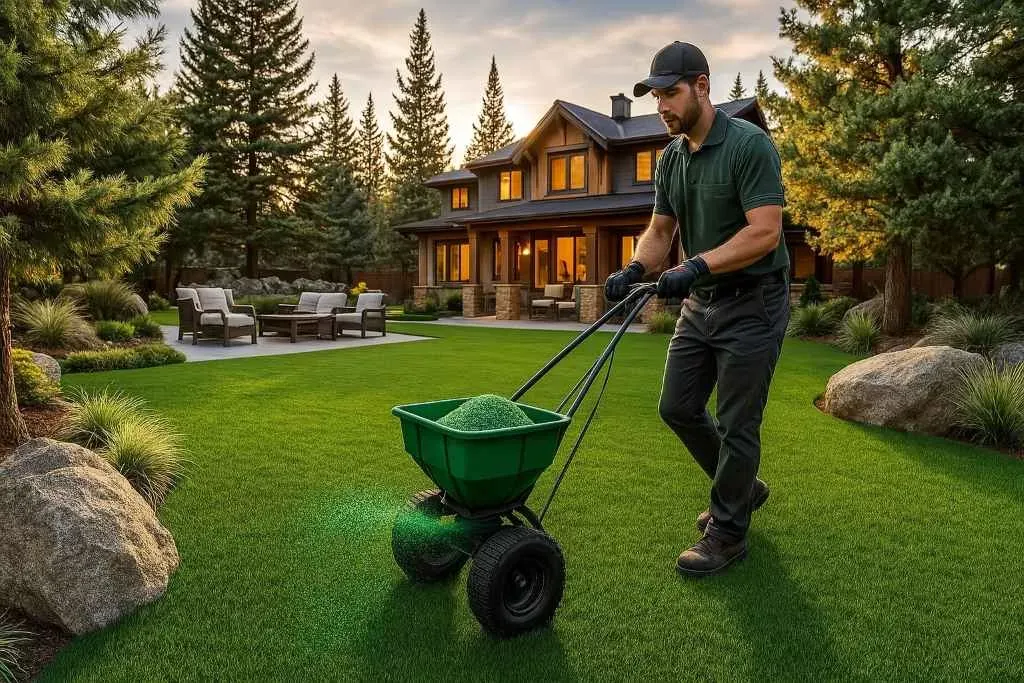
Realistic artificial turf lawn beside a home and planted beds

Synthetic Lawns, Pet Areas & Putting Greens

Highlands Ranch Artificial Turf Installation

We install artificial turf for Highlands Ranch homes by planning the conversion as part of the existing yard: removal limits, access, drainage, retained hardscape, planting, irrigation, and the final edges all come before the surface is fitted.

  • Six turf products matched to lawn, pet, putting, and play uses
  • Eight-stage base, fitting, edge, and infill installation
  • Free on-site turf consultation

Request a Highlands Ranch Turf Consultation

Tell us which area you want to convert and how you plan to use it. We will follow up about a site visit.

Selective lawn conversion

Replace a Worn Lawn Area Without Rebuilding the Whole Yard

Artificial turf can solve a defined use problem inside an established landscape: a muddy dog route, a lawn that no longer fits maintenance priorities, a compact play space, or a putting area. The project earns its place by improving that part of the yard while reconnecting everything intended to stay.

Which Lawn Area Actually Needs to Change?

A worn or inconvenient section can be replaced without automatically removing every living part of the yard. We define the conversion limits around how the space is used, which planting should remain, and whether another lawn or bed still earns its irrigation.
What Does the New Edge Meet?

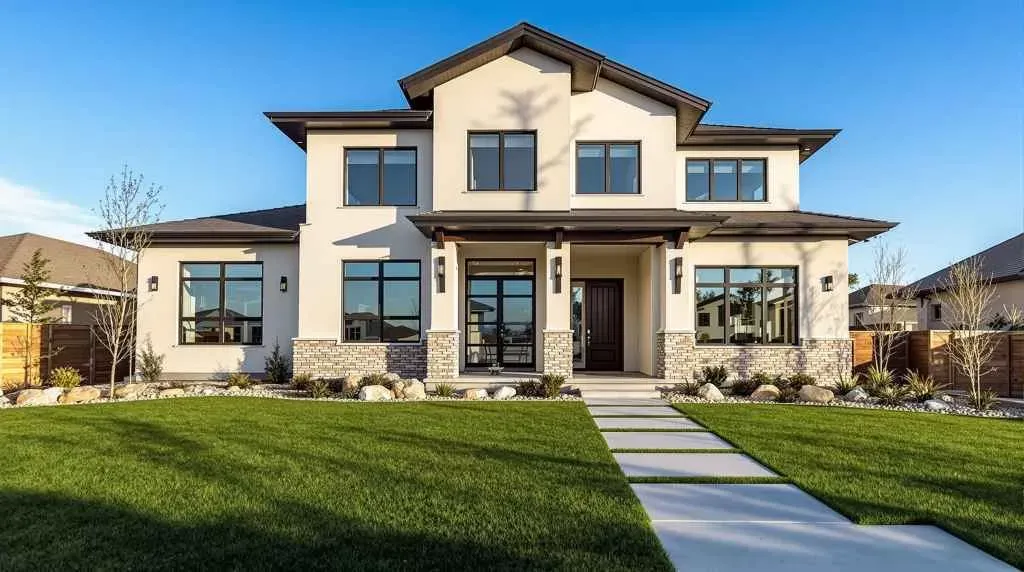
Patios, walks, walls, fences, gates, rock, trees, and planting beds establish fixed borders and elevations. Those connections determine the finished turf height, edging approach, cuts, and restoration more than a simple square-foot measurement does.

What Changes Below and Around It?

Living lawn removal affects soil, sprinkler coverage, drainage, and access. We plan the excavation and base while identifying irrigation that should be capped, rerouted, or retained for nearby planting and the route materials must take through the established yard.

Product choice follows use

Match the Artificial Turf Product to the Way the Space Works

The most realistic lawn product is not automatically the right pet, putting, slope, or sports surface. We compare blade height, density, drainage, cushioning, traffic, appearance, and budget within the actual footprint.

Summit Pro 200 artificial turf with dense two-inch blades

Flagship residential lawn

Summit Pro 200

A dense, two-inch blade profile creates the fullest lawn appearance in the lineup. It suits a primary visible lawn or everyday backyard where softness, realistic texture, drainage, and durable daily use lead the decision.

Summit Pro 200 uses a dense two-inch blade profile for a full residential-lawn appearance.

Sierra Select 169 artificial turf with a clean uniform surface

Value-oriented lawn surface

Sierra Select 169

A 1.69-inch blade height provides a clean, consistent look with a lighter product profile. It is a practical fit when the project needs dependable synthetic greenery at a more budget-conscious product tier.

Sierra Select 169 provides a uniform 1.69-inch blade surface for value-oriented lawn areas.

Vista Flex lightweight event turf

Slopes and adaptable applications

Vista Flex Event Turf

This lightweight, flexible product is intended for irregular surfaces, hillsides, temporary setups, and event or indoor use. Its role is different from a conventional permanent lawn, so the intended duration and setting matter.

Vista Flex is a lightweight option for slopes, irregular surfaces, and temporary or event use.

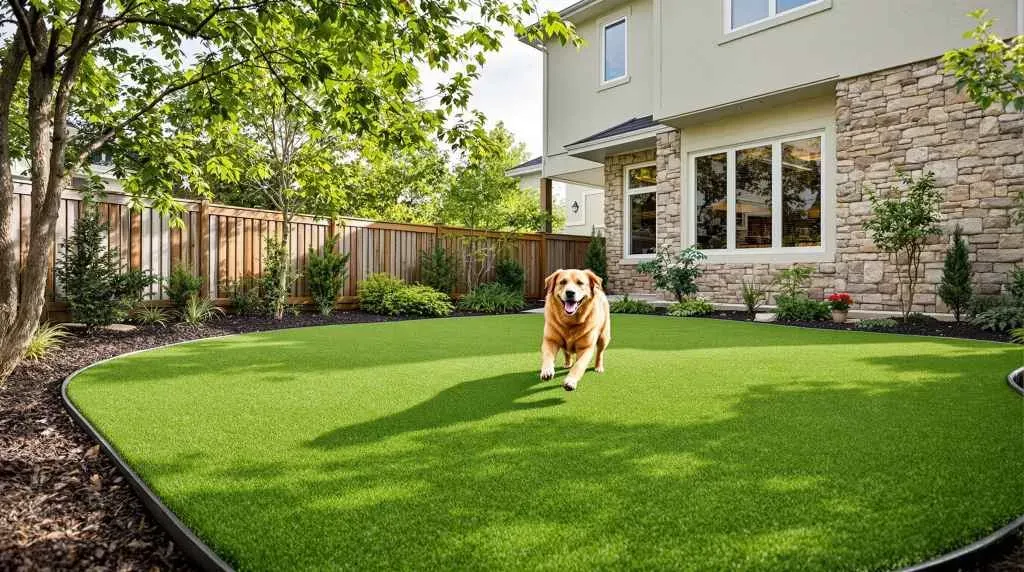
Paw Pro K9 artificial turf designed for dog runs and pet areas

Dog runs and pet areas

Paw Pro K9 Turf

A traffic-tolerant blade structure, rapid-drain design, and antimicrobial-infill compatibility address the repeated use and cleanup needs of a dedicated pet space. The base and drainage route remain as important as the surface product.

Paw Pro K9 combines a traffic-tolerant blade structure with rapid-drain and antimicrobial-infill compatibility.

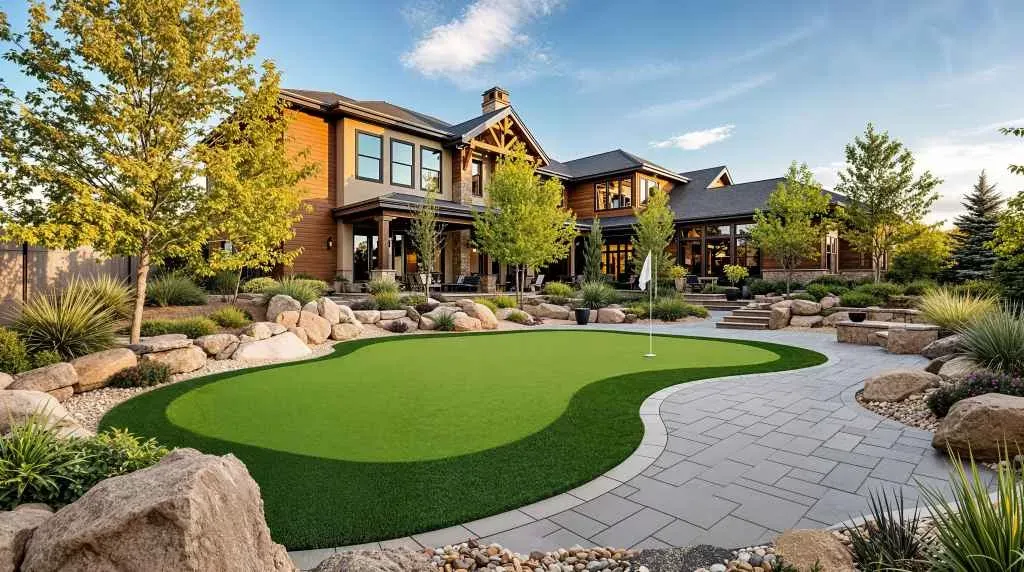
Pro Tour Series low-pile artificial turf for putting greens

Putting greens and short-game practice

Pro Tour Series

Dense, low-pile fibers create the putting surface and can be paired with a realistic fringe. Layout, cup locations, contours, target speed, surrounding access, and the transition back to the landscape shape the finished practice area.

Pro Tour Series creates a dense, low-pile putting surface that can be paired with a realistic fringe.

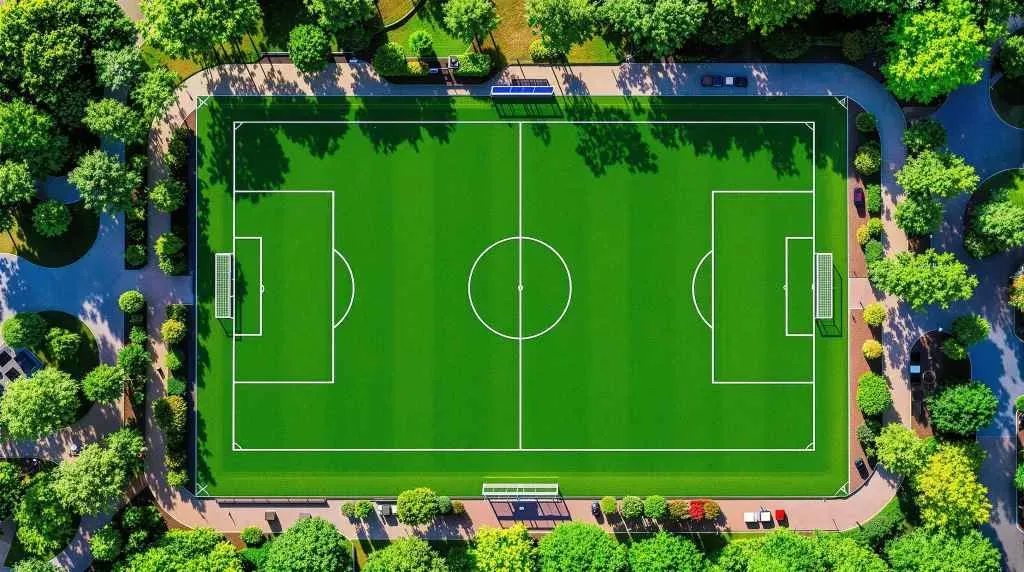
Pro Play Sports Blade artificial turf for athletic practice areas

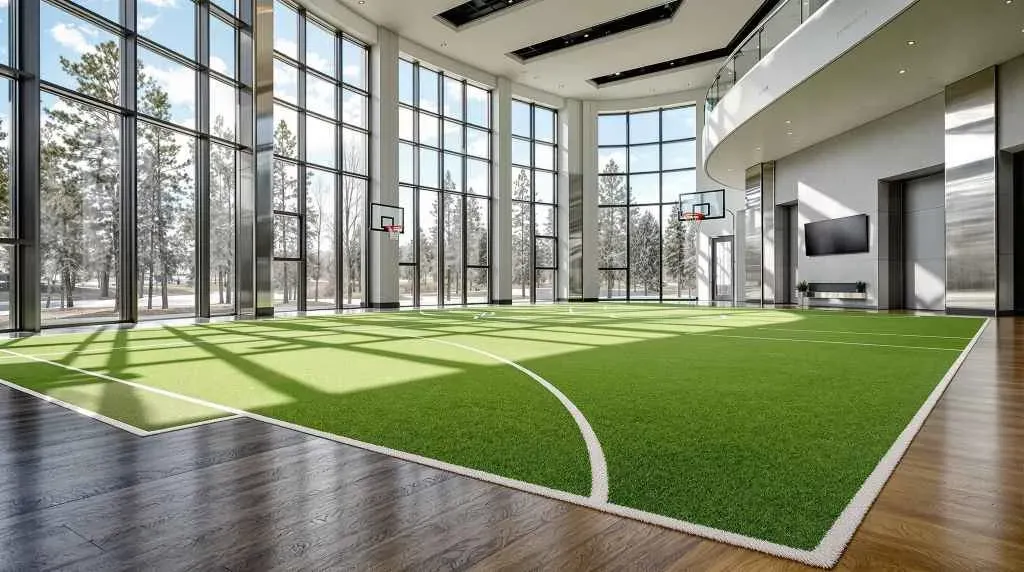
Athletic practice and active play

Pro Play Sports Blade

A durable blade structure and cushioning are designed for repeated foot traffic, quick direction changes, and active use. The intended sport, field size, edge safety, base, and drainage should be established before the surface is selected.

Pro Play Sports Blade is structured for active practice areas, quick movement, and repeated foot traffic.

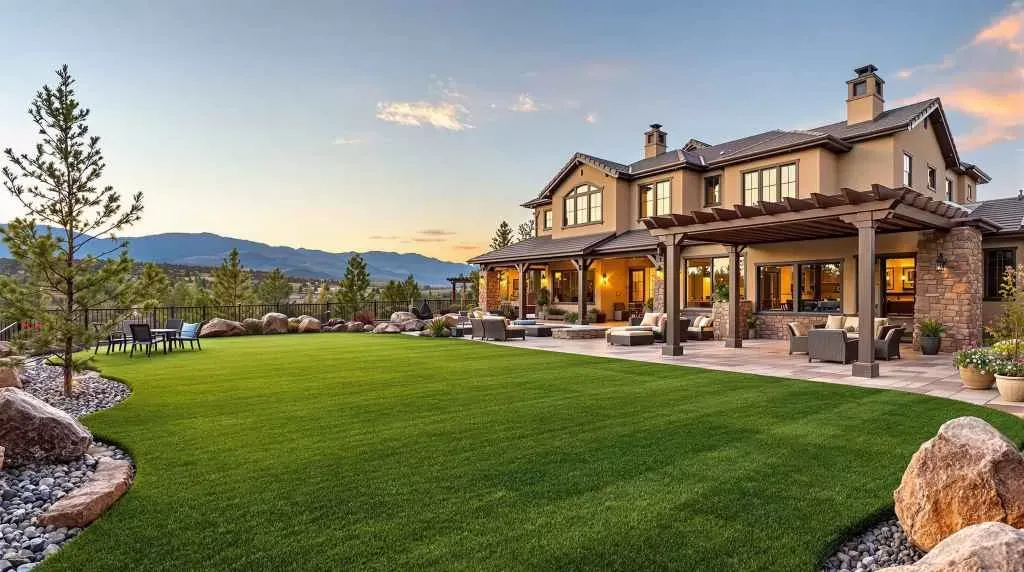
Finished artificial turf lawn beside planting beds and landscape edges
A defined synthetic lawn can sit beside living planting when drainage, irrigation, and edge elevations are coordinated.

Fit the conversion to what remains

Artificial Turf Must Meet Hardscape, Planting, and Irrigation Cleanly

A convincing result depends on the border as much as the turf. The finished elevation should meet patios and walks without a raised lip, follow walls and curves without pinched cuts, and leave enough usable soil and irrigation for planting that remains.

Converting a lawn zone also changes the water plan. Sprinklers serving only the removed grass can be capped or rerouted, while trees, shrubs, beds, or retained lawn still need suitable coverage. Drainage from roofs and adjacent hardscape must continue to move through or around the reconstructed area.

Access and sequence matter in a mature yard. Soil removal and gravel delivery are completed before delicate edge restoration, and lighting cable, irrigation changes, fence work, or adjacent hardscape should be coordinated before the turf closes the route.

Property review and approval needs can vary by address and scope. We identify what must be confirmed for the proposed conversion without presenting an unverified Highlands Ranch-wide rule or promising an approval outcome.

The performance layer is below the blades

Artificial Turf Base Preparation and Installation, Step by Step

Turf cannot hide a loose, uneven, or poorly drained foundation for long. The company’s eight-stage system carries the project from removal through compacted base, precise fitting, secure edges, and finished infill.

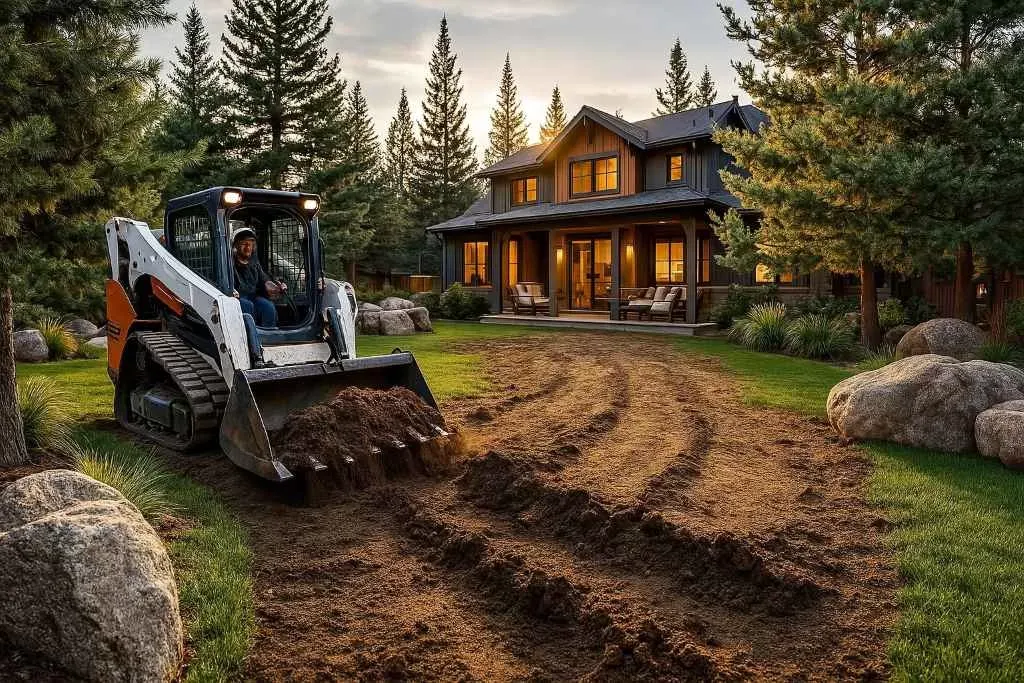
  1. Soil and organic material being excavated before artificial turf installation
    01

    Remove Soil and Organic Material

    The documented system begins by excavating approximately 4 to 6 inches of soil and organic material. Actual removal limits and access are confirmed for the footprint and the conditions exposed at the property.

    Removing the organic layer creates room for the structural turf base.

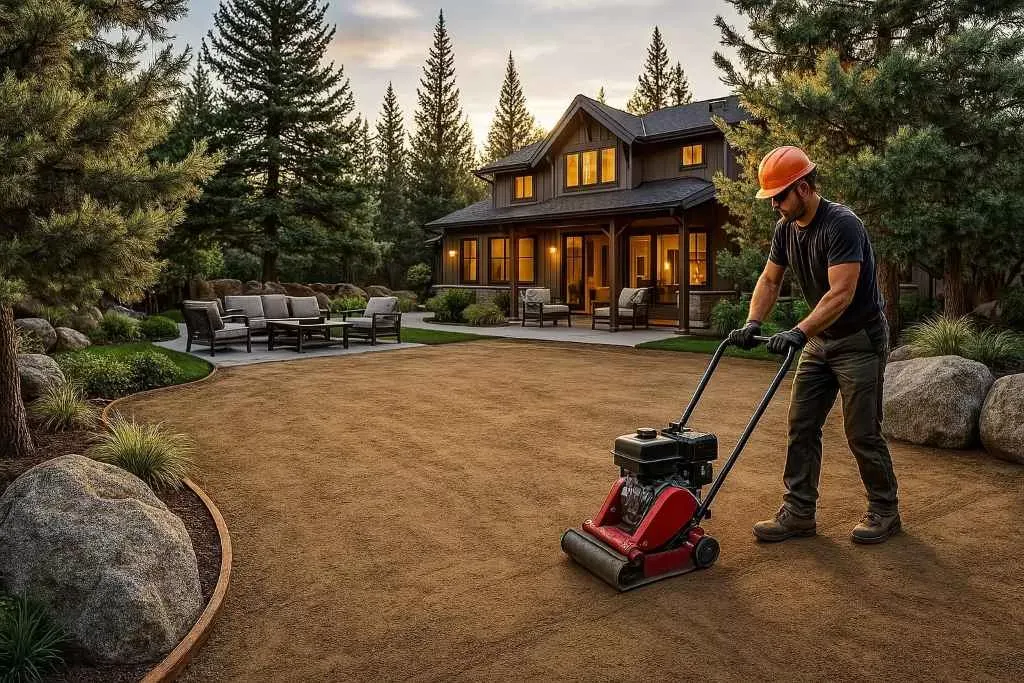
  2. Bare subgrade being compacted with a plate compactor
    02

    Compact the Subgrade

    The exposed earth is compacted with a plate compactor so the supporting layers begin on a stable surface rather than loose soil left behind by removal.

    The exposed subgrade is compacted before gravel closes the area.

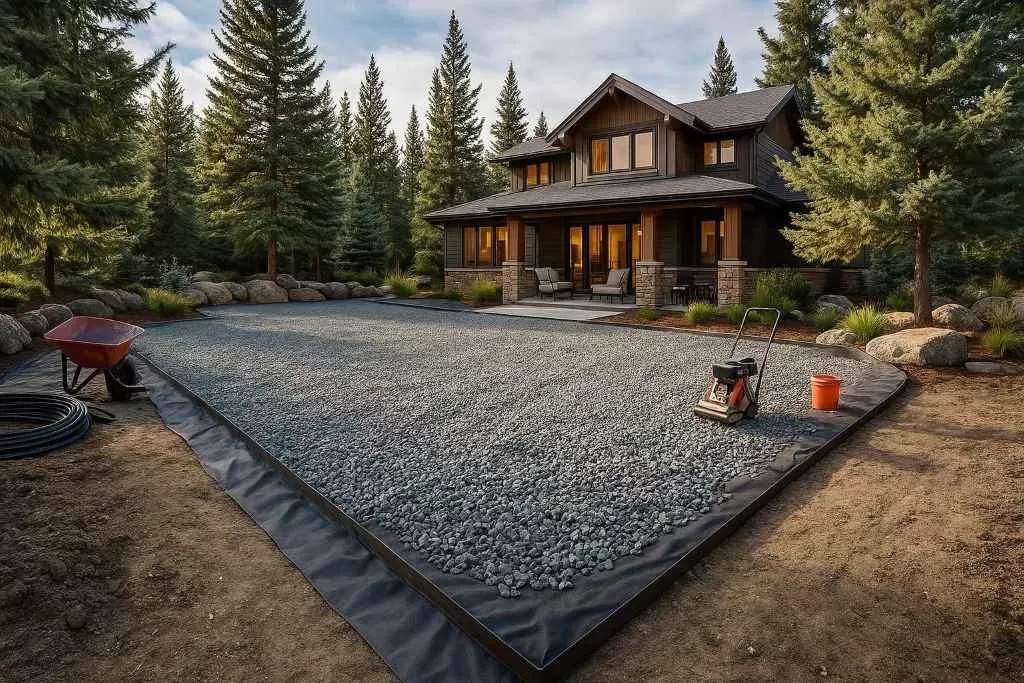
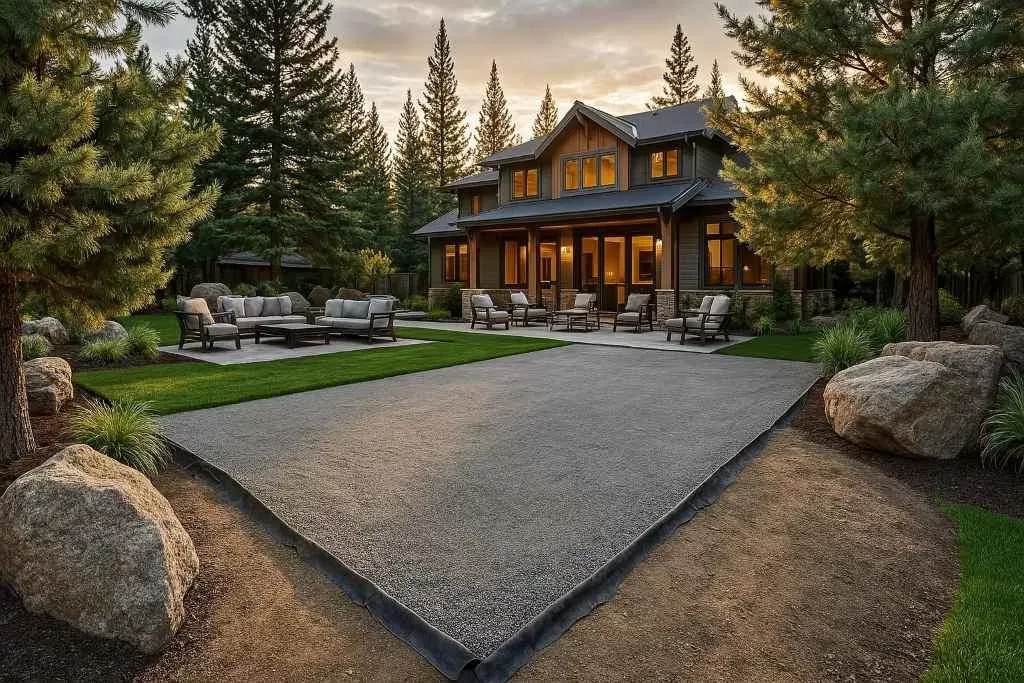
  3. Open-graded angular gravel being installed for artificial turf drainage
    03

    Install Geotextile and Angular Gravel

    The company system places geotextile and approximately 4 inches of open-graded angular gravel to form the main structural and drainage layer below the turf.

    Open-graded angular gravel over geotextile provides the main supporting and drainage layer.

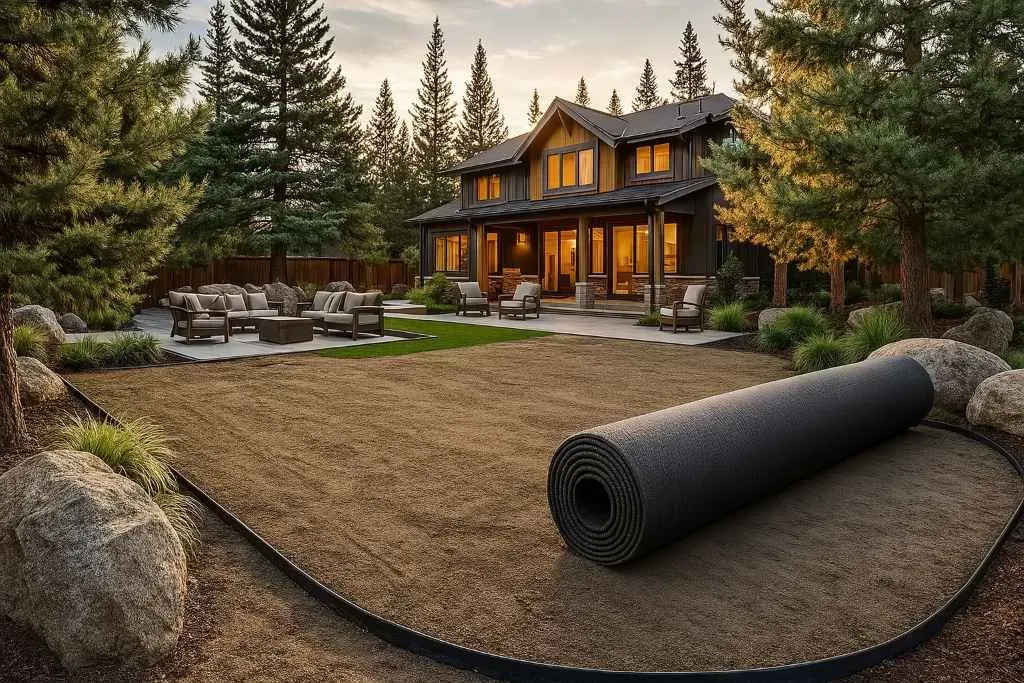
  4. Rolled artificial turf warming in sunlight before installation
    04

    Warm and Relax the Turf Rolls

    Rolled turf is allowed to absorb warmth before fitting. Softening the backing helps release wrinkles and makes the material easier to position accurately.

    Allowing rolled turf to warm softens the backing and helps release shipping wrinkles before fitting.

  5. Crushed refines being compacted into a smooth artificial turf setting surface
    05

    Compact the Crushed-Refines Layer

    A thin layer of crushed refines is placed and compacted above the gravel to create a smooth setting plane while the open-graded layer below continues to perform its drainage role.

    A thin compacted refines layer smooths the setting surface above the open-graded base.

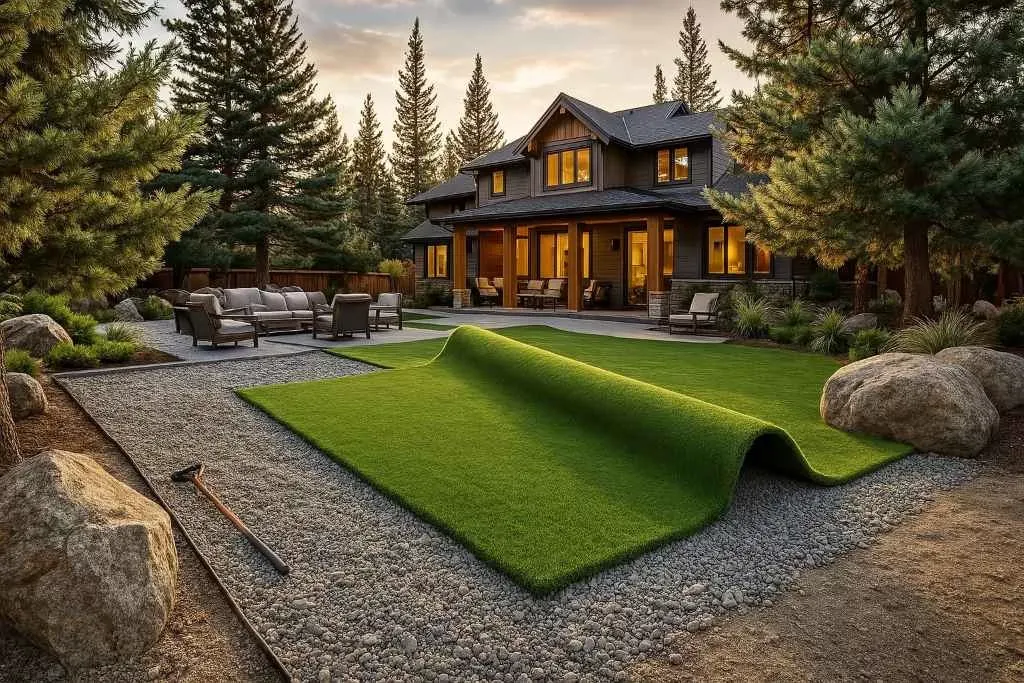
  6. Artificial turf being rolled out and cut to the landscape footprint
    06

    Orient, Roll Out, and Cut the Turf

    The material is oriented for a consistent grain direction, rolled over the prepared base, and cut to fit the approved curves, straight edges, obstacles, seams, and transitions.

    The turf is oriented, rolled out, and cut to the actual borders and transitions.

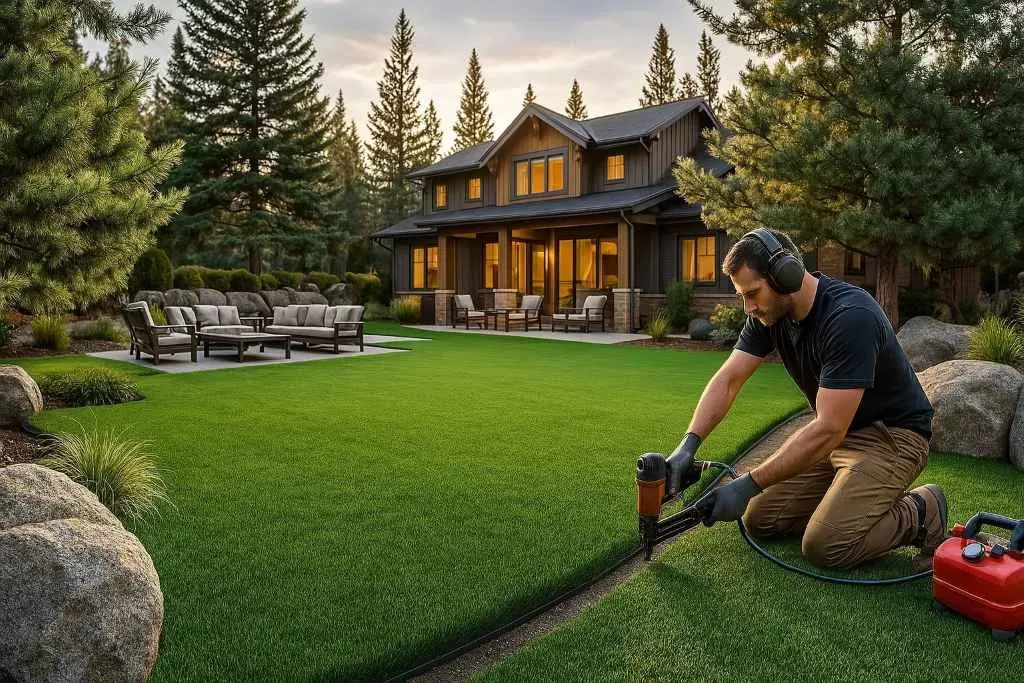
  7. Artificial turf perimeter being secured to installed edging
    07

    Secure the Perimeter

    The cut turf is fastened along the perimeter edging so the field remains tight and the finished border holds its intended line against the surrounding landscape.

    Securing the perimeter keeps the fitted surface tight against the approved edge.

  8. Antimicrobial infill being spread across installed artificial turf
    08

    Spread Antimicrobial Infill

    Approximately 2 pounds per square foot of antimicrobial emerald-green infill is distributed through the surface to add ballast, support the blades, and help manage odors in high-use areas.

    Antimicrobial infill adds ballast, supports the blades, and helps manage odor in high-use areas.

Four surfaces, four planning priorities

Plan Lawn, Pet, Putting, and Play Turf as Different Projects

All synthetic turf needs sound preparation, drainage, secure edges, and accurate fitting. The product, details, and buyer questions change with the job the surface has to do.

Everyday Synthetic Lawn

A general lawn area prioritizes appearance, softness, walking and play, clean transitions, and a product that suits how visible and heavily used the space will be.

Pet Run or Relief Area

Pet turf planning gives extra attention to drainage, base consistency, access for cleanup, antimicrobial infill, perimeter security, and the relationship to doors, gates, planting, and neighboring surfaces.

Backyard Putting Green

A putting surface is designed around ball roll, contours, cup locations, fringe, practice distance, drainage, maintenance access, and how the feature reads as part of the landscape rather than a loose turf rectangle.

Sports and Active Play

An active surface needs useful field dimensions, durable product selection, cushioning, edge conditions, drainage, clear circulation, and enough recovery area for the movements expected in the space.

What Changes After Living Lawn Becomes Synthetic Turf

Water use

The turf area no longer needs routine lawn irrigation, while nearby living plants keep the coverage appropriate to them.

Routine care

Mowing, edging, and fertilizing stop; debris removal, pet cleanup, brushing, and observation of edges and infill remain.

Surface consistency

The selected product stays green without bare soil or mud, while drainage and a consistent base keep the field useful after wet weather.

Price the complete conversion

What Shapes a Highlands Ranch Artificial Turf Estimate

Area is only one part of turf pricing. A clear estimate also accounts for removal, access, drainage, irrigation, edge complexity, the selected product, seams and specialty details, infill, and restoration around the finished footprint.

  • Exact conversion footprint and intended lawn, pet, putting, or play use
  • Removal depth, disposal volume, exposed conditions, and subgrade correction
  • Gate width, equipment route, hauling distance, and material staging
  • Finished elevation at patios, walks, walls, doors, fences, and planting beds
  • Drainage direction, downspouts, low points, and water leaving adjacent surfaces
  • Sprinkler removal or rerouting and drip irrigation retained for living planting
  • Turf product, grain direction, seams, curves, cuts, cups, fringe, and obstacles
  • Perimeter edging, infill, restoration, and connected landscape work

Verified Google Reviews

Hear What Our Customers Have to Say

“Aaron and his team made the process an easy one from start to finish and the pricing was very reasonable. Very happy with the finished product. Would recommend.”
Marcus Cram
1 / 8 View reviews on Google

Highlands Ranch Artificial Turf Planning Questions

What should a Highlands Ranch artificial turf consultation cover?

The consultation should define what the area will be used for, what lawn or material is coming out, which landscape features remain, how equipment reaches the footprint, where water goes, which irrigation changes are needed, and how the new turf meets every edge. Product selection and pricing make more sense after those property decisions are visible.

Can artificial turf replace only part of an existing lawn?

Yes. A selective conversion can keep healthy planting or a useful living-lawn area while replacing the section that no longer fits the yard. The design must create intentional borders, preserve irrigation for plants that remain, and avoid leaving awkward strips that are difficult to water or maintain.

Which artificial turf product is best for a dog run?

Paw Pro K9 is the dedicated pet option in the company lineup. It combines a traffic-tolerant blade structure, rapid drainage, and compatibility with antimicrobial infill. Product choice alone is not enough: the base, drainage direction, secure edges, cleanup access, and surrounding materials also determine how the pet area works.

How does the turf installation drain after rain or snow?

The documented system removes the organic layer, compacts the subgrade, and installs geotextile with approximately 4 inches of open-graded angular gravel below the setting layer and permeable turf. The property layout still has to provide a practical place for water to move instead of trapping it at a wall, patio, or low edge.

Does artificial turf eliminate all irrigation?

The synthetic turf itself does not need lawn irrigation, but retained trees, shrubs, perennials, or living lawn may still need water. We identify the sprinkler zones serving the converted area and coordinate caps, rerouting, or drip coverage so the rest of the landscape is not accidentally disconnected.

Is artificial turf completely maintenance-free?

It removes mowing, edging, fertilizing, and routine lawn watering, but it still needs care. Debris should be removed, pet waste cleaned promptly, high-traffic fibers brushed when needed, and edges, seams, infill, and drainage observed over time.

How is a putting green different from regular lawn turf?

Putting turf uses a dense, low-pile surface intended for consistent ball roll rather than the taller blade profile of a residential lawn. A complete green also considers cups, contours, speed, fringe, practice distance, drainage, and the transition into the surrounding yard.

Plan the Turf Conversion Around the Yard That Stays

Show us the area you want to change and how it needs to work. We will evaluate removal, access, drainage, irrigation, product choice, base preparation, fitting, edges, infill, restoration, and the complete construction sequence.