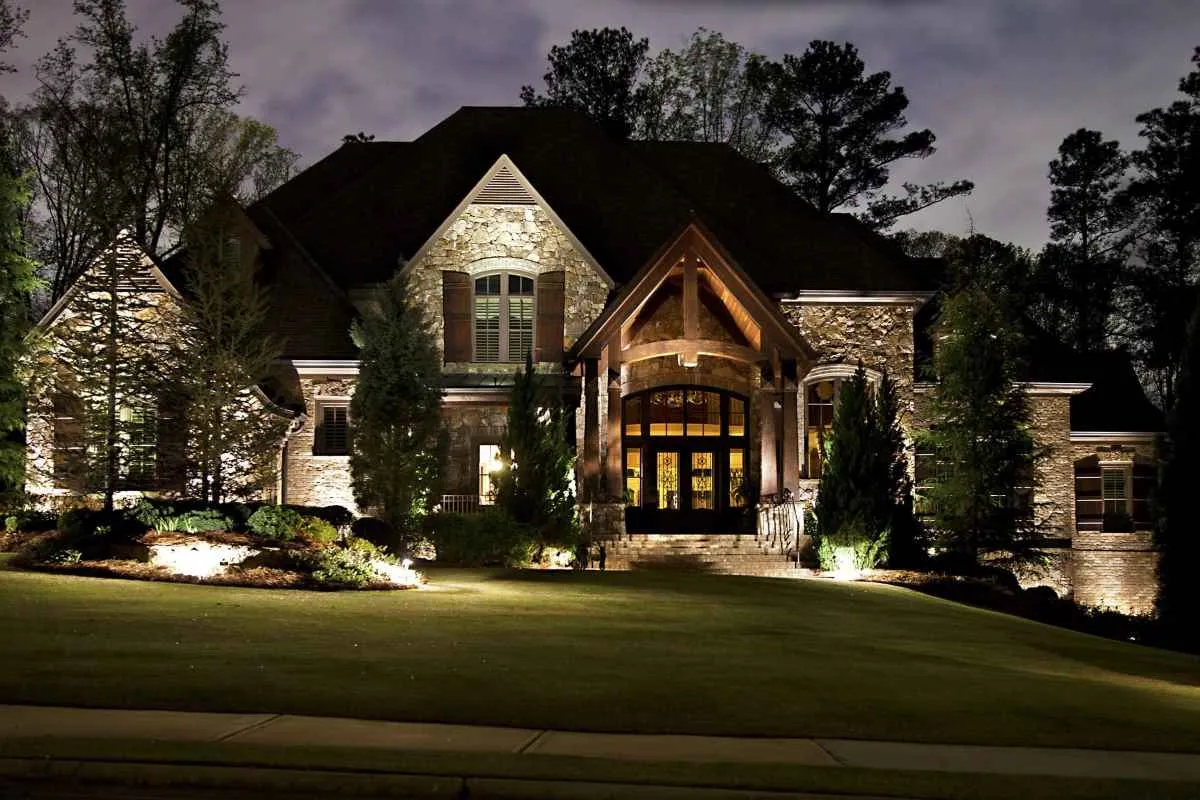
Layered Entry and Arrival Lighting
Entry lighting connects the approach, door, and planting under the trees into one arrival sequence, working better as several quiet layers than as one fixture trying to light everything at once.


Low-Voltage Lighting for Wooded Castle Pines Lots
Mature pines change how a Castle Pines yard should be lit: paths and steps need to stay readable under the canopy, and fixtures need to be aimed and shielded so light stays on the property instead of a neighbor's yard. We plan low-voltage systems around the trees, grade, and outdoor-living areas already on the lot.
Tell us which routes, outdoor areas, and features you want to use or see after dark.
Begin with movement under the canopy
Follow the evening route through the yard before deciding where accent light belongs. On a wooded Castle Pines lot, the first job is to make the sequence from door to path, step, patio, or gathering area easier to understand under tree cover. Once that route is established, accent light can add depth without competing with circulation.
Wooded Castle Pines lots often combine slope with tree cover. Fixture position and aiming help define treads, landings, and the next change in level after dark, without getting lost under the canopy.
Place light where a route begins, turns, narrows, or meets another surface, revealing the walking line without a row of bright points dominating the trees.
A patio under the pines needs enough usable light to gather comfortably, with a fire feature or planting accent as the focal point instead of every surface lit the same.
Arrival lighting connects the approach, front walk, planting, and door so those layers feel intentional together beneath the mature trees many Castle Pines homes have.
New paver patios and walks or concrete routes give the lighting plan clear edges and transitions to follow.
Create depth after dark
Build layers instead of turning up brightness. One group of fixtures may define a route through the trees, another may reveal a tree's form, and another may orient people toward an entry or patio. The spaces left darker are part of the design because they separate those layers and preserve the wooded feel of the lot.
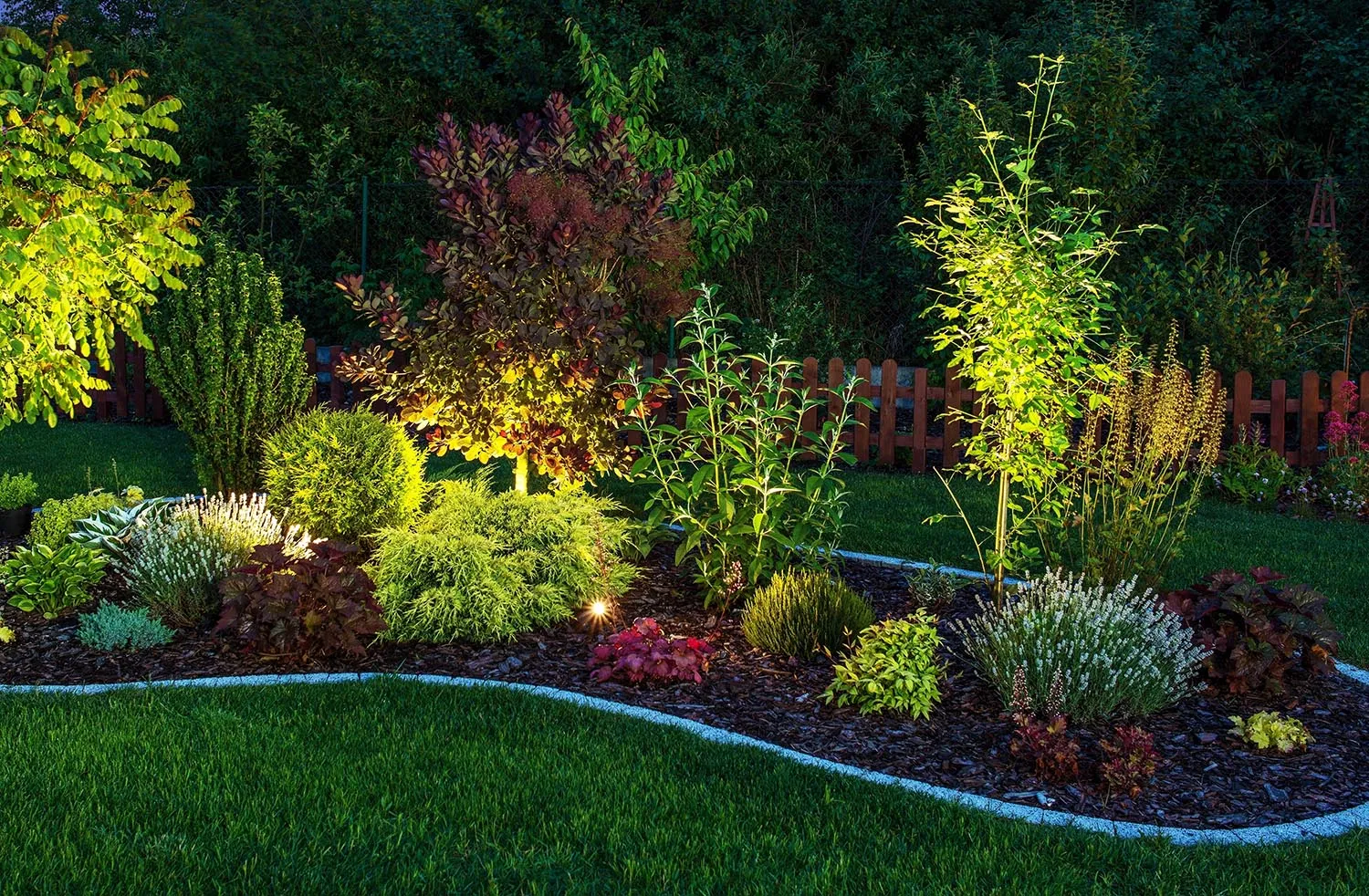
Entry lighting connects the approach, door, and planting under the trees into one arrival sequence, working better as several quiet layers than as one fixture trying to light everything at once.
Comfort depends on restraint
The dark spaces between trees are part of the design, not gaps to fill in. Overlighting a wooded lot flattens the depth that makes it distinctive, so fixtures are aimed narrowly at the surface or feature that actually needs light.
Because many Castle Pines lots sit close to a wooded neighbor or shared property line, fixtures are aimed and shielded so light stays where it belongs instead of crossing into someone else's yard.
Put lighting into the construction sequence
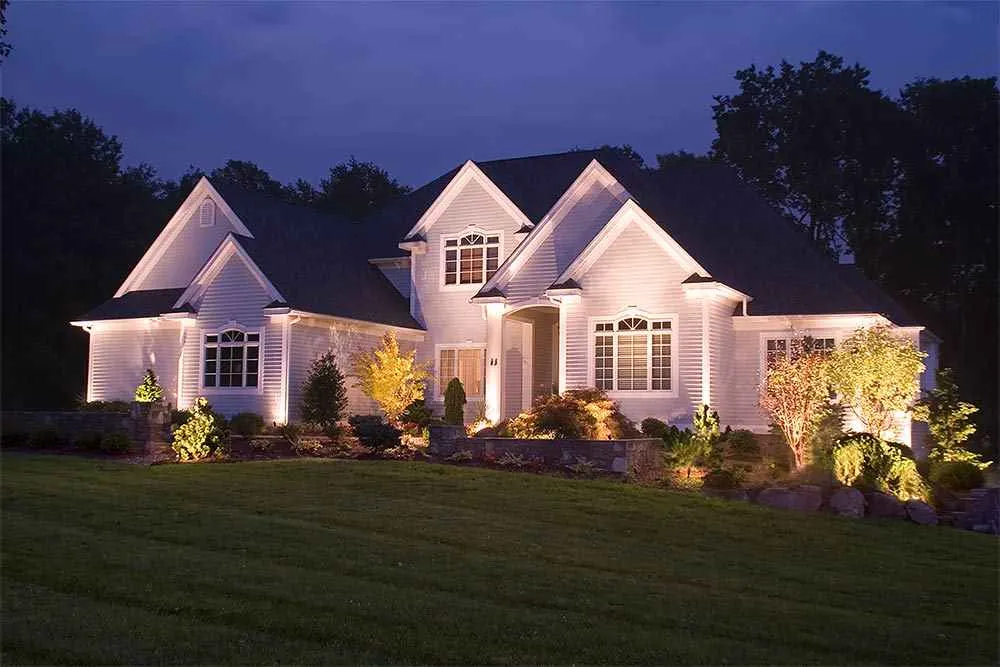
Low-voltage lighting is easier to coordinate before finished landscape layers limit access. On a wooded Castle Pines lot, the plan should identify cable routes and fixture positions around root zones while the hardscape, grade, and planting are still being resolved.
Mark the routes, steps, entries, and grade changes that need to remain understandable at night, along with the trees that will shape shadow and clearance.
Choose which elements guide movement through the trees, which become focal points, and which stay dark so the wooded depth of the lot still reads at night.
Coordinate low-voltage cable paths and fixture positions around root zones before paving, rock, and dense planting close the work area.
Run the installed system at night and adjust aiming so routes and features stay clear on your property without spilling across the fence line.
Keep the plan adjustable as the trees grow
Trees change the lighting pattern more here than on an open lot. A small tree can become a major screen, needle drop can cover a low fixture, and canopy growth can shift what a fixture actually reveals. Regular review keeps the visible result aligned with the original purpose.
A lighting estimate is shaped by the number and type of areas being lit, route length, grade changes, fixture placement, access around trees, and the nighttime aiming review. Lighting can be coordinated with the broader landscape scope when it is one part of a new outdoor-living project.
Full low-voltage design and installation: paths, steps, entries, tree and planting accents, and outdoor-living areas, all planned together rather than as separate fixtures.
Trees affect shadow, sightlines, and where cable routes can run without disturbing root zones. Accent lighting can reveal a tree's form, but fixtures are aimed and shielded so light stays on the property rather than spilling into a neighbor's yard.
Yes. Lighting can make treads, landings, and changes in elevation easier to read after dark. Placement and aiming matter because a bright fixture in the viewer's line of sight can reduce visibility instead of improving it.
Bring it in while the hardscape and planting layout are still being decided, so cable routes can work around root zones before mulch and rock make trenching disruptive.
Most established neighborhoods review exterior changes, and requirements vary by association and by project. Confirm current rules for the property before installation is scheduled.
Keep lenses and fixture openings clear of needles and debris, remove growth that blocks a lens, and review aiming after landscape or grade changes or as trees mature.
See the landscape as a complete evening space. Show us the routes, trees, patios, and entries that matter after dark, and we will plan a low-voltage lighting scope around the property.