Spray zones sized to the turf limit
New Castle Rock homes cap backyard lawn at 500 square feet and skip front-yard turf entirely, so the sprinkler zone for live grass is smaller and more deliberate than a typical suburban yard.


Castle Rock Irrigation Installation
Castle Rock's turf rules put most of the watering demand on trees, shrubs, and planting beds rather than lawn. We design sprinkler and drip systems sized to the approved turf area and the rest of the property, with controllers set for efficient, adjustable watering.
Tell us what is being planted, what is already installed, and what the current watering setup is doing.
Efficiency starts with the rules
Castle Rock's new-home turf limit changes what an irrigation plan is mostly doing. The compact approved lawn area needs accurate spray coverage, but the bigger design problem is usually the trees, shrubs, and water-wise beds that carry the rest of the yard.
New Castle Rock homes cap backyard lawn at 500 square feet and skip front-yard turf entirely, so the sprinkler zone for live grass is smaller and more deliberate than a typical suburban yard.
Because so much of a new Castle Rock yard is trees, shrubs, and beds rather than lawn, drip tubing carries more of the watering load here than the spray system does.
Wind and intense sun on open lots change how quickly beds dry out. Zones are separated so a shaded bed is not on the same runtime as an exposed one.

An irrigation plan should follow the landscape plan, and in Castle Rock that plan is shaped by the town's turf limit. The compact lawn area determines practical head spacing, while the trees and shrubs filling the rest of the yard need root-zone delivery instead of spray.
Grouping similar areas gives the controller useful control. A bed that needs a slower drip cycle can run independently from the sunny lawn zone, and a shaded bed does not have to receive the same runtime as an exposed one.

Spray heads need enough overlap to avoid dry gaps within the approved lawn area, but their arcs also have to be adjusted at walks, patios, and bed edges so the compact zone does not overspray onto hardscape.
A visible spray pattern helps explain why spacing and adjustment matter at lawn edges.
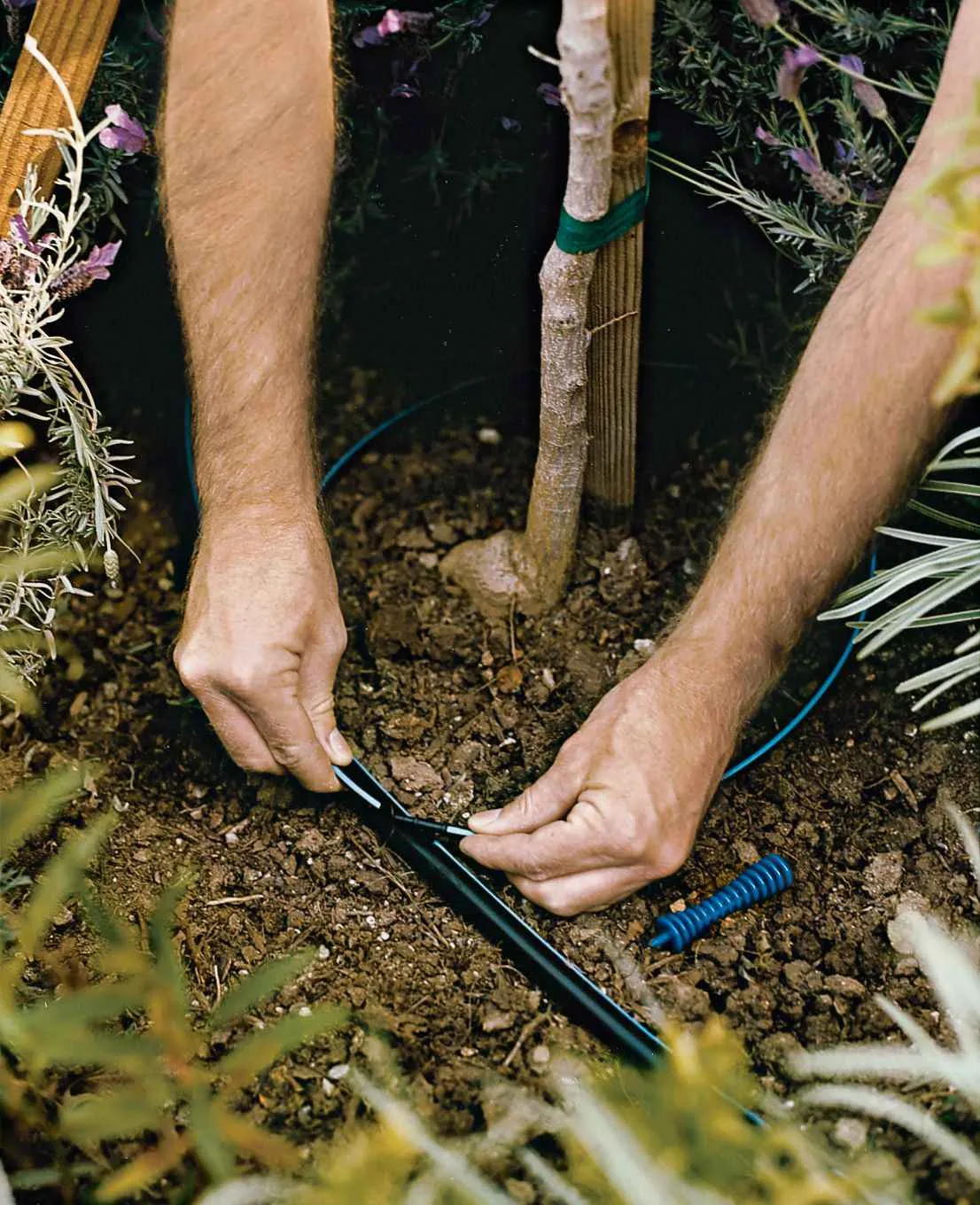
Drip tubing delivers water close to trees, shrubs, and bed plants, which is most of a new Castle Rock yard once the lawn cap is reached. The layout stays accessible enough to inspect, move, or add delivery points as plants establish.
Drip tubing is laid around the plants it serves and adjusted as the planting establishes.
The best time to coordinate irrigation is before sod, rock, and final hardscape edges close the site, especially on a new-construction lot where the fence, patio, and grading schedule are still moving.
The plan identifies the compact lawn area, planting beds, trees, hardscape, and the available water source before trenches or head locations are set.
The approved turf area is zoned separately from drip-fed beds so one is not scheduled like the other.
Piping, valves, spray heads, and drip routes are coordinated with grading, edging, patios, and future maintenance access.
Each zone is operated and adjusted around edges and plant material before the landscape is considered complete.
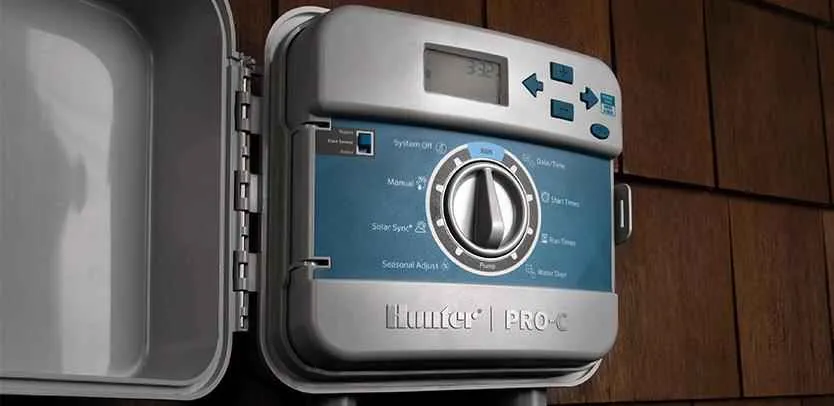
The controller receives a starting schedule for the new landscape. That schedule is a baseline, not a permanent setting, and should change with weather and establishment.
Each zone receives a starting runtime and frequency, but the schedule must respond to establishment, heat, wind, and the transition into cooler weather. Before freezing conditions, the system needs seasonal shutdown and protection appropriate to the property.
We also inspect, maintain, and retrofit existing systems, evaluating what is already in place before deciding whether a landscape change needs adjustment, added coverage, or more extensive replacement.
Yes. Because new-home lawns are capped at 500 square feet in the backyard with no front-yard turf, spray zones are smaller and more deliberate, and drip irrigation for trees, shrubs, and beds carries a larger share of the watering plan than it would on an unrestricted lot.
Zones group areas with similar delivery methods and watering needs. The approved lawn area, sun-exposed beds, and shaded beds are not scheduled the same way. Wind, slope, and layout all affect how the system is divided.
Yes. We plan and install new sprinkler and drip systems coordinated with the grade, hardscape, and living material being installed on a new-build lot.
No. A new landscape needs an establishment schedule, while an established one usually needs a different pattern. Heat, wind, and seasonal growth change demand, so controller runtimes need periodic attention.
Yes, after it is inspected. The practical scope depends on the existing valves, piping, coverage, and controller, and on the landscape changes being made, so we review the system before recommending an adjustment or replacement.
Coverage begins with correct head spacing and arcs, then continues with testing and adjustment at edges beside concrete, pavers, and planting beds so water reaches the intended area as consistently as the site allows.
We will review the approved lawn area, planting, grade, and existing system so the irrigation scope supports the yard you are actually allowed to build.