

Concrete Contractor for Foothills & Acreage Properties
Larkspur Concrete
We build and replace concrete patios, driveways, stamped finishes, and sidewalks for Larkspur homes, with the base, drainage, and joints planned for sloped, treed ground and Colorado freeze-thaw. The surface you see sits on a slab built to last.
- Stamped and broom-finish concrete for patios, walks, and steps
- Compacted base, reinforcement, and control joints planned together
- Free on-site concrete estimate measured on your ground
Request a Larkspur Concrete Estimate
Tell us what you want to build, replace, or connect and how it fits the slope, trees, and rest of the property.
Decorative finishes
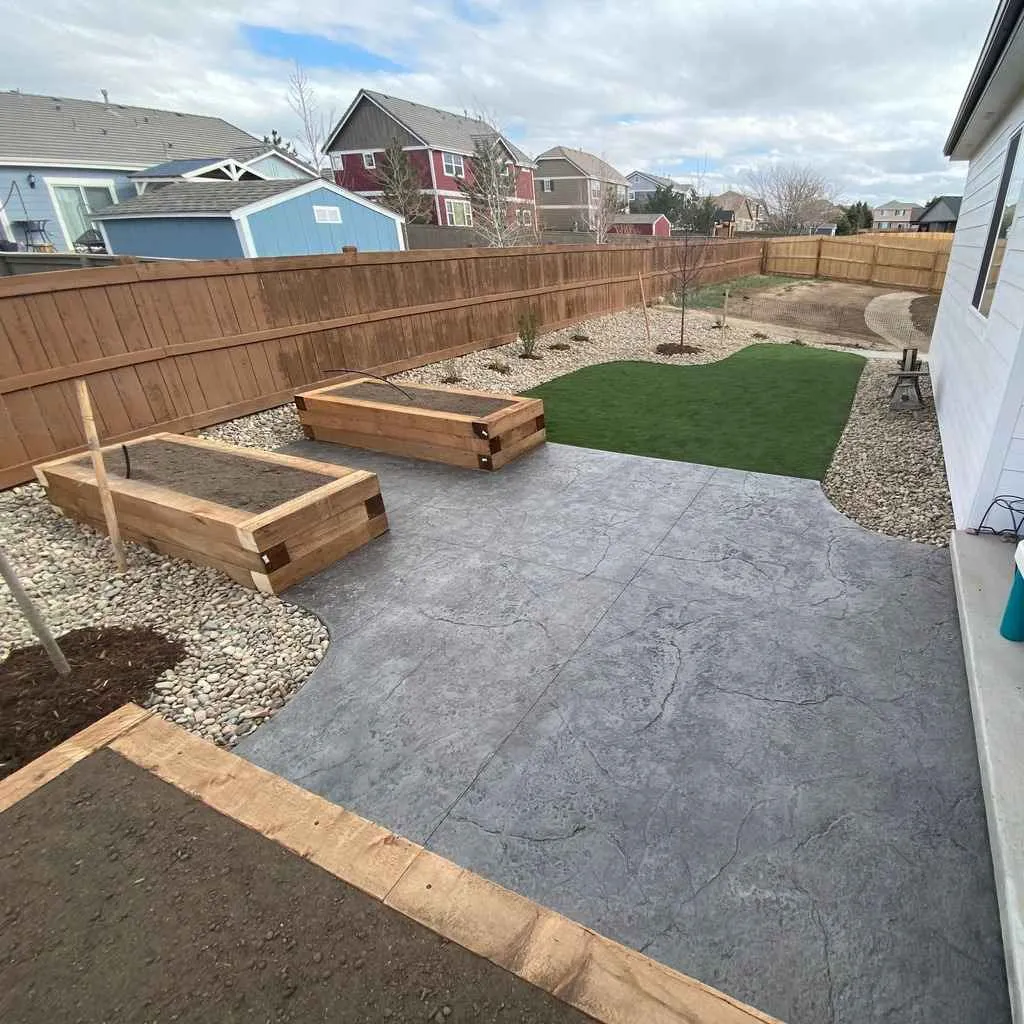
Stamped Concrete with the Look of Stone and the Bones of a Slab
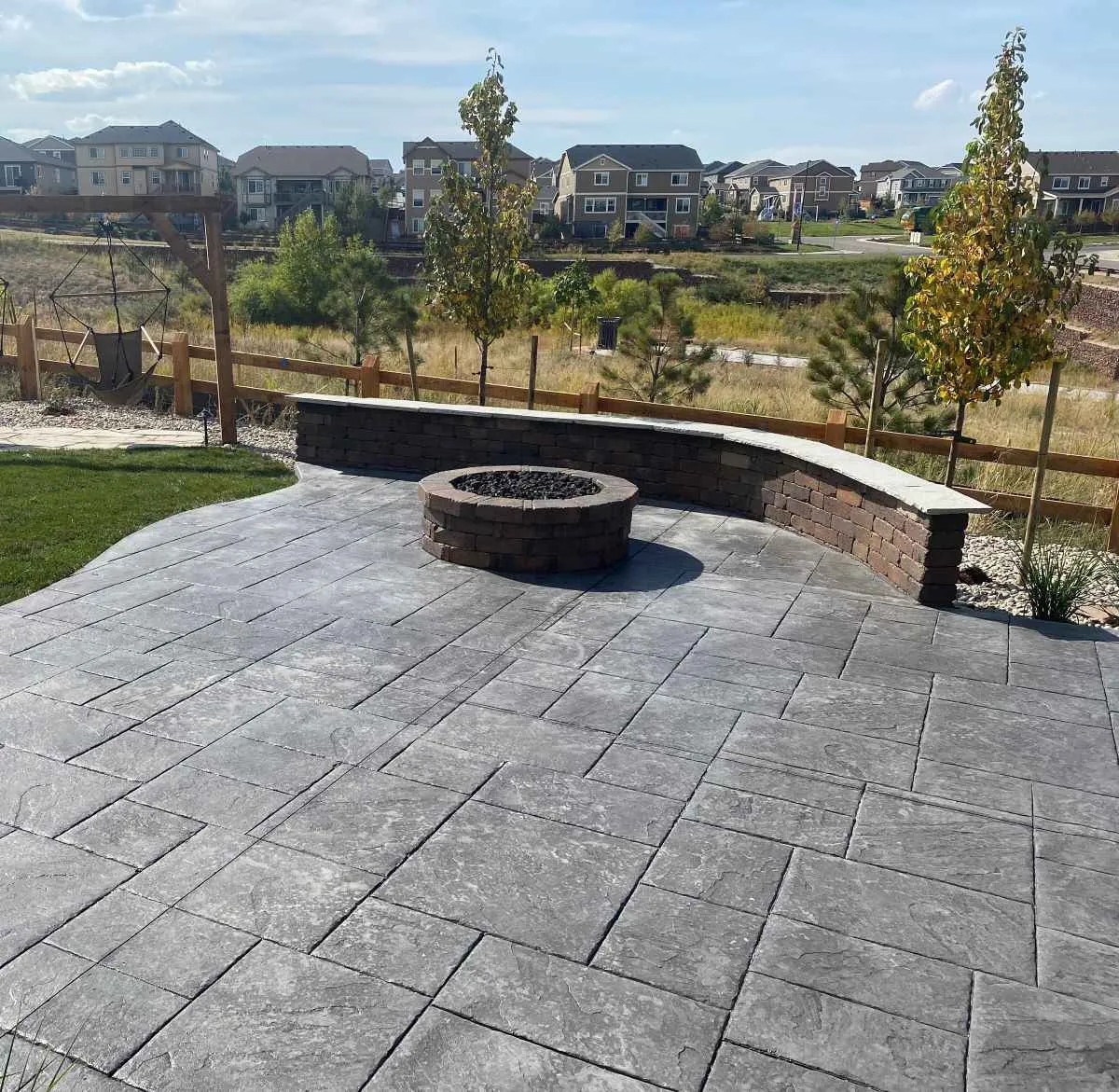
Stamped concrete presses pattern and tonal color into a continuous poured surface, so a patio can carry the look of stone, slate, or plank without the seams and shifting of individual units. The appearance is real, but it is the easy part. What decides whether a stamped patio still looks intentional years later is the work underneath: a pattern scale matched to the size of the slab, control joints placed inside the design instead of fighting it, and color and borders chosen to sit with the house and the landscape it meets.
Because a stamped surface is a single slab, it lives and dies by the same fundamentals as any other pour: base, reinforcement, drainage, and curing. We treat the finish as a design choice made on top of good construction, not as a way to dress up a slab that was not built to hold up.
Patios
A Concrete Patio Sized for the Way You Actually Sit Outside
A patio should be drawn from how it will be used (a table and chairs, a grill, a fire, a clear path to the door), not from whatever rectangle is simplest to form. Once the real footprint is set, the rest follows: where the level changes fall, how wide the steps and landings need to be, and how the edge meets lawn, rock, or planting. On a sloped, shaded Larkspur lot those level changes do more of the work than the finish, so we size them from the finished elevations rather than fudging the last riser at the end of the pour.
Getting the shape and elevations right early is also what keeps a patio from collecting water at the door it was built to serve. The slab is pitched to shed cleanly, and the surrounding grade is planned to carry that runoff away instead of back toward the house.
Built to last
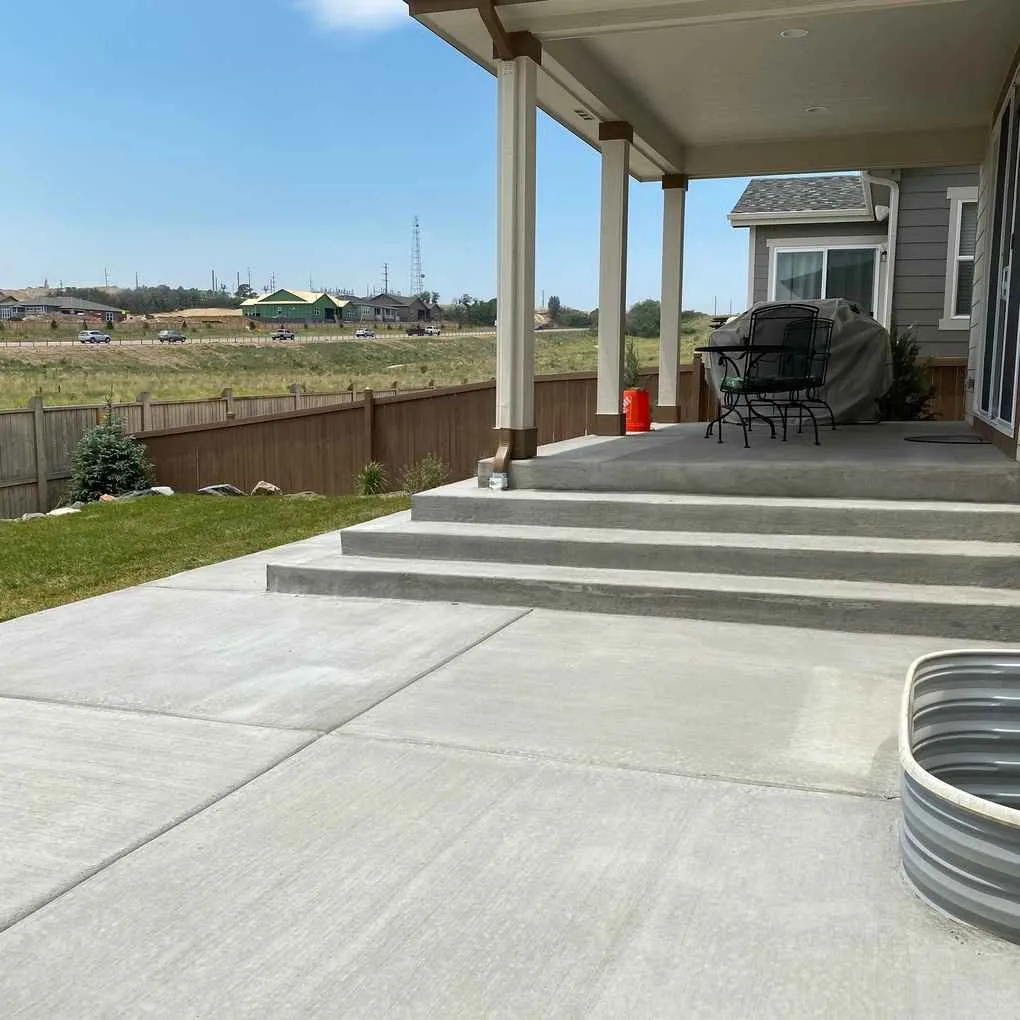
Concrete Patios That Stay Level, Drain Clean, and Last
A patio that stays level and sheds water is not luck; it is the result of decisions made before the truck arrives. These documented standards describe how Custom Landscapes by Design approaches the residential concrete on this page. They are not an engineering promise or a guarantee that any exterior slab can never crack.
Reinforcement, joints, base, and drainage all work together to help the slab manage load and movement. Joints create planned locations for that movement; they are one part of the system, not a substitute for the base beneath it.
- 4500 PSI
- The documented concrete mix strength for the residential work covered here, subject to the actual project specification.
- Fiber reinforcement
- Part of the documented concrete standard, mixed through the slab to help it manage the stresses of daily use and temperature swing.
- 3/8-inch fiberglass rebar
- Placed on chairs where this reinforcement system applies, held up in the slab rather than left resting on the base.
- Compacted subgrade and road base
- Wet, sandy, or disturbed material is corrected before road base is placed and compacted, so the slab starts on a consistent foundation.
Driveways
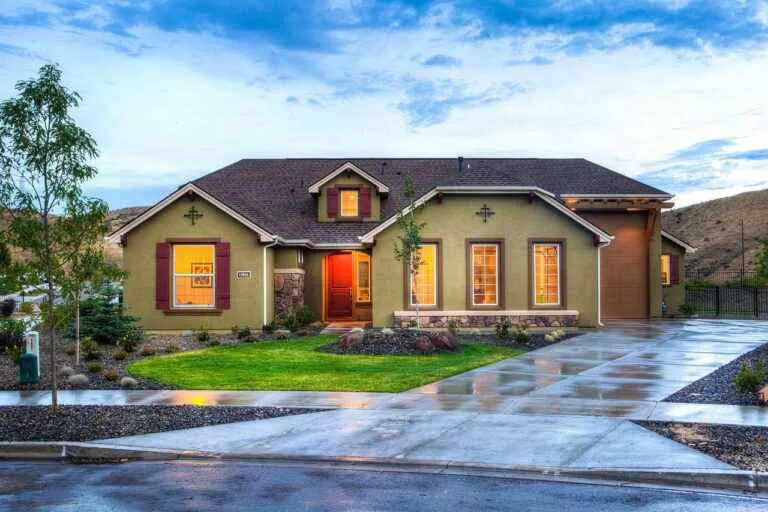
Driveways Built for Daily Loads and Plowed Snow
A driveway carries more than any other flatwork on the property: vehicle weight day after day, a broad surface exposed to sun and runoff, and, on many foothills lots, a plow blade every time it snows. That is why a driveway is planned from the subgrade up. We correct wet or unsuitable material, place and compact road base, set reinforcement, and lay out panels and control joints across the full approach rather than deciding the finish and hoping the rest holds.
Longer approaches on larger parcels add their own questions (where the drive meets the road, how it handles grade and turnarounds, and where snow gets pushed), and those are worked out before pricing rather than discovered during the pour. A driveway built this way stays a dependable surface instead of an early repair.
Sidewalks & paths
Sidewalks and Paths Poured to a Comfortable, Safe Line
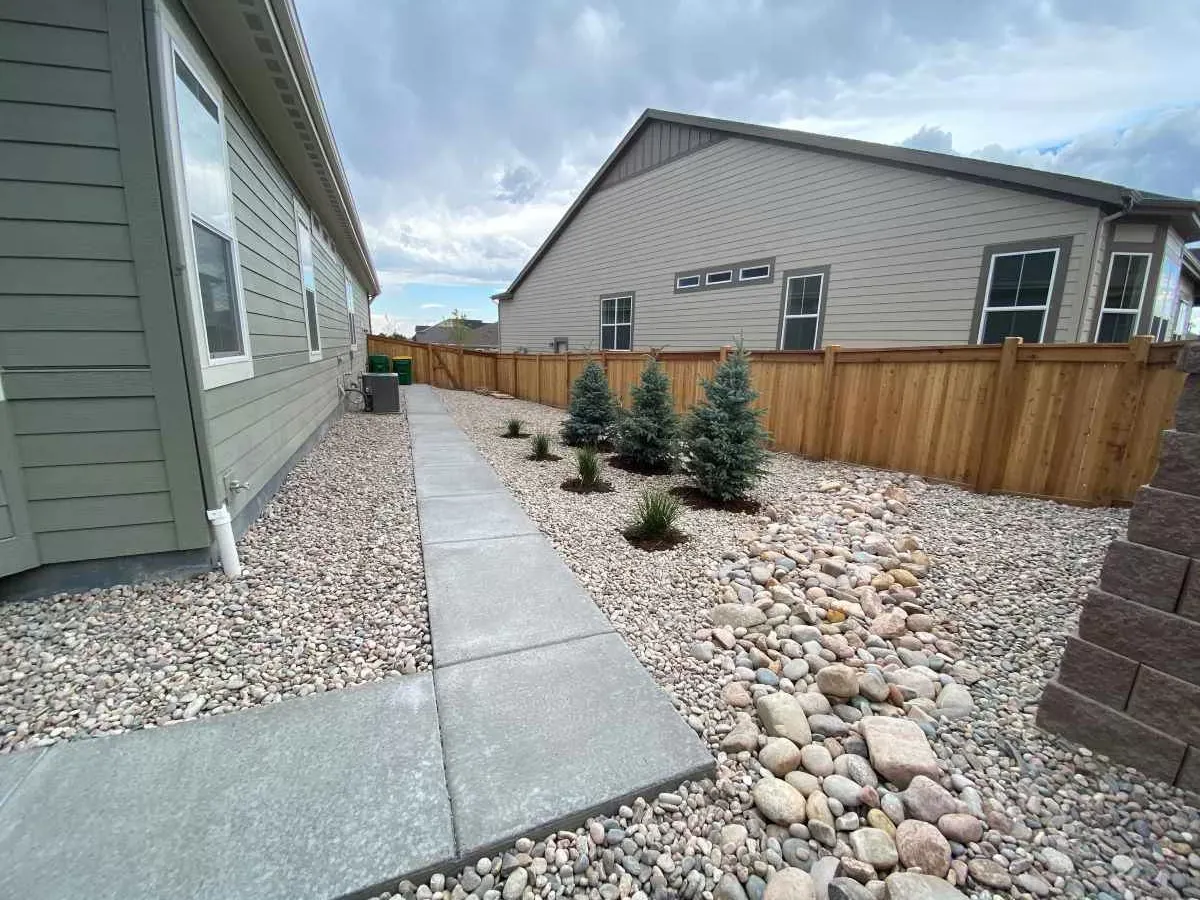
A path should follow the way people actually move (door to gate, gate to patio, house to the drive) and it should feel comfortable underfoot the whole way. On sloped, treed ground that means setting the line, width, and grade so the walk stays gentle instead of steep, adding steps or landings where the fall demands them, and keeping the surface pitched so runoff and snowmelt cross it rather than pool on it.
We keep decorative rock, planting, and drainage edges just below the walking surface so a path reads as a clean, deliberate line rather than a narrow strip poured wherever space happened to be left. A broom finish gives it dependable traction through the seasons the surface has to work in.
Why Custom Landscapes by Design
A Concrete Crew That Also Builds the Yard Around It
Concrete sets permanent elevations and edges, which makes it an early decision in a complete yard rather than a finish item squeezed between systems already in the ground. Because we design and build the surrounding landscape too, the patio footprint can anticipate a retaining wall or grade change, sleeves and access routes can be coordinated with irrigation, and the slab edges can be drawn to meet lawn, planting, and a fence gate cleanly.
On treed, sloped, dispersed parcels that coordination matters even more, because the same team is thinking about how the concrete phase and the grading, walls, and planting phases fit together and how equipment reaches the work without tearing up everything else. Individual property conditions are always confirmed on site before that plan is set.
Our Featured Larkspur Concrete Projects
Most of the decorative work homeowners ask us about is stamped concrete, so it is worth showing what "stamped" actually covers. The pattern is pressed into the fresh slab with mats or texture skins to imitate a natural material, then colored and sealed. A handful of patterns cover the majority of residential projects:
- Ashlar slate: squared, rectangular units with a rough, quarried-stone texture.
- Cobblestone: irregular, rounded units that read like an old set-stone surface.
- Flagstone: irregular shapes with a flatter, smoother face.
- Wood plank: long, narrow boards with a grained texture.
- Seamless texture: a continuous surface texture with no repeating unit.
The install itself moves in a set order: prepare and compact the site, form the shape and edges, pour and color, press the stamp before the concrete sets, then finish, apply a release agent, and seal once it has cured. Skipping or rushing any step shows up later, which is why stamped work rewards a crew that does it regularly. Every finish shown here reflects the kind of decorative concrete we build; we do not present any photograph as a specific completed project or attribute it to a particular address.
Larkspur Concrete Questions
Should I choose stamped or broom finish for a Larkspur patio or walk?
Broom finish is the practical default: a clean, consistent texture with dependable traction for patios, walks, and steps that get everyday use, including wet and snowy days. Stamped concrete adds pattern and color where you want a patio to read as a finished centerpiece. Both start from the same decisions about layout, elevations, joints, and drainage, so we usually settle the footprint first and choose the finish once the slab makes sense.
How do you keep concrete performing through freeze-thaw winters?
Freeze-thaw magnifies weak drainage, saturated edges, and inconsistent base, so most of the durability work happens below and around the slab: correcting the subgrade, compacting road base, placing reinforcement, and grading so water leaves the surface and the edges. On the maintenance side, keep the slab clear of standing snowmelt, avoid pushing downspouts or irrigation toward the edges, and follow the sealing and deicer guidance for the finish you install rather than a one-size schedule.
Why do so many Larkspur driveways crack or settle so soon?
A driveway that fails early almost always failed under the surface, not on it: the base was thin or poorly compacted, soft or wet material was left in place, reinforcement was missing, or the joints were never planned for the panels. On a longer foothills approach the same slab also carries plowing and repeated loads. We scope replacement and new pours from the subgrade up so the visible finish is sitting on something that will actually hold.
Will getting equipment to the pour damage the rest of my property?
It can, which is why access is part of the estimate rather than an afterthought. On treed, sloped, or larger parcels we look at how trucks and equipment reach the work, which routes protect established lawn and planting, and where staging and cleanup happen. Because we also build the surrounding landscape, we plan the concrete phase so the approach it needs does not undo work that comes before or after it.
Get a Concrete Plan Measured on Your Ground
Show us the patio, driveway, walk, or steps you have in mind and the slope, trees, and yard it has to fit. We will walk the site, look at access, grade, and drainage, and measure a concrete plan around your actual property.